An in-depth guide to buying incremental encoder and choosing suppliers
When you’re selecting an incremental encoder, the goal is to match the device to your application’s specific demands. Do you need high-resolution feedback for a precision CNC machine, or rugged performance for a harsh industrial environment? Is low latency critical for your servo loop, or is robustness and long-term availability more important?
These questions set the baseline for your search. By understanding core specifications, compatibility requirements, and supplier reliability, you can avoid common pitfalls and shorten your procurement cycle. This guide will walk you through the decision-making process, from defining the use case to validating supplier support. If you’re ready to optimize performance and keep downtime to a minimum, you’re about to gain a clear, actionable path to purchase.
What is an Incremental encoder?
GOH50AO1 Incremental encoder play a pivotal role in modern motion control systems. They provide real-time feedback on position, angle, and speed, helping machines run with precision and reliability. If you’re evaluating options for an incremental encoder, you’re in the right place. This article dives into what to look for, how to compare suppliers, and the long-tail considerations that often matter most in practice. We’ll weave practical tips, examples, and actionable guidance so you can make a confident buying decision. Along the way, you’ll find naturally placed long-tail terms that buyers frequently search for when researching incremental encoders and their suppliers.
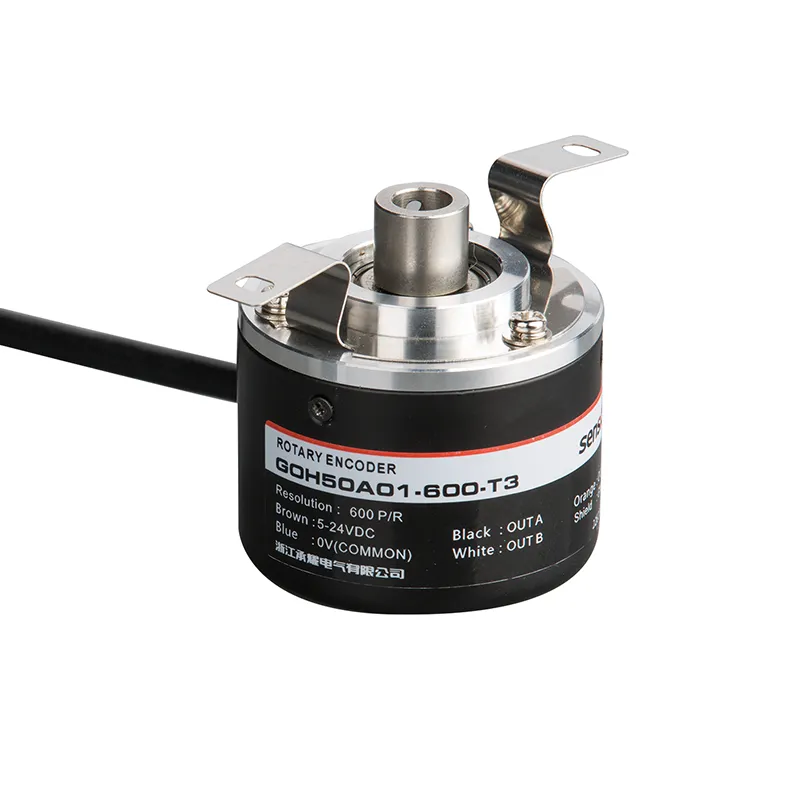
Understanding core specifications
An incremental encoder’s specifications are the map you’ll follow to a successful match. Here are the essential characteristics to assess, with practical questions you can ask during supplier conversations.
Resolution and accuracy
- What resolution does the encoder offer, and is it directional or absolute? How does the encoding track count translate to usable position accuracy in your system?
- Practical note: Even small increases in resolution can dramatically affect data bandwidth and noise susceptibility in long cables or high-speed systems.
- Suggested inquiry: Can you provide representative signal spectra at your stated resolutions under typical load conditions?
Output signals
- Do you require A/B (and sometimes Z) phase outputs? Are you operating with differential signaling (RS-422, RS-485) or single-ended TTL/HTL logic?
- Practical note: Differential outputs reduce susceptibility to EMI, which is essential in noisy factory floors.
- Suggested inquiry: What output protocol options exist, and can you tailor wiring diagrams for my controller?
Interface and compatibility
- Which mount standards are supported (NEMA, IEC), and what shaft diameter and coupling types are compatible with your motor or gearbox?
- Practical note: A misaligned coupling can introduce backlash and jitter, undermining your feedback loop.
- Suggested inquiry: Do you offer pre-mounted shaft adapters or flexible couplings for easy integration?
Linearity, repeatability, and backlash
- How do you characterize encoder linearity over the travel, and what is the typical repeatability across cycles?
- Practical note: In precision machines, even tiny linearity errors can accumulate in closed-loop control.
- Suggested inquiry: Can you share test data for a similar application to mine?
Environmental robustness
- What temperature range, IP rating, and sealing methods are provided? How does the encoder handle dust, moisture, or washdown cycles?
- Practical note: Harsh environments demand ruggedization—tenacious seals, corrosion resistance, and vibration tolerance.
- Suggested inquiry: Is the encoder rated for IP65/67, and do you offer conformal coating or encapsulation?
Mechanical and electrical ratings
- What is the shaft load capacity, rotor inertia, and maximum speed? What are the power supply requirements and current consumption?
- Practical note: Ensure the encoder’s electrical noise and power needs won’t conflict with other drives or controls.
- Suggested inquiry: Can you provide a test report showing behavior at peak speed and load?
Selecting the right encoder family
Manufacturers offer families tuned to different use cases. A well-chosen family balances performance, price, and service life.
High-resolution vs. ruggedized models
- If your system demands sub-micron positioning, a higher-resolution model may be justified. For general motor feedback, mid-range resolutions often deliver best cost-per-precision.
- Customer story: A packaging line swapped to a mid-range encoder family and achieved smoother servo response with no changes to the controller.
Absolute backup vs. incremental only
- Incremental encoders provide relative position; if you require quick recovery after power loss, consider models with high-speed automatic re-homing or redundancy features.
- Practical tip: For safety-critical operations, pair incremental encoders with a reliable home-position reference or an absolute encoder as a backup.
Cable management and EMI protection
- Some families emphasize integrated shielded cables, ferrite cores, and EMI-resistant housings. If your plant has significant EMI, this can reduce faults dramatically.
- Suggested inquiry: Do you offer shielded cables, and what are the allowable cable lengths before signal degradation becomes an issue?
Connector options and harnessing
- The easiest installations often come with pre-wired connectors or easy-to-plug harnesses. Do you provide standard connectors that fit common drives, or custom wiring services?
- Practical note: Consider future upgrades—will the same encoder family still be available in 5–10 years?
Supplier evaluation checklist
Choosing a supplier is more than picking a part number. It’s about ensuring continuity, support, and reliability over the product’s life cycle.
Technical support and documentation
- Is there a knowledge base with installation guides, wiring diagrams, and application notes? Do you offer quick-start guides for common controllers?
- Practical tip: A well-documented product with clear example circuits reduces wiring errors and commissioning time.
Lead times and stock availability
- What are typical lead times for standard vs. custom configurations? Do you offer batch production or regional stocking to shorten delivery?
- Suggested inquiry: Can you provide a service level agreement (SLA) for urgent rebuilds or spares?
Quality assurance and certifications
- Look for ISO 9001 or equivalent, and any industry-specific certifications relevant to your sector (for example, automotive, medical, or food-grade environments).
- Practical note: Certification may indicate a higher standard of process control and traceability.
Longevity and roadmaps
- How long does the supplier commit to supporting encoder models? Are there product roadmaps that align with your upgrade plans?
- Suggested inquiry: What is the policy for obsolescence, and how is migration path communicated?
After-sales and warranty
- What warranty terms are offered, and what is included in service? Is there a return-to-service program for delicate components?
Customization and engineering support
- If your application requires non-standard shaft sizes, unique connectors, or special environmental sealing, can the supplier accommodate?
- Practical tip: Early engagement with engineering can prevent costly redesigns later.
Choosing an incremental encoder and a reliable supplier is a strategic step in optimizing motion control systems. By understanding the core specifications, evaluating compatibility, and assessing supplier support, you can select an encoder that delivers accurate feedback, robust performance, and long-term value. Remember to tailor your questions to your exact application, consider future upgrades, and verify that the supplier can meet your service goals. If you’d like help tailoring this guide to your specific use case or need a supplier shortlist aligned with your industry, feel free to reach out with your project details.
FAQ
What is an incremental encoder, and how does it differ from an absolute encoder?
An incremental encoder provides relative position information based on counting pulses as the shaft turns. It does not inherently know its absolute position after power is removed, unlike an absolute encoder. This difference influences how you perform homing and position recovery after power cycles.
How do I determine the right resolution for my application?
Higher resolution yields more precise position feedback but also increases data bandwidth and susceptibility to noise. Consider the mechanical pitch, desired control loop frequency, and allowable latency.
What environmental factors should I consider when selecting an encoder?
Temperature, humidity, dust, water exposure, and vibration all affect encoder life and signal integrity. Look for appropriate IP ratings, sealed housings, and coatings if needed.
How important is EMI/RFI protection for encoders?
In factories with heavy machinery and motors, EMI protection is critical. Differential signaling and shielded cables help minimize noise-induced errors.
Should I pair incremental encoders with absolute encoders?
For applications where power loss requires rapid rehoming, using an absolute encoder as a backup or combining both types can offer resilience and uptime.
What role does supplier support play in encoder selection?
Strong technical support, ready availability of spare parts, and clear warranty terms can save time and reduce downtime during installation and maintenance.
How can I validate an encoder in my application before purchasing?
Request a test report or perform a bench test with your controller and drive system. Evaluate signal integrity, noise margins, and the encoder’s ability to handle your load conditions.