Understanding Encoder Incremental Features Benefits and Applications Guide
How Incremental Encoders Work
Incremental encoders are essential position feedback sensors that convert mechanical motion into electronic pulses, allowing you to track relative movement accurately. At their core, incremental rotary encoders generate pulses each time the encoder shaft or linear scale moves, providing real-time data on position changes rather than absolute position.
Core Principle: Pulse Generation for Relative Position
The fundamental working principle of an incremental encoder is simple: as the shaft turns or moves, the encoder produces a series of electrical pulses. These pulses correspond to the relative position changes, meaning the system counts pulses from a reference point to determine movement amount and direction.
Key Components
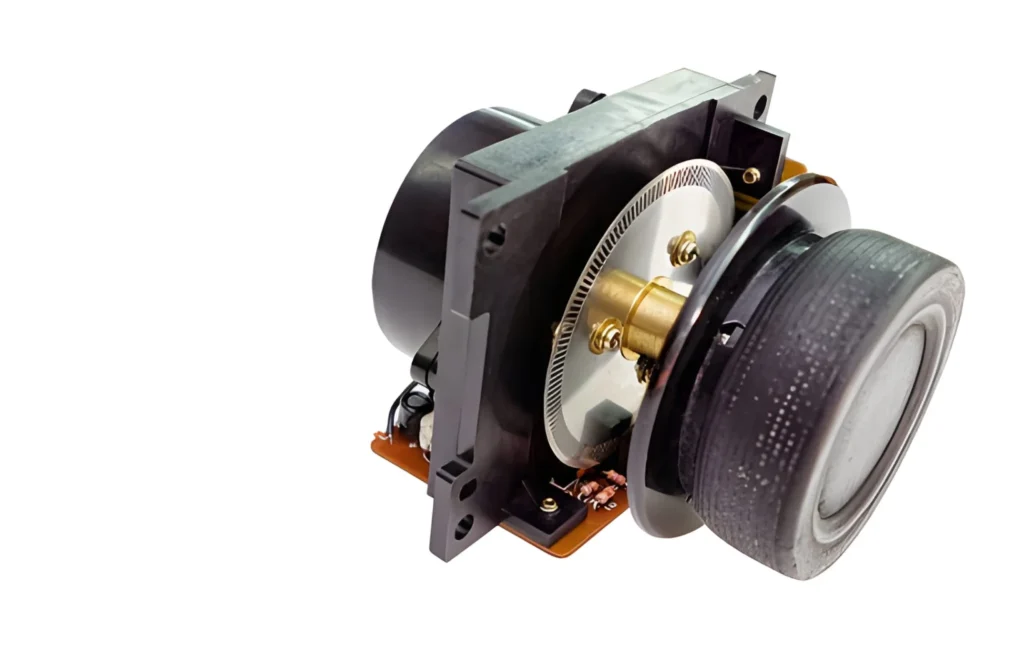
- Disc or Code Wheel: This is a rotating disc marked with evenly spaced transparent and opaque segments or magnetic poles.
- Sensor: Typically an optical sensor (using an LED and a photodetector) or a magnetic sensor detects changes as the disc passes.
- LED / Photodetector or Magnetic Elements: These components emit and detect light or magnetic fields, generating a pulse each time a segment moves past the sensor.
Output Signals: Channels A, B, and Z
Incremental encoders output two primary signals: Channel A and Channel B, along with an optional Z (index) pulse.
- Channel A and B: These signals are square waves shifted by 90 degrees (quadrature encoding), allowing the system to determine both speed and rotation direction.
- Z Channel (Index Pulse): This single pulse occurs once per revolution, providing a reference point for homing or exact position reset.
Quadrature Encoding for Direction Detection
The 90-degree phase shift between Channel A and Channel B is called quadrature encoding. It enables the encoder to detect rotation direction by comparing which channel leads or lags. This is crucial for precise control in robotics, CNC machines, and automation systems.
Resolution Basics: Pulses Per Revolution (PPR)
The precision of an incremental encoder is defined by its pulses per revolution (PPR). Higher PPR means more pulses per rotation and therefore greater position resolution. For example:
- Low PPR (e.g., 100 PPR) suits simple speed detection.
- High PPR (e.g., 10,000 PPR) offers fine position feedback for precise motion control.
Signal Types: TTL, HTL, and Sine/Cosine
Incremental encoders provide various output signals to fit different electronics:
- TTL (Transistor-Transistor Logic): Standard 5V digital output, common in many systems.
- HTL (Push-Pull): Higher voltage outputs (up to 24V), offering noise immunity for industrial environments.
- Sine/Cosine: Analog outputs used for interpolation and advanced motion smoothing.
Understanding these signal types helps you choose the right encoder for your system’s electrical compatibility and noise conditions.
With these basics covered, you’re ready to dive deeper into how incremental encoders compare to absolute types, their applications, and custom options—ensuring you pick exactly what your system needs.
Incremental vs. Absolute Encoders: Key Differences
When choosing between an incremental rotary encoder and an absolute encoder, understanding their core differences is crucial for selecting the right position feedback sensor.
| Feature | Incremental Encoder | Absolute Encoder |
|---|---|---|
| Position Tracking | Relative position (counts pulses from zero) | Absolute position (unique code for each position) |
| Power Loss Behavior | Position lost if power off; needs re-homing | Position retained without power |
| Complexity | Simpler design, fewer components | More complex internals |
| Cost | Generally lower | Higher due to advanced tech |
| Speed Capability | Higher speeds possible | Speed limited by data processing |
Advantages of Incremental Encoders
- Simple design means easier installation and maintenance.
- Higher speed operation suits fast motor feedback.
- Lower cost fits budget-conscious projects well.
When to Choose Which Encoder
- Use incremental encoders if you need fast, cost-effective relative position feedback and can manage homing on startup.
- Choose absolute encoders for critical applications where position can’t be lost during power outages or system restarts.
Common Misconceptions
- Incremental encoders can’t provide speed? Actually, their pulse output directly reflects speed when measured over time.
- Absolute encoders are always better? Not really—incremental types often outperform absolute encoders in high-speed, simple control systems.
For more in-depth differences and practical guidance on selecting encoders, check out this detailed page on absolute vs incremental rotary encoder key differences and industry applications.
Types of Incremental Encoders
Incremental encoders come in various types, each suited for specific environments and applications. The two main categories are optical incremental encoders and magnetic incremental encoders.
- Optical incremental encoders use a code wheel and an LED-light sensor setup to generate pulses. They offer high resolution and accuracy, making them ideal for clean, controlled environments. However, they can be sensitive to dust, oil, and moisture, which may affect performance if not properly sealed. To understand more about optical incremental encoders and their applications, you can explore detailed explanations on incremental optical encoder technology.
- Magnetic incremental encoders rely on magnetic field changes to detect position. They are more robust in harsh or dirty environments since they aren’t affected by dust, oil, or moisture. Their resolution might be lower compared to optical types but offer excellent durability for heavy-duty industrial uses.
You’ll also find incremental encoders designed by shaft type:
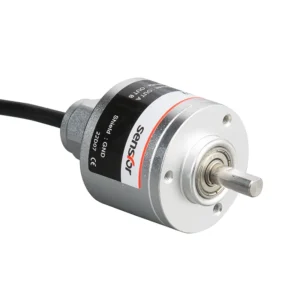
- Shaft encoders have a solid shaft directly connected to the motor or rotating equipment.
- Hollow-shaft encoders slip over an existing shaft, making installation easier in tight spaces or retrofits.
- Kit/modular designs provide flexible mounting options, allowing customization depending on machine requirements.
Besides rotary versions, there are linear incremental encoders built for non-rotary motion tracking. These are used in applications like precision conveyor systems and CNC machines where linear position feedback is essential.
Choosing the right type depends on your application’s environment, required resolution, and installation constraints. For more guidance on environmental factors affecting incremental encoders, see our insights on choosing an incremental encoder for different conditions.
Technical Specifications to Consider
When choosing an incremental encoder, several technical specs matter to ensure it matches your application needs perfectly.
Resolution and Accuracy
- Pulses Per Revolution (PPR): Typical ranges go from 100 up to 5000 PPR or more. Higher PPR means finer position measurement.
- Interpolation: Some encoders use interpolation methods to increase effective resolution beyond the native PPR, improving precision without mechanical changes.
Environmental Ratings
- IP Protection: Common ratings like IP54, IP65, or IP67 protect against dust and water — vital for harsh industrial settings.
- Temperature Range: Check if the encoder handles your operating temperatures, usually from -20°C to 85°C or higher for specialized units.
- Vibration & Shock Resistance: Important for applications on heavy machinery or where equipment experiences frequent jolts.
Mounting Options and Shaft Sizes
- Encoder types include shaft, hollow-shaft, and kit/modular designs.
- Shaft diameters vary (3mm, 6mm, 10mm, etc.); ensure compatibility with your motor or machine.
Electrical Interfaces and Cable Lengths
- Typical output signals include TTL and HTL (push-pull), with some models offering analog sine/cosine signals for advanced controllers.
- Cable lengths vary; shorter cables reduce noise but longer cables may be necessary depending on installation layouts.
Speed Limitations and Output Drivers
- Each encoder model supports max shaft speeds, often up to 10,000 RPM or more.
- Output drivers must match your control system’s input (open-collector, push-pull, differential line drivers).
For detailed specs tailored to your needs, explore our incremental shaft encoder selection guide or check out the main output signals and how to identify A, B, Z phases to ensure proper integration.
Applications of Incremental Encoders
Incremental encoders are widely used across industries thanks to their reliable position feedback and speed measurement capabilities. In industrial automation, they keep conveyor systems and packaging lines running smoothly by providing precise motion control. This helps ensure consistent product flow and accuracy.
In robotics and CNC machines, incremental rotary encoders offer vital motor feedback, allowing for exact positioning and speed adjustments. This is crucial for applications where precision machining or controlled robotic movement matters.
You’ll also find incremental encoders in elevators, printers, and medical equipment, where accurate position sensing helps maintain safety, quality, and efficiency. Their fast response and simplicity make them ideal in these environments.
In automotive and heavy machinery, incremental encoders provide robust position feedback under demanding conditions, supporting engine controls, transmission systems, and industrial equipment.
Many real-world cases involve tailoring encoder specs such as pulses per revolution (PPR) and output signals to meet unique system needs. Custom solutions improve performance and lifespan, especially in harsh or specialized environments. For those interested, detailed information on incremental encoders customization offers insight into adapting encoders precisely for your application.
Selecting and Installing an Incremental Encoder
Choosing the right incremental encoder starts with understanding your motor or drive requirements. Check your system’s speed range, shaft size, and mounting type to ensure compatibility. Look at the encoder resolution (PPR) needed for your precision goals — higher PPR means better accuracy but may increase cost and complexity.
When wiring, keep these tips in mind to reduce noise and signal issues:
- Use shielded cables and proper grounding.
- Keep cable runs away from high-power lines.
- Follow correct wiring for quadrature encoder signals (channels A, B, and Z).
- Ensure differential signaling if your encoder supports it for noise immunity.
Homing is key for many systems. The Z channel or index pulse provides a precise reference point for absolute position resetting after startup or power loss, so configure your controller to recognize and use this pulse.
Common installation pitfalls to watch out for include:
- Misaligned shafts causing premature wear or inaccurate counts.
- Loose mounting leading to vibration-related errors.
- Incorrect signal wiring resulting in missed pulses or wrong direction detection.
- Skipping the calibration or homing routine after installation.
If anything seems off during operation, check for loose connections, verify wiring against the encoder’s datasheet, and confirm the PPR matches your controller settings.
For more detailed guidance on matching an encoder to your equipment and wiring tips, explore our incremental rotary encoder resources at sensyorcoder.com incremental rotary encoder.
Customization Options with sensyor
Customizing your incremental rotary encoder can make a big difference in performance and integration. At sensyor, we tailor key features like pulses per revolution (PPR), housing styles, connector types, and environmental protections to fit your exact needs.
Why Customize?
- Tailored PPR: Get the exact resolution needed for your application, enhancing accuracy without overspending.
- Housing & Connectors: Choose from various shaft types, mounting styles, and cable connectors for seamless installation.
- Environmental Adaptations: Ensure reliable operation in harsh environments with IP ratings, temperature ranges, or vibration resistance.
sensyor’s Expertise
sensyor specializes in incremental encoder customization, delivering solutions built for your specific operating conditions and technical requirements. Our flexible manufacturing allows quick adjustments without extra cost or delay.
Benefits of Custom Incremental Encoders
| Benefit | Description |
|---|---|
| Improved Performance | Precise feedback matching your motor or system needs |
| Longer Lifespan | Enhanced durability through better sealing and materials |
| Cost Efficiency | Avoid paying for unneeded specs by customizing only what matters |
For more on how incremental encoders compare to absolute ones, check out sensyor’s detailed guide on incremental encoder vs absolute encoder. Customization helps maximize the advantages of incremental encoders in your projects.
FAQ Section
What is the difference between incremental and absolute encoders?
Incremental encoders provide relative position information by generating pulses as the shaft rotates—meaning you track movement changes from a starting point. Absolute encoders, on the other hand, give a unique position value at any moment, even after power loss. This key difference affects your choice depending on precision and system requirements. For a detailed comparison, check out our guide on incremental vs absolute encoders.
How do I calculate speed from an incremental encoder?
Speed calculation with an incremental rotary encoder involves counting the pulses (from channels A and B) over a time period. Since pulses per revolution (PPR) are known, speed is derived by measuring how many pulses occur per second and then converting that into RPM or linear speed, depending on your setup.
Can incremental encoders work in harsh environments?
Yes, especially magnetic incremental encoders, which typically handle dust, moisture, and vibrations better than optical types. Additionally, models with robust IP ratings and customized housings from sensyor can endure tough conditions reliably.
What is quadrature output?
Quadrature output refers to the two pulse signals, channel A and channel B, shifted by 90 degrees in phase. This phase shift lets your system detect both the speed and direction of rotation accurately, enhancing the utility of incremental rotary encoders. Learn more about interpreting these signals on our page about distinguishing incremental encoder signals.
Why choose customization from sensyor?
Choosing sensyor’s incremental encoder customization means you get tailored resolutions (PPR), specialized housings, connector options, and environmentally adapted builds. This customization leads to better performance, longer equipment life, and cost efficiency by matching exactly what your application needs.
For any further questions or detailed assistance, sensyor is here to help with expert advice and solutions.