Absolute encoder are indispensable components in modern industrial automation and precision control. They provide accurate, stable, and unique position information for mechanical systems—even retaining data after power loss. This makes absolute encoders crucial in many B2B applications such as robotics, CNC machines, and automated production lines. As a professional absolute encoder supplier, Sensyor is committed to delivering high-performance, diverse encoder solutions to help industries upgrade intelligently.
What Is an Absolute Encoder?
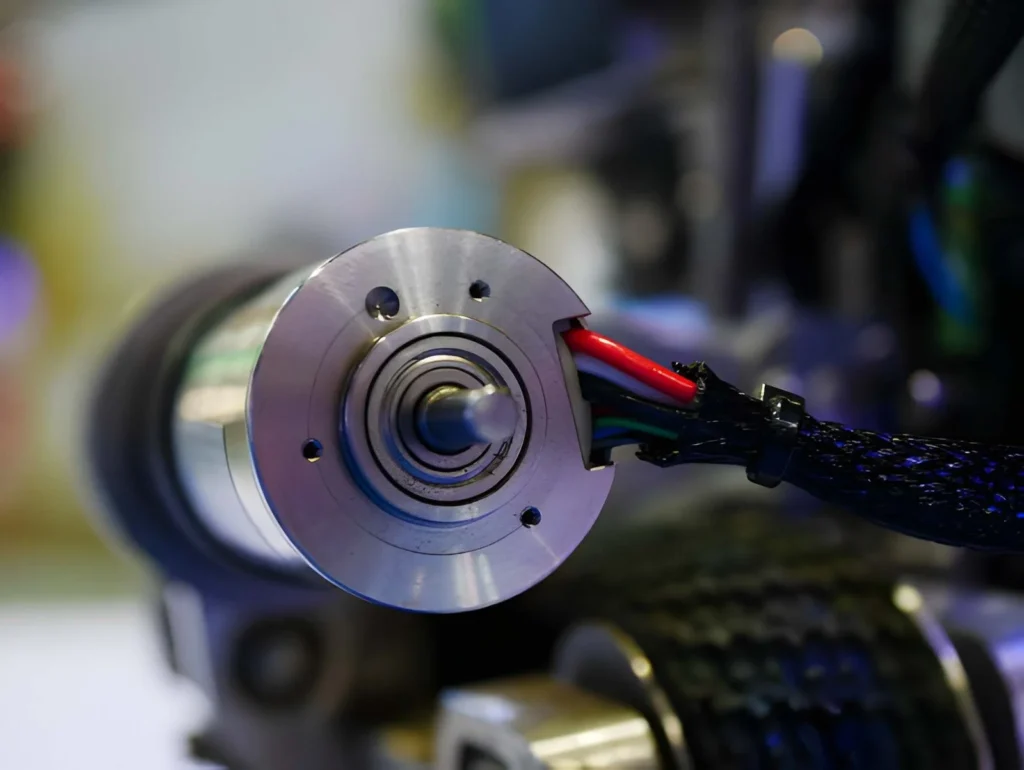
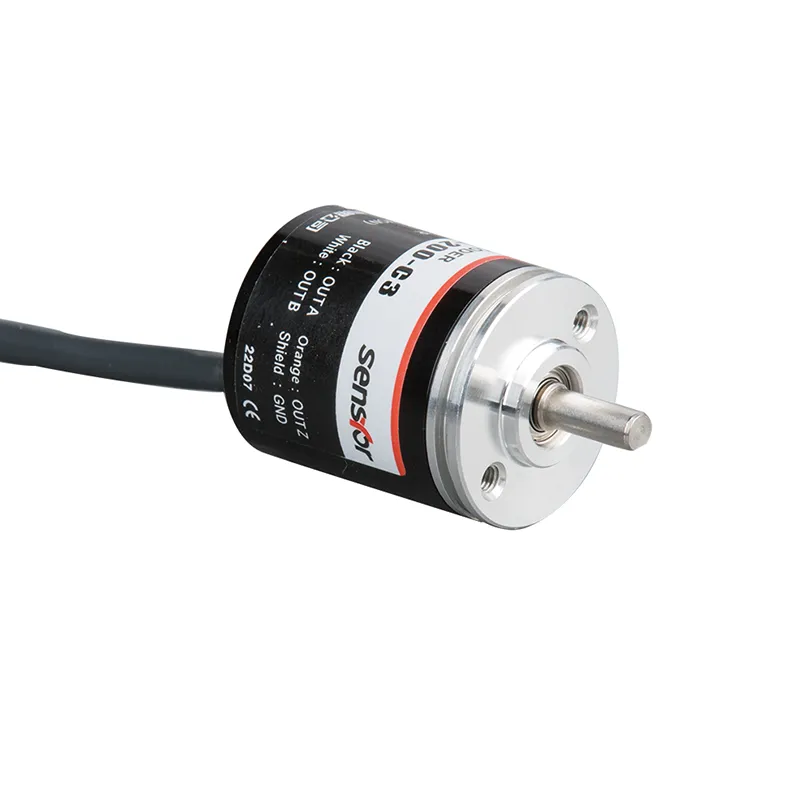
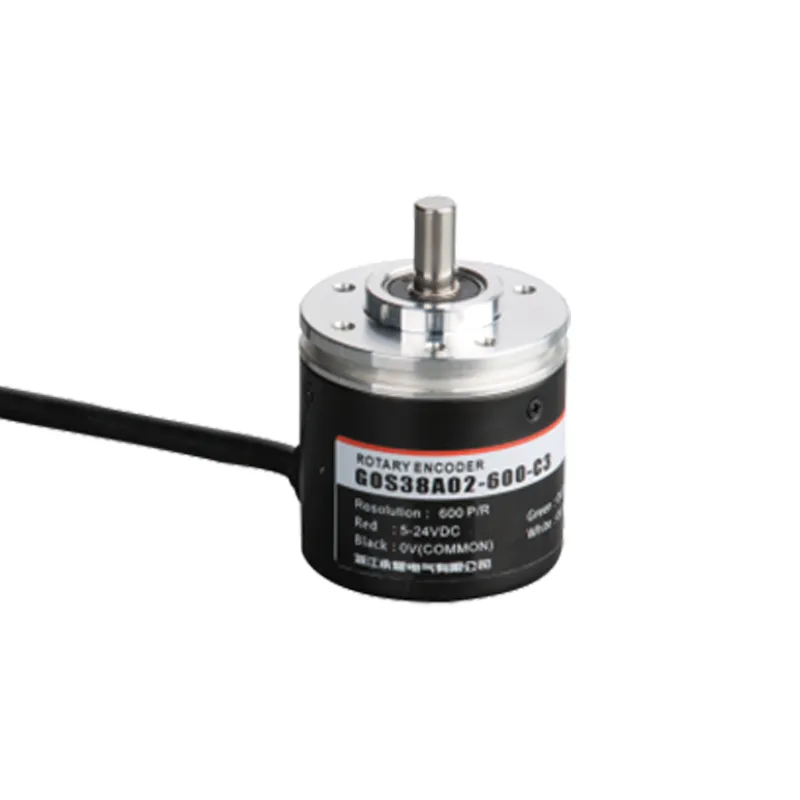
An absolute encoder is a sensor that outputs the exact position of a mechanical shaft. Unlike incremental encoders, absolute encoders assign a unique digital code to every shaft position. This means it can tell you the exact position at any moment without needing a reference point or re-zeroing.
Absolute encoders are mainly classified by their working principles:
Optical Absolute Encoders: Use a coded disc with optical patterns and photodetectors to determine position by detecting light interruptions. They offer high resolution and suit applications requiring high precision.
Magnetic Absolute Encoders: Detect magnetic field changes with magnets and Hall sensors. They are dustproof, vibration-resistant, and ideal for harsh industrial environments.
Inductive Absolute Encoders: Based on electromagnetic induction, they have strong anti-interference capabilities and are used in specialized industrial fields.
Additionally, absolute encoders come in single-turn and multi-turn types. Single-turn encoder measure position within one rotation, while multi-turn encoders track multiple rotations, suitable for applications needing long-range or multi-turn positioning.
Core Functions and Technical Advantages of Absolute Encoders
Absolute encoders are designed to provide highly accurate and reliable position information. Key features include:
Real-time absolute position feedback: No need for zeroing or recalibration; position remains accurate after power loss.
High resolution and precision: Can achieve micron-level or higher accuracy to meet complex industrial needs.
Strong anti-interference ability: Dustproof, waterproof, and vibration-resistant to adapt to harsh environments.
Multiple communication interfaces: Support SSI, CANopen, BiSS, Profibus, and other industrial standard interfaces for easy integration.
Wide range of applications: Used in automated production lines, robotics, medical devices, wind power, elevators, and more.
These advantages ensure absolute encoders perform excellently in scenarios requiring stable and continuous position monitoring.
Sensyor Absolute Encoder Product Advantages
As a professional absolute encoder manufacturer, Sensyor offers distinct advantages:
Advanced magnetoelectric measurement technology: Combines magnetic and electronic technology to ensure long-term stability and accuracy.
Compact design: Small size for easy installation and replacement, saving equipment space.
Extensive product line: Includes single-turn, multi-turn, and redundant safety models to meet diverse industrial needs.
Excellent mechanical and electromagnetic compatibility: Suitable for complex environments, ensuring stable operation.
Customizable solutions: Tailored designs based on customer requirements, with quick project response.
Comprehensive after-sales support: Professional technical team provides full technical guidance and service.
Sensyor aims to help customers improve equipment performance and production efficiency with high-quality absolute encoders.
Industry Applications and Case Examples of Absolute Encoders
Absolute encoders are widely used in the following industries:
Industry
Application Scenario
Benefits
Automated Production
Conveyors, packaging equipment
Precise position control, reducing errors and downtime
Robotics
Joint positioning, motion control
High-precision feedback ensures accurate and reliable movements
CNC Machines
Tool position feedback
Enables high-precision cutting and repeatable machining
Medical Devices
Surgical robots, diagnostic equipment
Precise control ensures medical safety
Wind Power
Wind turbine blade angle adjustment
Optimizes wind energy utilization, improving power generation efficiency
Elevators and Lifts
Cabin position detection
Ensures smooth stops and enhances safety
These examples demonstrate the critical role of absolute encoders in industrial automation and smart manufacturing.
FAQ
Q1: What is the difference between absolute encoders and incremental encoders?
Absolute encoders provide a unique digital code representing position and retain position data after power loss; incremental encoders output pulse signals and require re-zeroing after power loss.
Q2: How do absolute encoders maintain accurate positioning after power loss?
They use non-volatile memory technology to store the current position code, preserving data even when powered off.
Q3: Which is better, optical or magnetic absolute encoders?
Optical encoders offer higher precision and are suitable for clean environments; magnetic encoders have stronger anti-interference capabilities, ideal for harsh environments.
Q4: What is the difference between single-turn and multi-turn absolute encoders?
Single-turn encoders measure position within 0-360 degrees; multi-turn encoders track cumulative position over multiple rotations, suitable for long-range rotation monitoring.
Q5: What communication interfaces are common, and how to choose?
Common interfaces include SSI, CANopen, BiSS, etc. The choice depends on control system compatibility and communication distance requirements.
Q6: How does Sensyor handle custom absolute encoder requests?
Customers can contact us with application requirements such as shaft diameter, resolution, and interface type. We provide tailored design solutions accordingly.
Absolute Encoder Rotary: Precise Positioning You Can Trust Experience unmatched accuracy and reliability with our absolute rotary encoder solutions. Designed for industrial automation, robotics, and demanding applications, our encoders deliver true absolute positioning without the need for reference runs, ensuring every movement is tracked from the first rotation with pinpoint precision. Key Features & Benefits […]
Key Features & Benefits Sensyor absolute encoder rotary products deliver precise and reliable position sensing with these standout features: Feature Benefit Keywords Included True Absolute Positioning Instant position reading on power-up; available in single-turn or multiturn versions for extended range absolute rotary encoder, single-turn absolute encoder, multiturn absolute encoder High Resolution (up to 24+ bits) […]
We use cookies to enhance your browsing experience, serve personalised ads or content, and analyse our traffic. By clicking "Accept All", you consent to our use of cookies.