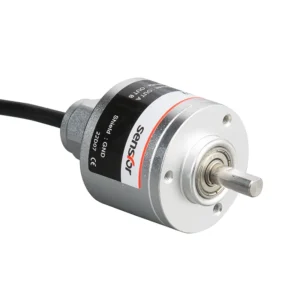
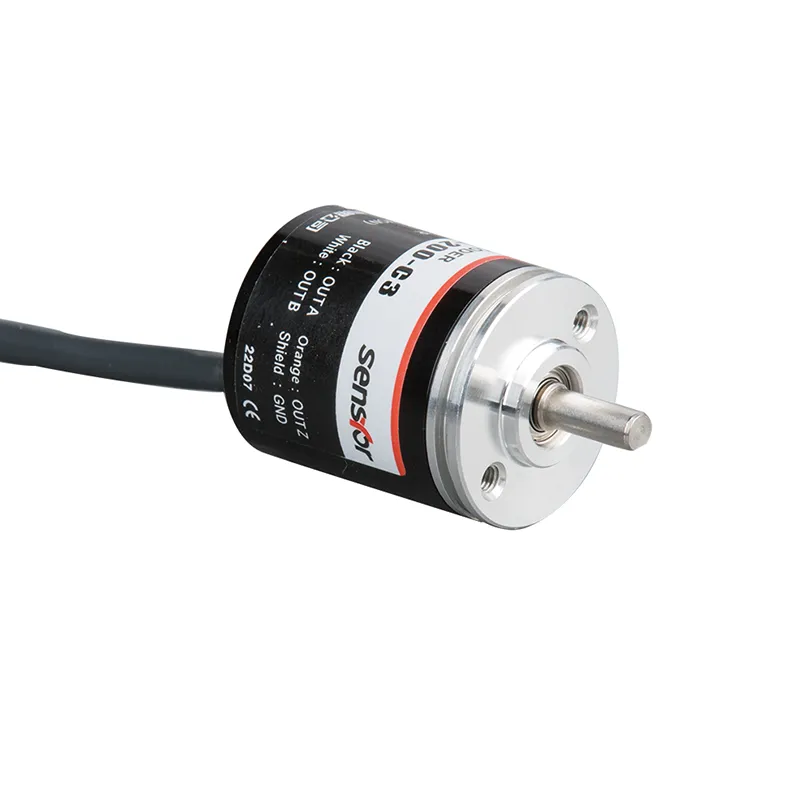
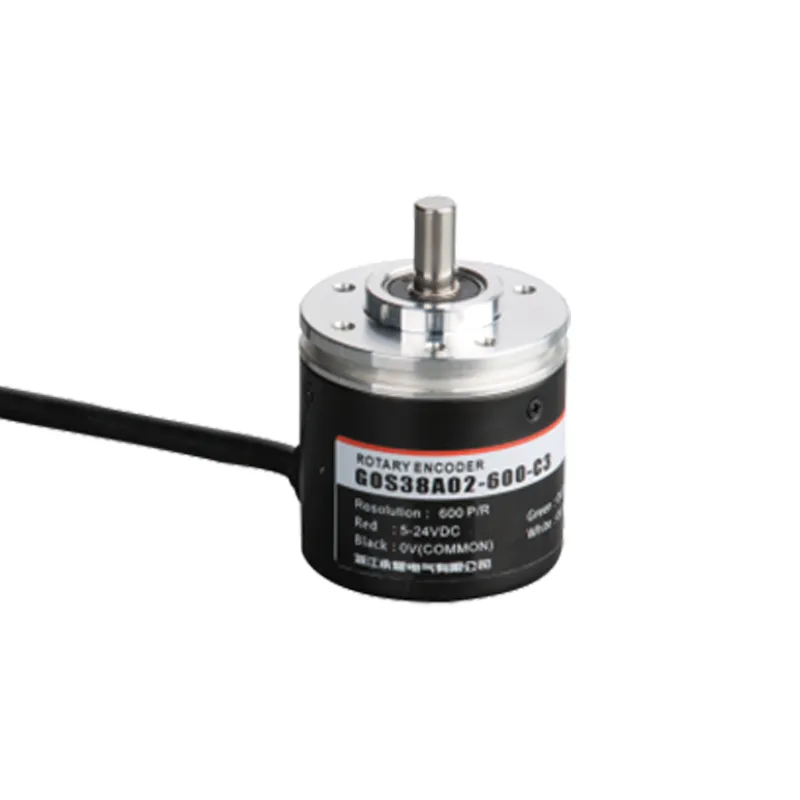
ATEX incremental encoders are precision devices designed to provide reliable position and speed feedback in explosive atmospheres. They work by generating a series of electrical pulses as the shaft rotates, allowing for accurate measurement of rotational movement.
How Incremental Encoders Work
Pulses per Revolution (PPR): The encoder outputs a fixed number of pulses per full shaft rotation, indicating movement increments.
Quadrature Signals (A/B/Z): Two main signals, A and B, output in phase quadrature for direction detection, while the Z signal provides a reference position once per revolution.
Output Types: Common outputs include HTL, TTL, Push-Pull, and Sin/Cos for various control system compatibilities.
Differences from Absolute Encoders
Unlike absolute encoders that return a unique position code for every shaft angle, incremental encoders provide relative position data based on pulse counting. In hazardous environments, incremental encoders offer simpler, cost-effective feedback suited for monitoring speed and relative position without the complexity of absolute positioning.
ATEX Certification Explained
ATEX certification ensures that encoders are safe to use in explosive atmospheres by following strict standards. Key aspects include:
Zone Classification
Description
Gas Zones: 0, 1, 2
Based on the frequency and duration of gas presence (0 = continuous, 1 = likely, 2 = occasional)
Dust Zones: 20, 21, 22
Similar scale for combustible dust environments
Protection Methods
Intrinsically Safe (Ex i): Limits electrical energy to prevent ignition.
Flameproof (Ex d): Encases the device to contain explosions.
Encapsulated (Ex m): Uses resin or sealing to isolate components.
Markings and Global Compliance
ATEX incremental encoders often carry markings such as:
Ex II 2G or 2D: Indicating gas (G) or dust (D) use in Zone 1 or 21.
IECEx and UL: Additional certifications for worldwide acceptance.
These markings confirm the encoder’s compliance with international safety standards, making them suitable for global industrial applications in hazardous areas.
By combining incremental encoder technology with ATEX certification, these devices ensure safe, reliable feedback in explosive atmospheres without compromising performance or compliance.
Why Choose ATEX-Certified Incremental Encoders?
Using non-certified encoders in explosive atmospheres is a serious risk. Encoders that aren’t ATEX certified can generate sparks or excess heat, creating possible ignition sources in hazardous zones. This can lead to fires or explosions in environments filled with flammable gases, vapors, or dust.
Key Advantages of ATEX Incremental Encoders
Benefit
Explanation
High Reliability
Stable, accurate real-time speed and position feedback to ensure safe, efficient operation.
Cost-Effective
Generally more affordable than absolute encoders while delivering precise incremental signals.
Superior Durability
Designed to withstand vibration, shock, corrosion, and extreme temperatures common in hazardous areas.
Choosing explosion-proof incremental encoders certified for ATEX zones means you’re investing in devices tailored to withstand harsh conditions and prevent accidents. Plus, this helps you meet legal safety requirements, reducing liability and downtime.
Key Features of High-Quality ATEX Incremental Encoders
When choosing ATEX incremental encoders, look for rugged designs built to withstand harsh, explosive environments. Here are the key features that set top models apart:
Feature
Description
Robust Construction
Stainless steel or aluminum housings with IP66/IP67 sealing ensure dust and water resistance in tough conditions.
Resolution Range
Wide options from low (1 PPR) to ultra-high (up to 50,000 pulses per revolution) for precise feedback.
Output Types
Includes HTL, TTL, Push-Pull, and Sin/Cos outputs to suit various control systems and signal requirements.
Shaft Options
Solid, hollow, or blind hollow shafts available, matching diverse mounting and coupling needs in hazardous areas.
Advanced Protections
Features such as no-bearing designs reduce wear points; short-circuit proof outputs increase reliability under power faults.
Temperature & Shock Resistance
Operates smoothly across a wide temperature range and endures vibration and shock common in industrial zones.
These features are essential for hazardous area encoders where safety and durability cannot be compromised. Advanced protection mechanisms help maintain signal integrity, while robust housings protect against environmental risks.
For more details on output types used in these encoders and how to identify key signals like A, B, and Z phases, check out our guide on the main output signals of incremental rotary encoders. This will give you a clearer picture of what to expect from your ATEX encoder options.
Applications of ATEX Incremental Encoders
ATEX incremental encoders are essential in many hazardous environments where safety and precision matter. Industries that handle explosive atmospheres rely on these robust devices for accurate position and speed feedback.
Oil & Gas: Used extensively on drilling rigs, pumps, and offshore platforms, these explosion-proof incremental encoders ensure reliable operation in harsh, volatile conditions.
Chemical and Petrochemical: Ideal for mixing, painting, and handling solvents, they provide safe and precise motion control in gas group IIC and dust zones.
Mining and Tunneling: Essential for monitoring conveyors, ventilation systems, and heavy machinery in dust and gas-prone tunnels.
Food and Grain Processing: Perfect for dust-explosive environments like flour and sugar mills, where strict ATEX compliance is mandatory.
Woodworking and Textiles: Used in sawmills and fiber processing, these hazardous area encoders help maintain safety without sacrificing performance.
Other Industries: Pharmaceuticals, agriculture (silage processing), and printing also benefit from ATEX-certified incremental encoders to meet strict safety standards while maintaining productivity.
Choosing the right ATEX incremental encoder starts with understanding the explosion risk in your environment. You’ll need to assess the zone classification—whether it’s Zone 0, 1, or 2 for gas, or 20, 21, or 22 for dust—as well as identify the specific gas or dust group involved. This ensures the encoder matches the hazardous area requirements and provides safe operation.
Next, consider the encoder’s technical specs like resolution—pulses per revolution (PPR)—that fit your application’s precision needs. Shaft size and type (solid, hollow, or blind hollow) should align with your mechanical setup. Don’t forget mounting options such as flange, servo, or clamping to secure the encoder properly.
Electrical interface matters too when integrating your ATEX-certified incremental encoder. Common outputs like HTL, TTL, or Push-Pull must be compatible with your control system, and cable requirements for hazardous zones (armoring, shielding) must be planned to maintain safety and signal integrity.
Customization options often make a big difference: special resolution ranges, connectors designed for explosion-proof environments, and extended temperature ratings enhance performance and durability in tough conditions. That’s where sensyor’s expertise in tailored encoder solutions shines—helping you get the perfect match for your unique hazardous application.
By carefully matching zone requirements, mechanical specs, electrical compatibility, and customization needs, you can ensure safe, reliable, and precise operation with your ATEX incremental encoder.
sensyor ATEX Incremental Encoder Solutions
sensyor offers a wide range of ATEX-certified incremental encoders designed specifically for hazardous areas. Whether you need high-precision optical or magnetic sensing technology, sensyor delivers robust, explosion-proof incremental encoders built to last in tough environments. We focus on heavy-duty hazardous encoders with full customization options tailored to your application needs.
Chemical plants requiring explosion-proof incremental encoders for mixers
Mining conveyors operating in dust-filled atmospheres
For more details on the technology behind these devices, explore our incremental optical encoders and find out what separates our solutions in hazardous zones.
Partnering with sensyor means choosing dependable, certified, and tailored ATEX incremental encoders that meet your exact hazardous area requirements.
Installation, Maintenance, and Best Practices for ATEX Incremental Encoders
Installing ATEX incremental encoders safely in hazardous zones is crucial to ensure both performance and compliance. Always use certified cable glands and explosion-proof barriers where required, especially in Zones 0/1/2 for gas or 20/21/22 for dust environments. Proper sealing and grounding prevent ignition risks. Follow manufacturer guidelines strictly and ensure the encoder is mounted securely to avoid mechanical stress that could compromise its hazardous area certification.
When wiring and integrating quadrature output encoders in ATEX settings, pay close attention to signal integrity. Use shielded cables and keep wiring runs separate from high-power lines to reduce electrical noise. Correctly connect A, B, and Z channels for accurate pulse counting and direction detection. If your installation uses intrinsic safety barriers, ensure compatibility with your encoder’s electrical ratings.
Routine maintenance is key for long-term reliability in tough environments. Inspect housings, seals, and cables regularly for wear, corrosion, or damage. Clean encoders carefully without aggressive solvents that could degrade protection. Check output signals with diagnostic tools to catch early signs of faults before they lead to failure.
Common troubleshooting tips in explosive atmospheres include:
Confirming ATEX compliance certificates are intact after any repair
Checking signal continuity and output waveform quality
Verifying grounding and bonding to avoid static discharge
Monitoring temperature and vibration levels to spot abnormal conditions early
By following these best practices, you ensure your explosion-proof incremental encoders operate safely and reliably, supporting critical motion feedback in hazardous areas.
In modern automation and motion control, precision is everything. Whether you’re designing a robotic arm, upgrading a conveyor system, or developing industrial machinery, one question always surfaces: Should you choose an absolute encoder or an incremental encoder? At first glance, both devices seem to perform the same task — measuring position and speed. But when you […]
Choosing the right encoder for an industrial automation system can feel like navigating a maze — so many options, each promising precision and efficiency. Among these, incremental encoders often stand out thanks to their reliability and cost-effectiveness. Yet, when maintenance and long-term upkeep enter the picture, the question becomes: which encoder is actually easier to maintain — incremental […]
In today’s fast-paced industrial and automation landscape, incremental encoder are everywhere—hidden in robotics, conveyors, packaging lines, and even your favorite coffee machine. But, here’s something people often overlook: the real-world environment where these nifty gadgets operate. Does it matter? Absolutely. Sure, incremental encoders are versatile and accurate, but environmental factors can make or break their performance and […]
We use cookies to enhance your browsing experience, serve personalised ads or content, and analyse our traffic. By clicking "Accept All", you consent to our use of cookies.