If you’ve ever wondered whether incremental encoders can measure linear displacement, you’re not alone. Engineers, system integrators, and industrial buyers often face this exact question when designing motion control systems or sourcing encoder solutions for automation projects.
Let’s break this concept down in a clear and practical way—no jargon, no fluff, just straightforward insight into how incremental encoders work, where they fit in, and whether they’re the right choice for your linear motion applications.
Understanding Incremental Encoders
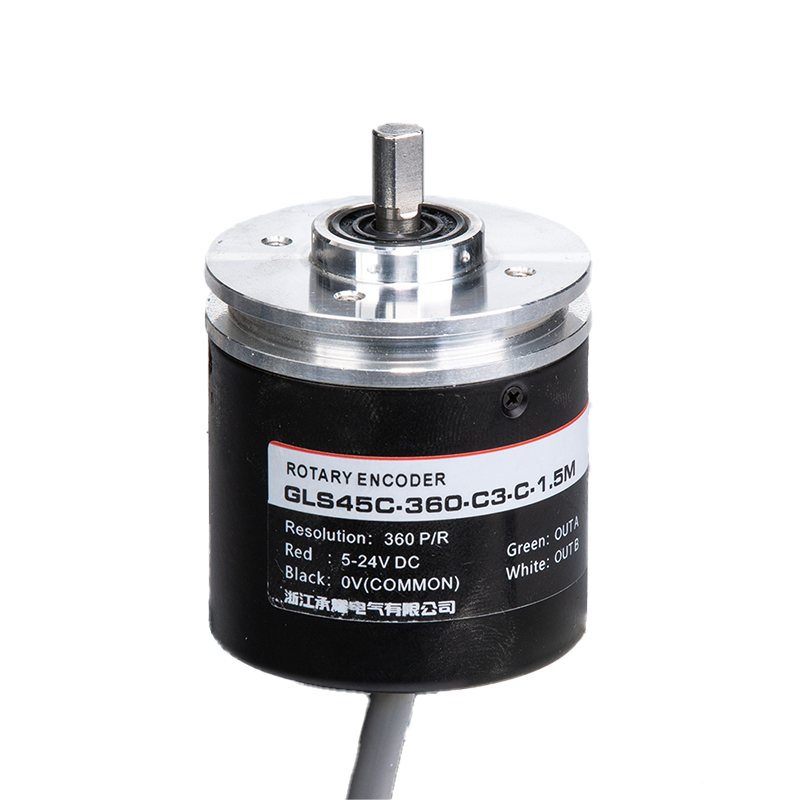
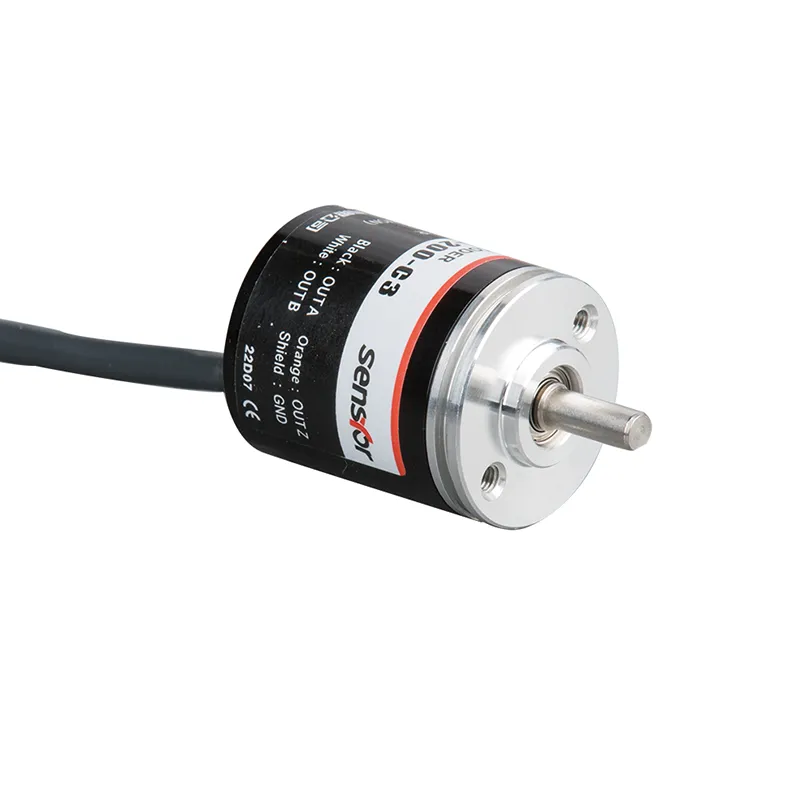
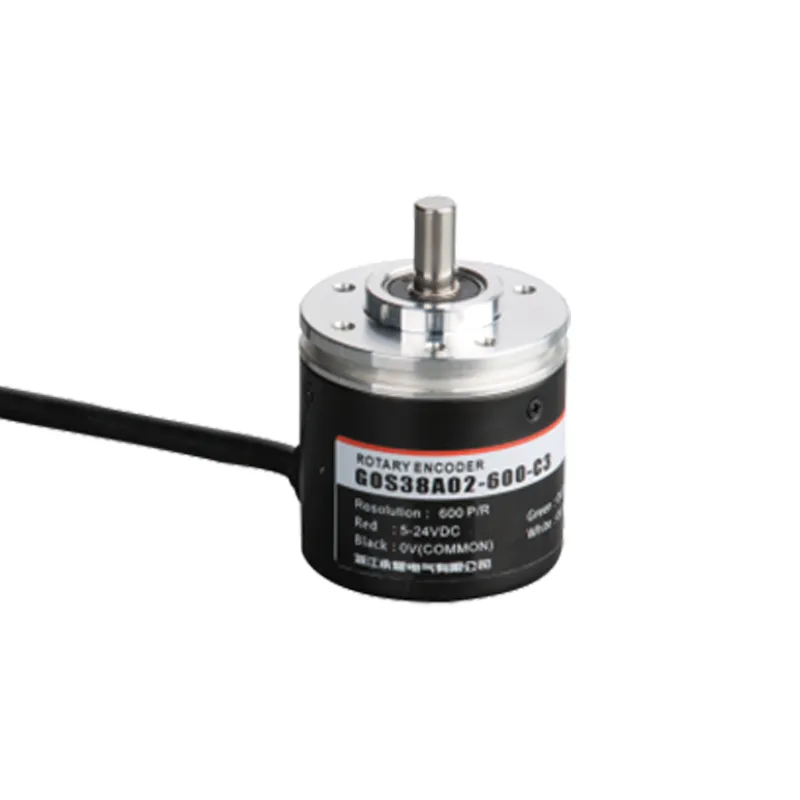
Incremental encoders are motion feedback devices that generate a sequence of electrical pulses as an axis or shaft rotates. Each pulse represents a tiny increment of movement. The number of pulses per revolution (PPR) defines the encoder’s resolution—a crucial parameter for any precision motion system.
When connected to a motion controller or PLC, these pulses are counted to determine angular position, rotational speed, or direction. Unlike absolute encoders, incremental types do not retain position information when powered off, but they are simpler, cost-effective, and widely used.
Feature
Incremental Encoder
Absolute Encoder
Position retention
No
Yes
Output signal
Pulses (A, B, Z channels)
Unique binary code
Typical use cases
Speed & direction control, displacement monitoring
Servo control, positioning
Cost
Lower
Higher
Signal type
Quadrature (digital)
Serial or parallel
So, can incremental encoders measure linear displacement if they’re designed for rotary motion? The short answer: yes, with the right setup.
How Incremental Encoders Measure Linear Displacement
Incremental encoders inherently measure rotation. However, that rotational motion can be converted into linear displacement when coupled with a mechanical transmission system—like a lead screw, rack and pinion, or measuring wheel.
Here’s how it works:
The encoder shaft attaches to a rotating element (wheel or screw).
Each rotation corresponds to a specific linear travel distance.
The system multiplies the encoder pulses by the linear pitch of that element.
The output gives a direct reading of linear displacement.
For example, if a 500 PPR encoder is mounted on a measuring wheel with a 100 mm circumference, one complete revolution equals 100 mm of travel. Therefore, each pulse equals 0.2 mm of linear movement.
That’s how a rotary incremental encoder can provide precise linear measurement in conveyor systems, packaging lines, or CNC feed drives.
Linear vs. Rotary Incremental Encoders
You’ll find two main types of incremental encoders in linear displacement applications:
Rotary Encoders with Mechanical Conversion: These are standard rotary encoders connected via mechanical components, converting rotation into linear displacement.
Linear Incremental Encoders: These measure displacement directly using a scale and read head. The scale encodes position increments while the read head detects motion across it.
Encoder Type
Measurement Principle
Common Applications
Accuracy
Rotary Incremental
Counts rotation pulses
Motors, conveyors, roller drives
±0.05%
Linear Incremental
Detects linear scale movement
CNC machines, precision stages
±0.003%
Industrial buyers often choose rotary incremental encoders for general motion monitoring and linear encoders for high-accuracy metrology or CNC feedback.
Incremental encoders Key Specifications to Consider
When selecting an incremental encoder for linear measurement, consider these core specifications:
Output format: TTL, HTL, or Line Driver signals ensure compatibility with your PLC or controller.
Shaft or bore type: Depends on whether you’re using direct or indirect coupling.
Environmental protection: IP-rated housings are essential for harsh industrial conditions.
Temperature and vibration tolerance: Particularly important in factory automation and robotics.
All these factors influence accuracy and reliability—both critical for industrial B2B applications.
Applications Across Industries Incremental encoders
Incremental encoders are key components in countless industrial automation systems, from automotive assembly lines to semiconductor production.
They enable speed control, feedback monitoring, and precision movement in:
Linear actuators and electric cylinders
Packaging and labeling equipment
Material handling conveyors
3D printers and CNC machines
Industrial robots
Textile and printing machinery
Engineers value them for their robust performance, easy integration, and cost-efficiency compared to absolute feedback sensors.
If your application requires reliable motion detection without the high price tag of complex absolute encoders, incremental encoders make an excellent fit. Contact our technical team today to discuss suitable models for your linear motion system—we’ll help you select the right encoder based on your system’s pitch, accuracy, and resolution needs.
Advantages of Using Incremental Encoders for Linear Motion
There are several compelling reasons why many engineers prefer incremental encoders for linear displacement measurement:
Simplicity: Fewer signal channels and easier wiring.
Cost-effectiveness: Perfect for large-scale automation lines where cost per sensor matters.
Real-time responsiveness: Fast signal response suitable for high-speed production.
Ease of maintenance: No complex calibration or programming required.
System versatility: Can pair with different mechanical translators for adjustable measurement ranges.
In short, they deliver great value for performance-sensitive industries like machine tools, packaging, and material transport.
Common Challenges and How to Solve Them
Let’s be real—no encoder setup is perfect. You might face some subtle but solvable issues.
1. Mechanical slippage or backlash: If your measuring wheel or coupling isn’t secure, you’ll experience measurement drift. A simple fix: use anti-slip encoder wheels or preloaded couplings to eliminate backlash.
2. Electrical noise: In high-power environments, signal integrity can degrade. Use shielded cables, line driver outputs, and differential receivers (RS-422) to maintain signal reliability.
3. Reset on power loss: Incremental encoders lose position when powered off. Use a homing sequence or reference mark (Z-channel) to re-establish zero upon startup.
Integration Tips for B2B Applications
For buyers and OEM engineers planning integration, consider these steps:
Define linear travel distance and expected resolution.
Select appropriate gearbox or conversion ratio for rotary encoders.
Confirm interface compatibility with motion controllers.
Order samples for testing before batch deployment.
Many B2B partners offer ODM/OEM incremental encoder tailored to unique motion setups. If you’re sourcing encoders for high-volume or integrated automation systems, early collaboration with the manufacturer ensures better performance alignment and cost control.
So, can incremental encoders measure linear displacement? Absolutely—either through mechanical conversion or by using linear versions designed for direct measurement. They remain a trusted and cost-efficient solution for countless industries needing reliable motion feedback.
For engineers, integrators, and procurement teams, choosing the right encoder isn’t just about specs—it’s about system compatibility, long-term performance, and support. Whether you’re building a new automation platform or upgrading an existing one, incremental encoders provide the flexibility and precision your motion control systems demand.
Looking for bulk or custom encoder solutions? Contact our sales team for a tailored quote or sample request—we’ll guide you toward the ideal incremental encoder for your specific linear measurement needs.
FAQ
Can incremental encoder directly measure linear displacement?
Yes—but you’ll need mechanical conversion (wheel, screw, or belt). For direct linear measurement, use a linear incremental encoder.
What resolution should I choose for linear measurement?
That depends on your required precision. For most conveyor or motion-tracking tasks, 250–2000 PPR works well. For fine positioning, consider 5000–10,000 PPR or higher.
How do incremental encoder differ from linear scales?
Incremental encoders generate digital pulses per movement step, while linear scales measure position directly over a fixed path with finer precision.
Are incremental encoders suitable for outdoor or harsh environments?
Yes, provided they have sealed housings (IP65+), reinforced bearings, and corrosion-resistant materials.
How can I ensure consistent accuracy over time?
Use high-quality couplings, perform regular calibration, and maintain stable mechanical alignment.
As a professional incremental encoder supplier, Sensyor is committed to providing high-quality, high-performance encoder solutions for industrial automation customers. This article will provide an in-depth introduction to the classification, functions, product advantages, and frequently asked questions about incremental encoders, helping you better understand and select the right incremental encoder to improve your equipment’s precise control […]
Modern automation systems depend heavily on precise motion feedback, and incremental encoder are one of the most reliable solutions to achieve it. These compact, cost-effective sensors play a crucial role in measuring speed, direction, and position across countless industrial and automation fields. But when sourcing or integrating them, one detail often raises questions among engineers and technical […]
When you’re selecting an incremental encoder, the goal is to match the device to your application’s specific demands. Do you need high-resolution feedback for a precision CNC machine, or rugged performance for a harsh industrial environment? Is low latency critical for your servo loop, or is robustness and long-term availability more important? These questions set […]
We use cookies to enhance your browsing experience, serve personalised ads or content, and analyse our traffic. By clicking "Accept All", you consent to our use of cookies.