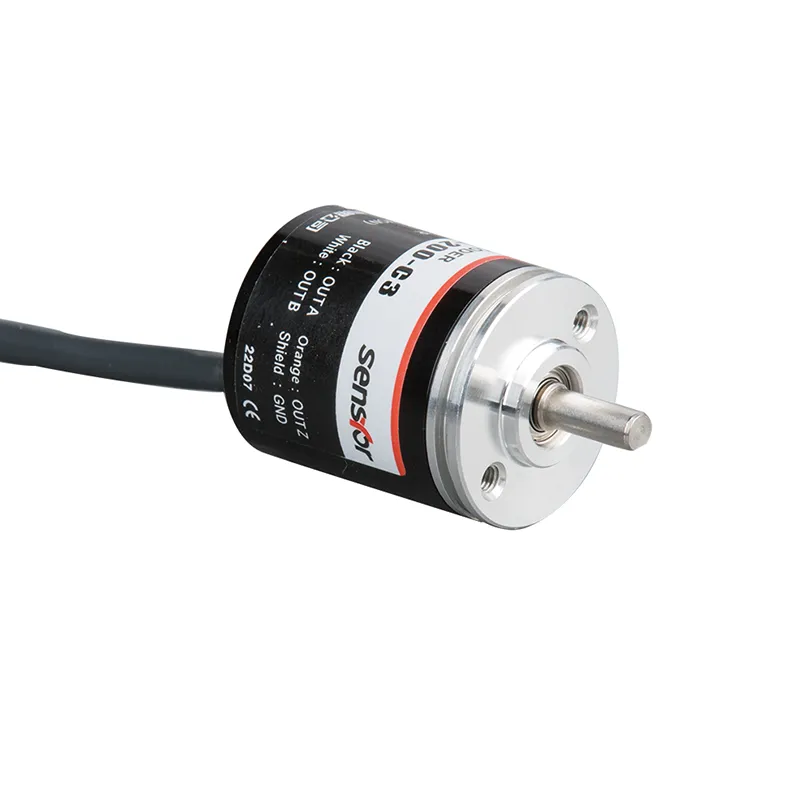
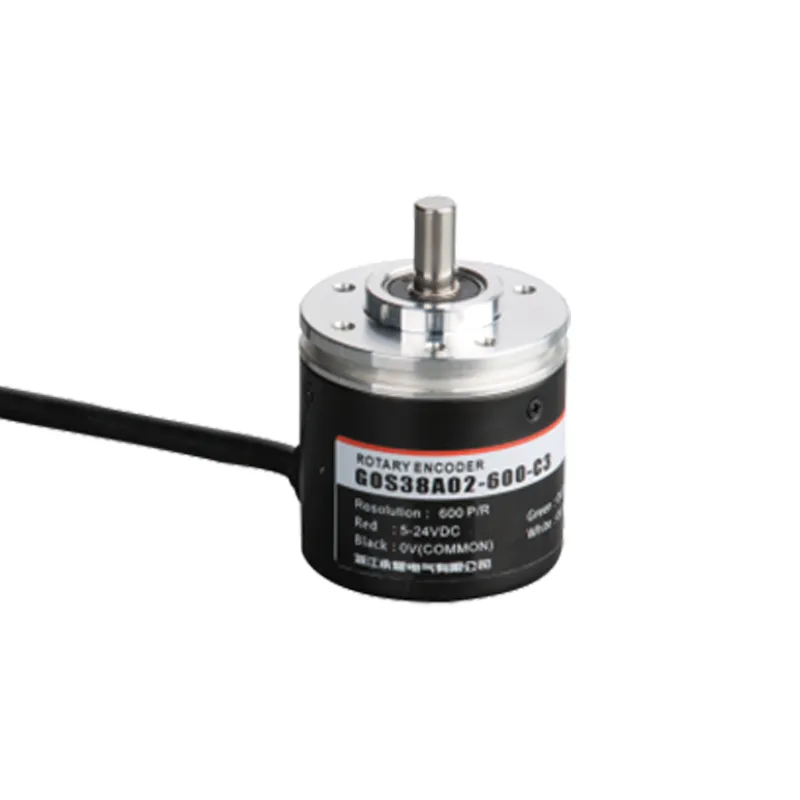
Incremental Encoder
Quadrature vs Incremental Encoder Working Principles and Selection Guide
Discover the key differences between quadrature and incremental encoders with expert insights on operation, resolution, and best selection tips.
Read More
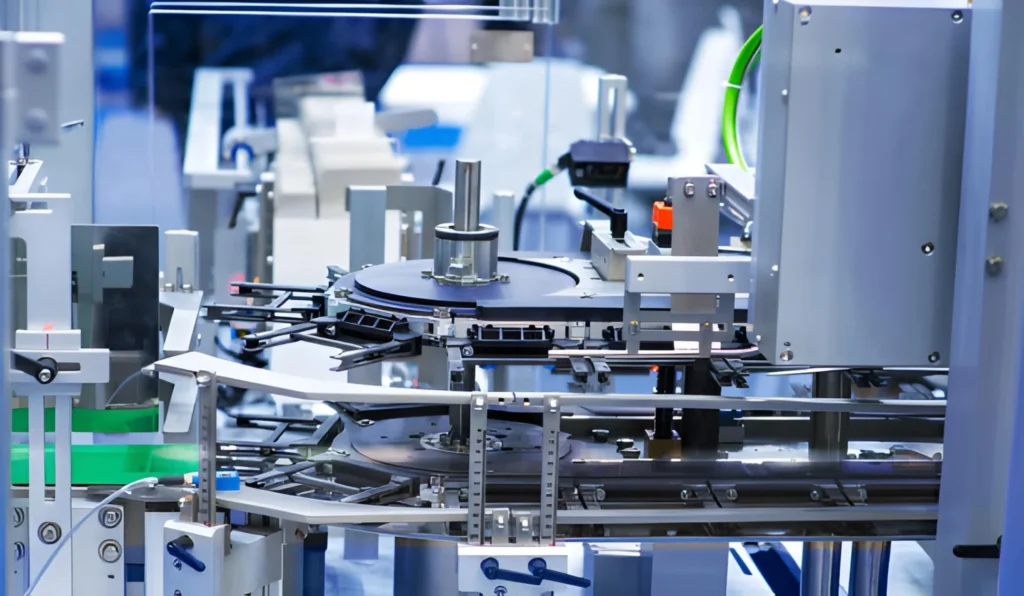
If your application demands precision motion control in a compact form, understanding how a high resolution incremental encoder delivers accurate feedback is essential. Whether you’re tackling CNC machine automation, robotics design, or medical device integration, choosing the right encoder means balancing pulse per revolution (PPR), electrical interface, and mechanical constraints. In this post, you’ll uncover how cutting-edge signal interpolation, compact designs like the φ25mm incremental encoder, and robust output options translate into reliable, high-stability positioning. Ready to elevate your system’s accuracy? Let’s dive into what makes these encoders tick and how to select the perfect fit.
In today’s industrial automation landscape, precision and miniaturization are no longer optional—they are essential. As devices shrink and systems demand tighter control, high resolution incremental encoders have become key components in achieving accurate motion feedback. This shift towards compact, high-precision sensors supports advanced robotics, semiconductor manufacturing, and medical devices where every micron counts.
High resolution in incremental encoders moves beyond the traditional pulse per revolution (PPR) metric. While standard rotary encoders might offer a few hundred PPR, high-resolution models deliver thousands, enabling more detailed angular position sensing. This increase in resolution directly enhances the accuracy and repeatability of position feedback, critical for precise motion control applications.
Understanding the relationship between resolution, accuracy, and repeatability helps engineers select the right optical rotary encoder or magnetic encoder. Higher resolution improves the granularity of movement detection, resulting in smoother, more consistent system performance—essential for complex CNC machine feedback, precision motion control, and other industrial automation sensors where reliability can’t be compromised.
When it comes to achieving high resolution in incremental encoders, the sensing technology plays a key role. Optical rotary encoders are the go-to choice for precision motion control because they offer much finer resolution than magnetic types. Optical sensors use a patterned disk and a light detector to count pulses with remarkable accuracy, whereas magnetic encoders rely on magnetic fields, which tend to be less precise in high-resolution settings.
| Feature | Optical Encoder | Magnetic Encoder |
|---|---|---|
| Resolution | Very high (up to 10,000+ PPR) | Moderate |
| Susceptibility | Sensitive to dust but well sealed options exist | Less sensitive to contaminants |
| Signal Quality | Clear, sharp pulses (ideal for interpolation) | Weaker signal, less sharp |
For example, an encoder with 2,500 PPR can produce 10,000 CPR with quadrature decoding, effectively quadrupling its resolution.
To push beyond physical limitations of disk patterns, many high-resolution incremental encoders use electronic signal interpolation. This technique subdivides the sine and cosine signals generated by the optical sensor, multiplying pulse counts without enlarging the physical disk size. As a result, resolutions up to 10,000+ PPR become feasible in compact housings, essential for applications demanding extreme precision like CNC machine feedback and industrial automation sensors.
For a deeper understanding, check out our comparison of absolute encoder vs incremental encoder and detailed specs on the GOS63 rotary encoder, which also employs advanced optical sensing and interpolation methods.
By combining optical technology with quadrature outputs and signal interpolation, high resolution incremental encoders deliver the angular position sensor accuracy needed for today’s precise motion control feedback systems.
When choosing a high resolution incremental encoder, several factors come into play to ensure optimal performance in demanding applications like robotics and medical devices.
A small footprint is often critical. For example, a φ25mm housing diameter is ideal for space-limited setups, such as robotic arms or precision medical equipment, where every millimeter counts. The choice between a solid shaft and a hollow shaft encoder also impacts integration, with hollow shafts simplifying installation on rotating shafts without extra couplings.
Look closely at the encoder’s output circuits. Line driver output circuits are preferred for high-resolution encoders because they offer excellent noise immunity, which is essential when signals must travel long distances in industrial automation settings. On the other hand, open collector or push-pull outputs can be suitable for shorter runs or less electrically noisy environments.
Voltage compatibility is another key point. Many high resolution incremental encoders operate at 5V DC, but some models accept a broader range like 5–30V DC, providing flexibility to fit into various control systems.
Industrial environments are tough — harsh dust, moisture, and temperature swings are common. Choosing an encoder with an IP rating, such as IP65 or higher, ensures reliable operation by protecting internal components from dust and water ingress. This durability supports continuous precision in challenging settings.
By balancing these mechanical, electrical, and environmental factors, you pick a high resolution incremental encoder that matches the unique demands of precision motion control. For examples of compact, rugged encoders designed with these criteria in mind, check out models like the Sensyor GOS25C series. For a deeper look at the differences between incremental encoder types and their interfaces, the detailed guide on incremental vs absolute encoders is a useful resource.
The Sensyor GOS25C rotary encoder is a high-resolution incremental encoder designed for precision motion control in compact spaces. Its φ25mm housing makes it a perfect fit for applications where size matters without sacrificing performance.
| Feature | Details |
|---|---|
| Housing Diameter | φ25mm (Compact and space-saving) |
| Resolution | High resolution with stable A/B/Z phase signals |
| Output Signal | Quadrature output with line driver option |
| Voltage Range | 5 V to 30 V DC |
| Environmental Protection | Suitable for standard industrial environments |
Explore the GOS25C as a reliable and precise angular position sensor in applications demanding both compactness and high accuracy. For more about Sensyor’s range of compact rotary encoders, see their lineup including the GOS30C Rotary Encoder and other industrial automation sensors designed for precision.
When it comes to high resolution incremental encoders, off-the-shelf solutions often fall short of meeting all application needs. Variations in cable lengths, connector types, and shaft dimensions can make a big difference in installation and performance. Customization ensures these critical details are right for your setup, avoiding costly reworks or compatibility issues.
At Sensyor, we understand that every system has unique demands. Working directly with a rotary encoder manufacturer means you can tailor product specs precisely—whether it’s adjusting shaft size, choosing between hollow shaft or solid shaft options, or configuring the electrical interface to match your existing equipment. This hands-on collaboration is especially valuable for integrating encoders into legacy systems or specialized OEM designs where standard models just don’t fit.
For a deeper understanding of how customized incremental encoders can improve your solution, explore Sensyor’s guide on incremental encoders customization. This resource highlights how tailored encoders deliver not just better fit but enhanced performance in precision motion control applications.
Installing a high resolution incremental encoder correctly is key to maintaining accurate motion control feedback. Here are some best practices to ensure signal integrity:
Shielding is essential to protect the delicate quadrature output and high-frequency pulse signals from electrical noise. This includes:
Following these installation and noise mitigation strategies will help maintain the precision and repeatability expected from high resolution optical rotary encoders, especially in demanding motion control feedback applications such as CNC machines and robotic arms. For more on precise timing and reliability in encoders, you might find our overview of the CY7 High Frequency Counter useful.
Discover the key differences between quadrature and incremental encoders with expert insights on operation, resolution, and best selection tips.
Read More
Explore high-precision incremental optical encoders with advanced quadrature signals resolution durability ideal for industrial motion control applications.
Read More
When you’re sourcing precision feedback devices for motion control systems or automation projects, one of the first questions that comes up is simple but crucial: Should I choose an absolute or incremental rotary encoder? If you’re an engineer, a purchasing manager, or anyone involved in industrial automation, understanding this difference isn’t just a matter of preference […]
Read More