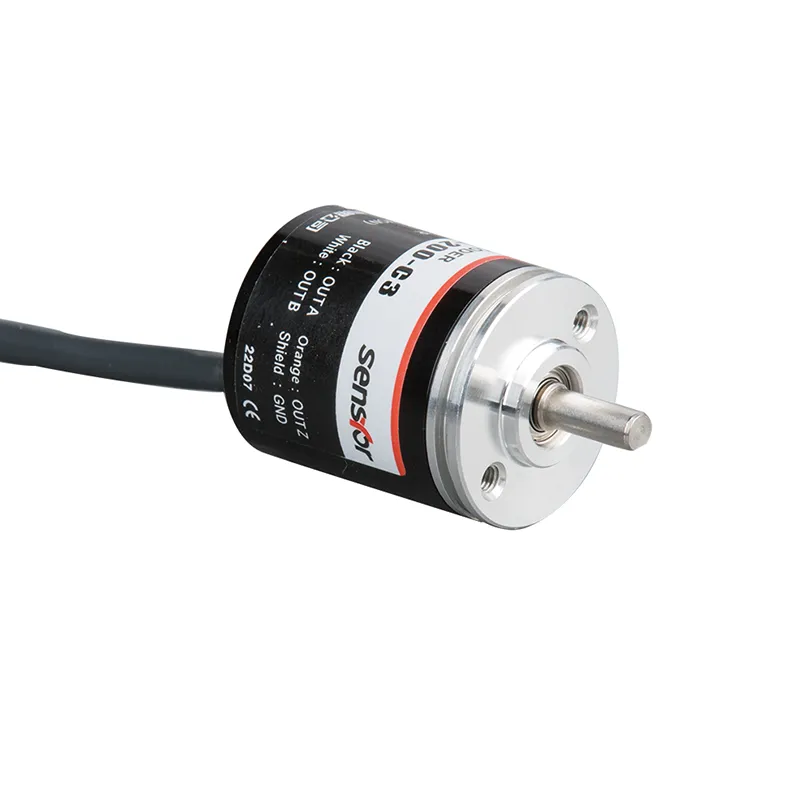
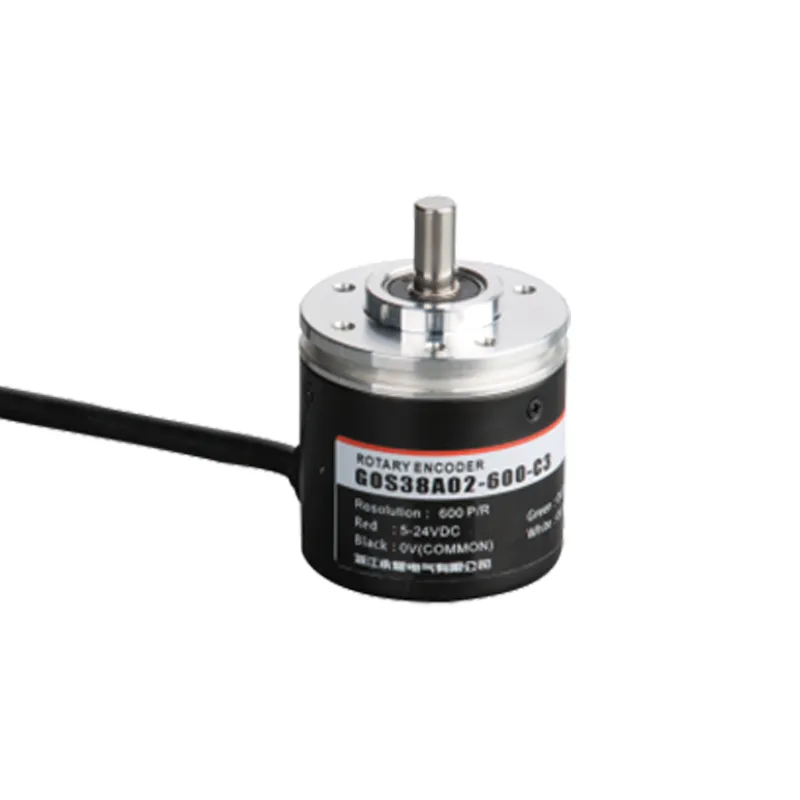
If you’re diving into precision motion control or automation projects, understanding the difference between an incremental encoder vs absolute encoder is crucial. Both play key roles in position feedback, but choosing the right one can impact everything from system accuracy to startup time and overall reliability. Whether you’re working on CNC machines, robotics, or industrial drives, knowing how these encoders handle position data—especially during power loss—is essential for optimum performance. In this guide, you’ll get a clear, no-nonsense comparison of incremental and absolute encoders, helping you pick the perfect fit for your application with confidence. Let’s get started!
What Is an Incremental Encoder?
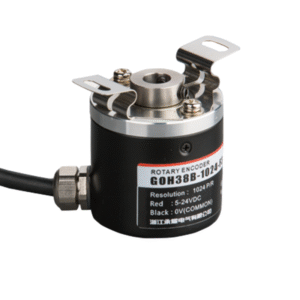
If you’re wondering how machines track motion precisely, incremental encoders are a popular choice. An incremental rotary encoder works by generating pulses that represent relative movement rather than absolute position. Think of it as a sensor that tells you how much something has moved, not exactly where it is.
How Does It Work?
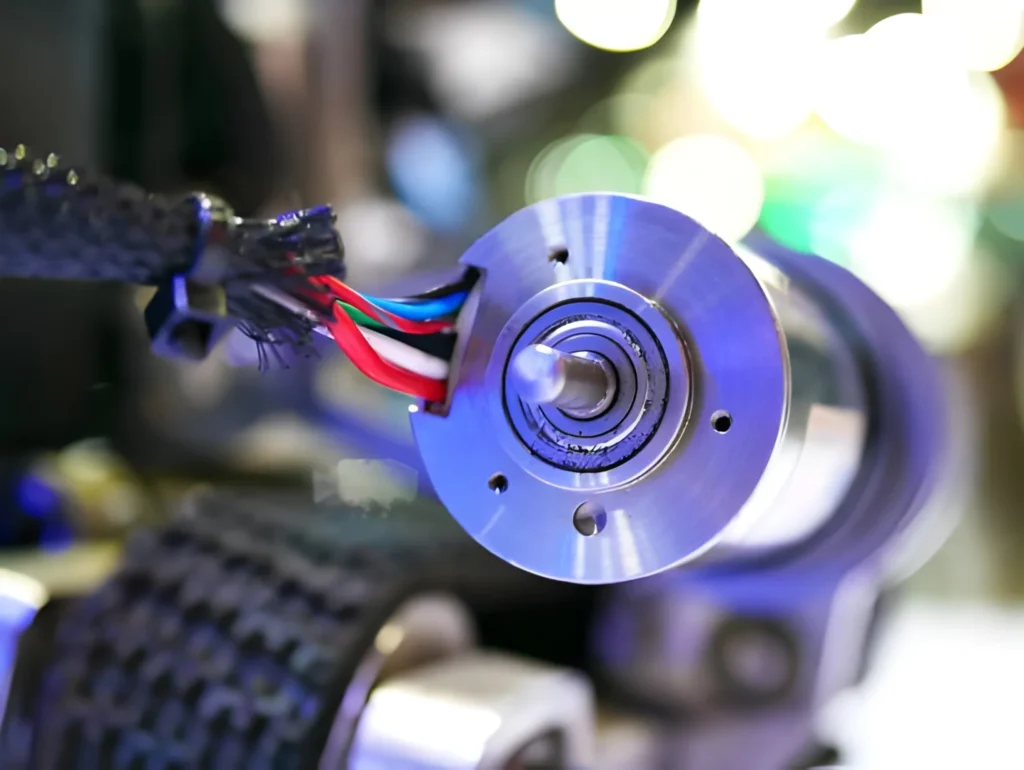
At the heart of an incremental encoder is a rotating disk with evenly spaced markings. As it spins, optical or magnetic sensors detect these markings, producing electrical pulses. These pulses come in the form of quadrature signals via two main channels, typically labeled A and B. The signals are offset in phase to help determine both speed and direction of rotation. There’s also usually a third channel, Z (index), which offers one pulse per revolution to establish a reference point.
Key Components
Disk: Marked with transparent and opaque segments or magnets, depending on the technology.
Channels A & B: Provide quadrature signals for motion tracking.
Channel Z (Index): Delivers a single pulse per rotation to reset or calibrate the position counter.
Output Types and Formats
Incremental encoders output pulses that can be counted to measure relative position or used to calculate speed and direction. These pulses come in various electrical formats:
TTL (Transistor-Transistor Logic): Digital square waves suitable for short distances and standard industrial settings.
HTL (High Threshold Logic): Higher voltage output, better noise immunity for harsh environments.
Analog sine/cosine signals: Used mainly in advanced motion systems requiring interpolation for very precise measurements.
Common Resolutions
Resolution defines how many pulses the encoder generates per revolution. Incremental encoders come with a wide range of options, typically from a few hundred to several thousand pulses per revolution, letting you select the right balance of precision and speed for your application.
In short, incremental encoders are straightforward, reliable sensors that deliver pulse-based feedback ideal for monitoring speed, direction, and relative position in various industrial and automation settings.
What Is an Absolute Encoder?
An absolute encoder provides precise position feedback by generating a unique digital code for every position along its rotation or linear path, unlike incremental encoders that track only relative movement. This means it can immediately tell the exact position without needing a home reference after power loss.
Absolute encoders come in two main types: single-turn and multi-turn. A single-turn encoder measures position within one full rotation (360 degrees), while a multi-turn encoder tracks multiple rotations, making it ideal for applications requiring longer-range position tracking.
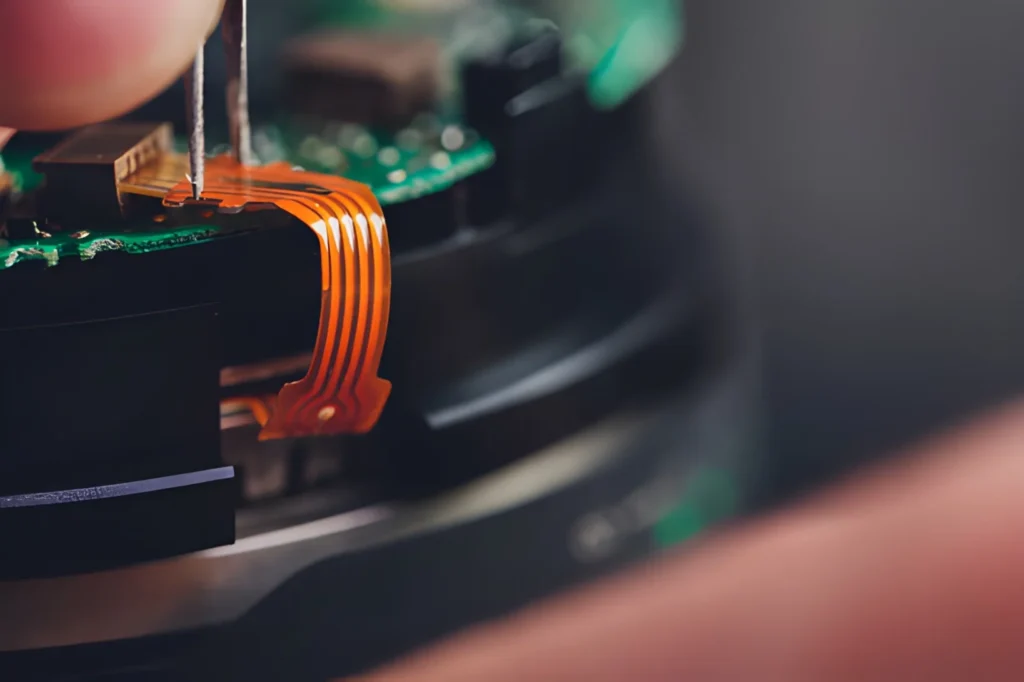
The core components include a coded disk or track with patterns encoded in binary or Gray code. These coded signals allow the encoder to output a distinct position value for each step. The output can be delivered via several communication formats such as parallel interfaces, or modern serial protocols like SSI (Synchronous Serial Interface), BISS, and various fieldbus systems, enabling easy integration with industrial controllers.
To explore more detailed options and signal types, check out our comprehensive guide on absolute encoders.
Head-to-Head Comparison: Incremental Encoder vs Absolute Encoder
When choosing between incremental and absolute encoders, understanding their key differences in position feedback, power loss behavior, resolution, wiring, and noise immunity is crucial.
Feature
Incremental Encoder
Absolute Encoder
Position Feedback
Relative position; counts pulses from zero
Absolute position; unique code per position
Power Loss Behavior
Requires homing or reference reset on restart
Retains exact position without homing
Resolution & Accuracy
High resolution but can lose count with missed pulses
High accuracy with consistent absolute value
Complexity & Wiring
Simpler wiring with A, B, and Z channels
More complex wiring; supports parallel or serial protocols like SSI or BISS
Noise Immunity
Susceptible to pulse loss and noise errors
Better noise immunity; less error accumulation
Error Accumulation
Errors accumulate if pulses are missed or pulses are distorted
No error accumulation; position is always known
Key Takeaways
Incremental encoders offer relative position feedback but need a homing sequence after power loss, which can complicate startup procedures.
Absolute encoders provide instant position data even after power cycles, making them ideal for safety-critical or complex systems.
Incremental types are typically simpler and cheaper, with straightforward quadrature outputs for speed and direction.
Absolute encoders, especially multi-turn models, handle complex feedback needs better but at the cost of increased wiring and system complexity.
Noise sensitivity in incremental encoders can cause errors during motion, while absolute encoders maintain stable position data.
For projects needing precise motion control and reliable position readout after power interruptions, absolute encoders are the safer bet. If cost and simplicity matter more, incremental encoders often fit the bill.
Explore our high-performance incremental rotary encoders and absolute encoders designed for robust industrial applications, including options compatible with advanced protocols and tough environments. For specialized needs, check out sensyor’s coupling series for seamless encoder integration.
Advantages and Disadvantages of Incremental vs Absolute Encoders
When choosing between incremental encoders and absolute encoders, understanding their pros and cons is essential.
Incremental encoders are popular because they’re generally cost-effective and offer high speed and resolution, making them great for applications where relative position and speed are the main focus. Their design is simpler, which leads to easy integration with most motion control systems. However, they do have drawbacks: they require homing after power loss to find a reference point, and there’s a chance of pulse loss causing position errors in noisy environments or during fast movements.
On the other hand, absolute encoders provide an immediate and unique position reading without needing homing, which is critical for power-off position retention and safety-critical applications like robotics or CNC machines. Their ability to retain exact position even after shutdown reduces downtime and improves reliability. These advantages come at the cost of higher price and greater complexity in wiring and signal processing.
Understanding these trade-offs helps in selecting the right encoder for your application, balancing budget against functionality and reliability. For top-quality incremental and absolute rotary encoders with available customization, you can explore options like the sensyor GOS58FO3 rotary encoder and GOS58FO4 rotary encoder.
Cost Considerations for Incremental vs Absolute Encoders
When comparing incremental encoders and absolute encoders, cost is a major factor. Typically, incremental rotary encoders are more budget-friendly, making them ideal for applications where cost-efficiency matters and position resets or homing routines are possible. Prices for incremental encoders often start lower due to simpler design and fewer components.
On the other hand, absolute encoders, especially multi-turn versions, tend to cost more upfront because of their complex mechanics and advanced output protocols like SSI or Biss. However, in high-uptime or safety-critical systems—such as robotics or CNC machines—the long-term ROI of absolute encoders can outweigh their initial expense due to zero downtime caused by power loss or position uncertainty.
Key cost influencers include resolution, communication interface complexity, and environmental protection. Also, suppliers like sensyor offer custom-made encoder solutions with competitive pricing, allowing a tailor-fit balance between performance and budget. Their options cover both incremental rotary and linear encoders, meeting a wide range of motion control needs.
For projects with tight budgets but less critical position feedback, incremental encoders provide better value. But when absolute position data and reliability matter most, investing in an absolute encoder pays off over time. For a detailed comparison of encoder costs and capabilities, sensyor’s selection guide on absolute encoder vs incremental encoder analysis offers in-depth insights.
Common Applications of Incremental and Absolute Encoders
Incremental encoders are widely used for speed and direction monitoring in various industrial settings. You’ll often find them in conveyor systems, where tracking relative movement and speed is crucial but exact position isn’t always mandatory. They’re also popular for motor feedback in general automation tasks and non-critical positioning setups due to their cost-effectiveness and high resolution. For example, many industrial machines rely on incremental rotary encoders to keep processes running smoothly without needing constant position recalibration.
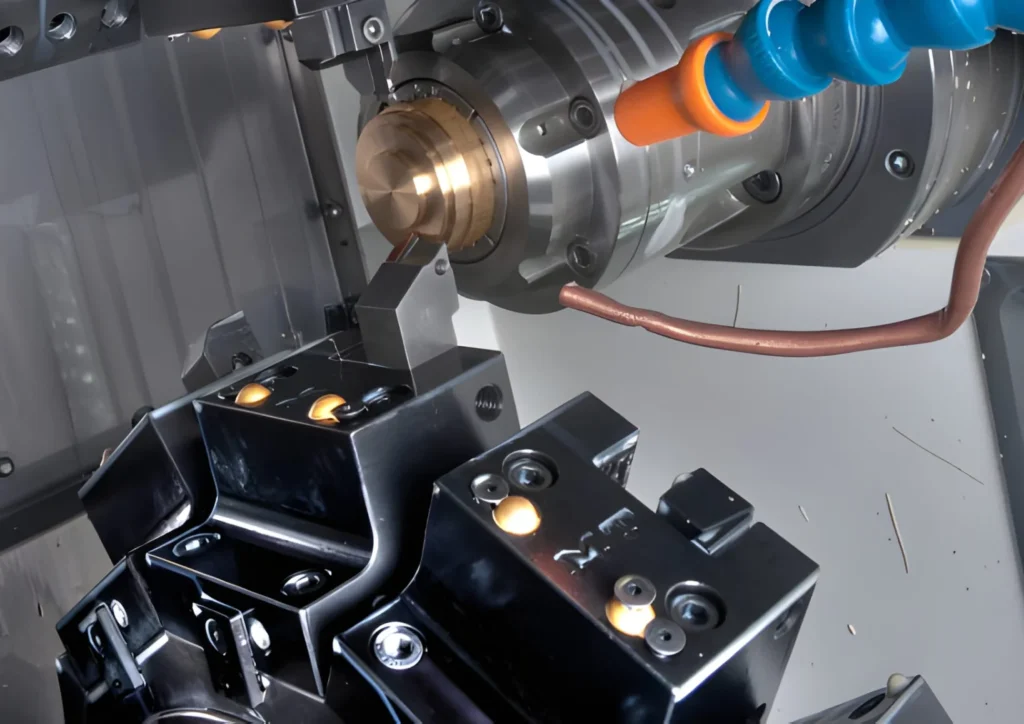
On the other hand, absolute encoders are essential where precise and reliable position feedback matters most. They shine in robotics arms, CNC machines, and medical devices where knowing the exact position at any moment is critical for accuracy and safety. Elevators and other safety systems also depend on absolute encoders since they retain position data even after power loss, ensuring dependable operation. These real-world applications highlight how absolute encoders provide the accuracy and reliability needed in complex motion control environments.
For those interested in specific incremental encoder use cases in industrial automation, sensyor offers a detailed overview of incremental rotary encoder applications that might help you decide the right fit for your project.
Explore sensyor’s resources to understand more about choosing the right absolute or incremental encoder for CNC or automation tasks to make informed decisions for your application.
How to Choose the Right Encoder for Your Project
Picking the right encoder comes down to a few key factors. Consider how often your system powers on and off, whether you need exact position data (absolute) or just relative movement (incremental), your budget, and the environment—like vibration or electrical noise.
Decision Factors at a Glance
Factor
What to Consider
Power Cycling
Frequent power loss? Absolute encoders keep position without homing.
Position Accuracy
Need exact position? Go absolute; else, incremental might suffice.
Budget
Incremental encoders usually cost less upfront.
Environment
High vibration/noise? Look for robust, noise-resistant designs.
Motion Type
Rotary or linear? Select according to your application.
System Integration
Ensure compatibility with PLCs, drives, or controllers.
Rotary vs. Linear Encoder Considerations
Rotary encoders are ideal for measuring angular position or rotational speed.
Linear encoders track straight-line movement with high precision—great for CNC machines or automation lines.
Integration Tips
Match encoder signals with controller input types (TTL, HTL, SSI).
Use shielded cables in noisy environments to avoid signal loss.
Check if your PLC or drive needs specific output protocols like BISS or parallel.
Plan your wiring to minimize interference and keep cable lengths within recommended ranges.
Choosing smart upfront saves time, money, and prevents costly system downtime down the road.
sensyor Encoder Solutions
sensyor offers a broad range of incremental rotary encoders and absolute encoders, designed to meet diverse industrial needs. Whether you require position feedback for motion control or high-precision measurement, sensyor provides reliable, high-quality encoders with customizable options tailored to your project specifications.
Key highlights of sensyor encoders include:
High-quality manufacturing: Built in a modern encoder manufacturing plant, sensyor ensures consistent performance and durability.
Customization capabilities: From resolution tweaks to output signal formats (TTL, HTL, or sine/cosine for incremental, plus SSI or BiSS for absolute), sensyor supports tailor-made solutions.
Competitive pricing: Offering cost-effective options for both incremental and absolute encoders, sensyor delivers excellent value across different budget ranges.
Linear encoder range: Beyond rotary types, sensyor also provides reliable linear encoders, perfect for applications requiring precise linear position feedback with rugged design and easy integration.
Choosing sensyor means partnering with a supplier that supports both standard and specialized requirements, ensuring your project benefits from durable encoders with dependable accuracy and robust signal integrity.
In the fast-paced world of industrial automation and precision engineering, one key component often determines the accuracy of motion systems — the incremental optical encoder. Whether you’re designing factory robots, upgrading conveyor systems, or maintaining CNC machinery, encoders are essential for translating mechanical motion into reliable digital feedback. But what exactly is an incremental optical encoder, […]
If you’ve ever wondered whether incremental encoders can measure linear displacement, you’re not alone. Engineers, system integrators, and industrial buyers often face this exact question when designing motion control systems or sourcing encoder solutions for automation projects. Let’s break this concept down in a clear and practical way—no jargon, no fluff, just straightforward insight into how incremental encoders […]
Modern automation systems depend heavily on precise motion feedback, and incremental encoder are one of the most reliable solutions to achieve it. These compact, cost-effective sensors play a crucial role in measuring speed, direction, and position across countless industrial and automation fields. But when sourcing or integrating them, one detail often raises questions among engineers and technical […]
We use cookies to enhance your browsing experience, serve personalised ads or content, and analyse our traffic. By clicking "Accept All", you consent to our use of cookies.