If you’re exploring precise motion feedback solutions, understanding the incremental encoder is essential. These devices deliver accurate relative position, speed, and direction data through finely tuned light-based sensing, making them indispensable in automation, robotics, and CNC machinery. But how exactly do they work, and when should you pick an incremental optical encoder over absolute or magnetic types? In this post, we’ll cut through the complexity—revealing key principles, performance specs, and real-world applications—to help you make confident, informed decisions. Ready to dive into how incremental optical encoders can elevate your system’s precision and reliability?
How Incremental Optical Encoders Work
Incremental optical encoders are precision devices that convert mechanical motion into electrical signals, providing accurate feedback on position and speed. Understanding their working principle helps in selecting the right encoder for your application.
Basic Components
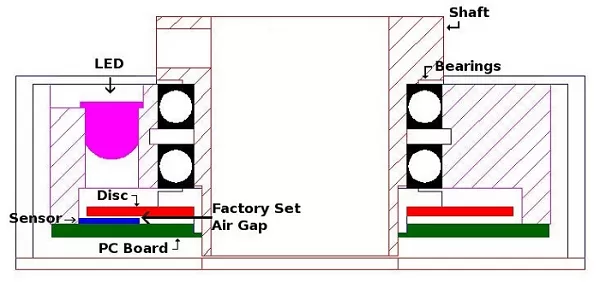
An incremental optical encoder primarily consists of four components:
LED Light Source: Provides consistent illumination.
Code Disk: A rotating or linear disk patterned with alternating opaque and transparent segments.
Photodetectors: Sensors that detect the light passing through or reflecting off the code disk.
Electronics: Circuits that process sensor signals into output pulses.
When the code disk moves, the photodetectors sense changes in light, generating electrical pulses proportional to motion.
Transmissive vs Reflective Optical Designs
Incremental optical encoders come in two main optical configurations:
Transmissive: Light passes through the code disk’s transparent and opaque areas to reach the photodetectors. This design offers high precision but requires a clear optical path.
Reflective: Light reflects off a patterned surface on the disk back to the photodetectors. This setup is more compact and less sensitive to contamination but may have lower resolution.
Quadrature Signal Generation: A, B Channels and Z Index Pulse
Incremental encoders generate two output signals, referred to as A and B channels, which are square waves offset by 90° in phase. This phase difference allows:
Detection of rotation direction.
Increased position resolution through quadrature decoding.
A third output, the Z (or index) pulse, appears once per revolution, providing a precise reference or home position.
Pulse Counting and Interpolation for Resolution
The number of pulses generated per revolution (PPR) or per millimeter (for linear encoders) defines the base resolution. To further enhance precision, many encoders support electronic interpolation, multiplying pulses by analyzing the analog transitions between signals.
Signal Output Types
Incremental optical encoders provide various output interfaces to suit different controllers and environments:
TTL (Transistor-Transistor Logic): Standard digital square wave, widely compatible.
Open Collector: Allows flexible voltage levels and long cable runs but may require pull-up resistors.
Differential (Line Driver): Balanced signals with noise immunity, ideal for industrial settings.
This combination of components and signal features makes incremental optical encoders versatile and reliable, fitting a broad range of industrial and automation applications.
Key Specifications and Performance Parameters
When choosing an incremental optical encoder, understanding its key specs is crucial for matching your application needs.
Resolution
Expressed as pulses per revolution (PPR) for rotary encoders or lines per millimeter for linear types.
Higher resolution means finer position detection.
Interpolation can increase effective resolution by electrically subdividing pulses for smoother outputs.
Accuracy and Repeatability
Accuracy refers to how close the output is to the true position.
Repeatability describes how consistently the encoder returns to the same position under the same conditions.
Low jitter (signal noise) is vital for reliable counting in high-speed applications.
Operating Speed and Environmental Ratings
Maximum operating speed varies widely: from a few thousand RPMs up to 100,000 RPMs for specialized models.
Frequency response affects how fast signals can be reliably processed.
Encoders can be rated for different environments—IP rating, temperature range, vibration tolerance.
Mounting Options
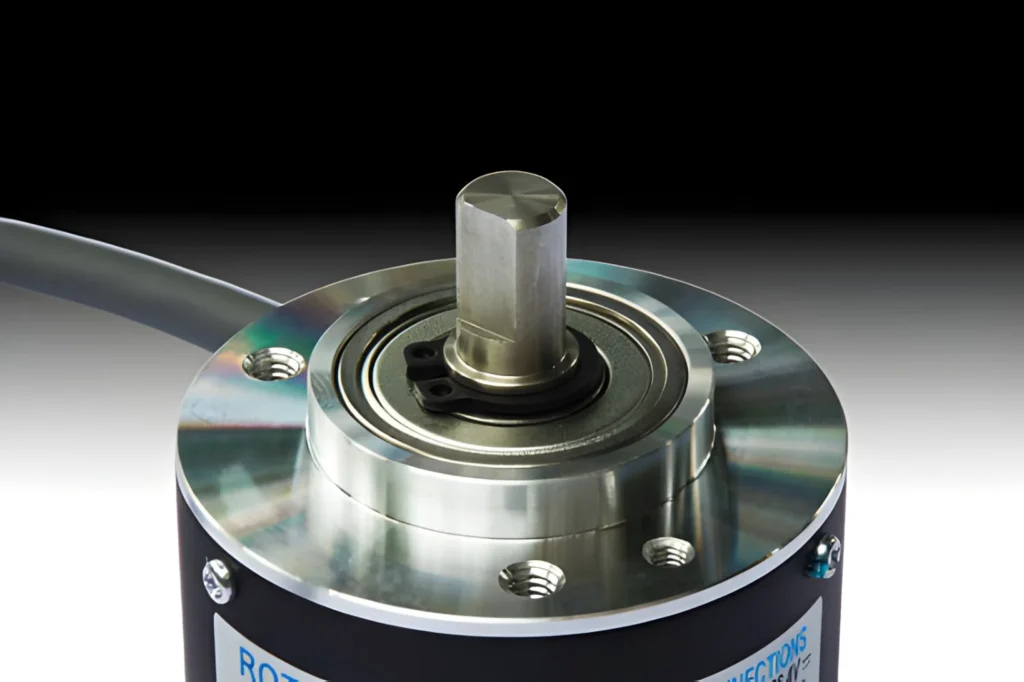
Shaft encoders mount directly on rotating shafts.
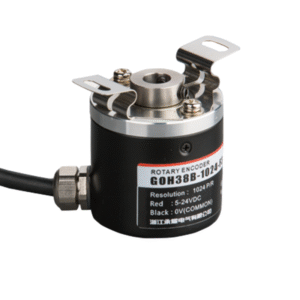
Hollow-shaft (bore) encoders fit around motor shafts, simplifying installation and alignment.
Linear incremental encoders require secure mounting along the movement path for accurate linear measurement.
Understanding these parameters ensures you select an incremental encoder that delivers precise, reliable performance tailored to your system’s needs.
Incremental vs Absolute Encoders: When to Choose Incremental
Incremental optical encoders measure relative position by counting pulses from a starting point, while absolute encoders provide a unique position value at power-up. This key difference affects when you’d choose one over the other.
Differences in Positioning
Feature
Incremental Encoder
Absolute Encoder
Position Type
Relative (change in position)
Absolute (exact position)
Power Loss Behavior
Position lost; needs homing
Position retained
Complexity
Simpler design
More complex, with multi-track disks
Output Signals
Quadrature (A, B) + Index (Z)
Multi-bit absolute code
Pros of Incremental Optical Encoders
Simplicity: Fewer components, easier to install and maintain.
High Resolution: Quadruple pulse counts improve position accuracy.
Cost-Effective: Generally cheaper than absolute encoders.
Fast Response: Ideal for high-speed applications.
Cons of Incremental Optical Encoders
Position Loss on Power-Off: Requires homing or referencing after restart.
No Direct Absolute Position: You always measure position change, not location alone.
Ideal Use Cases
Systems where power backup for position is available or homing routine is acceptable (e.g., robotics, servo drives).
Applications needing high speed and resolution but with less critical continuous position tracking.
Cost-sensitive projects requiring accurate angular or linear feedback.
Choosing the right encoder depends on your application’s need for either relative or absolute positioning and balancing cost with complexity. Incremental optical encoders offer an efficient, accurate solution where position zeroing is manageable and quick updates are essential.
Rotary vs Linear Incremental Optical Encoders
Incremental optical encoders come in two main types: rotary and linear, each serving different measurement needs.
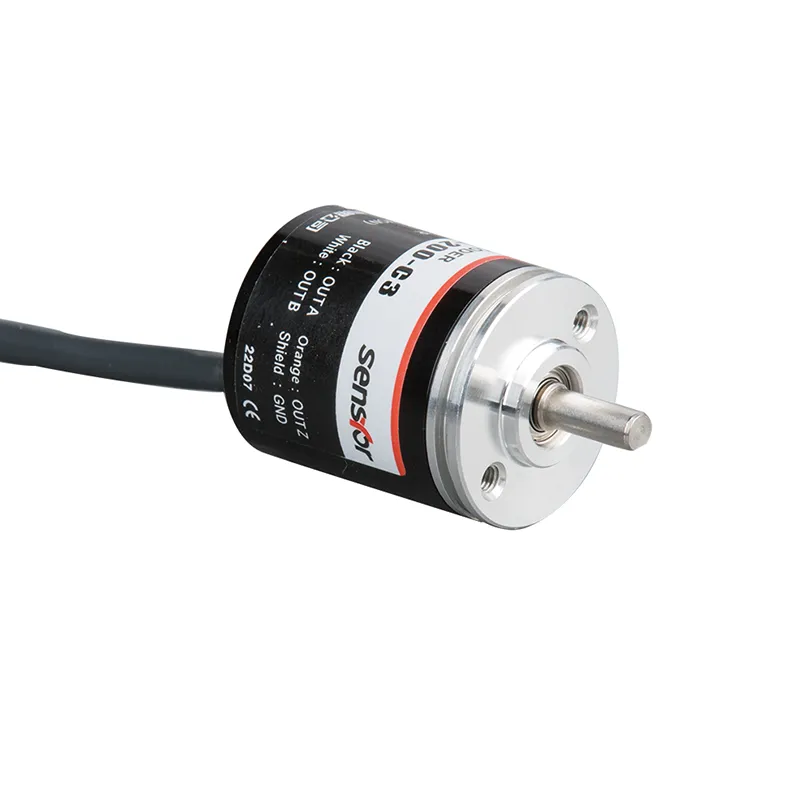
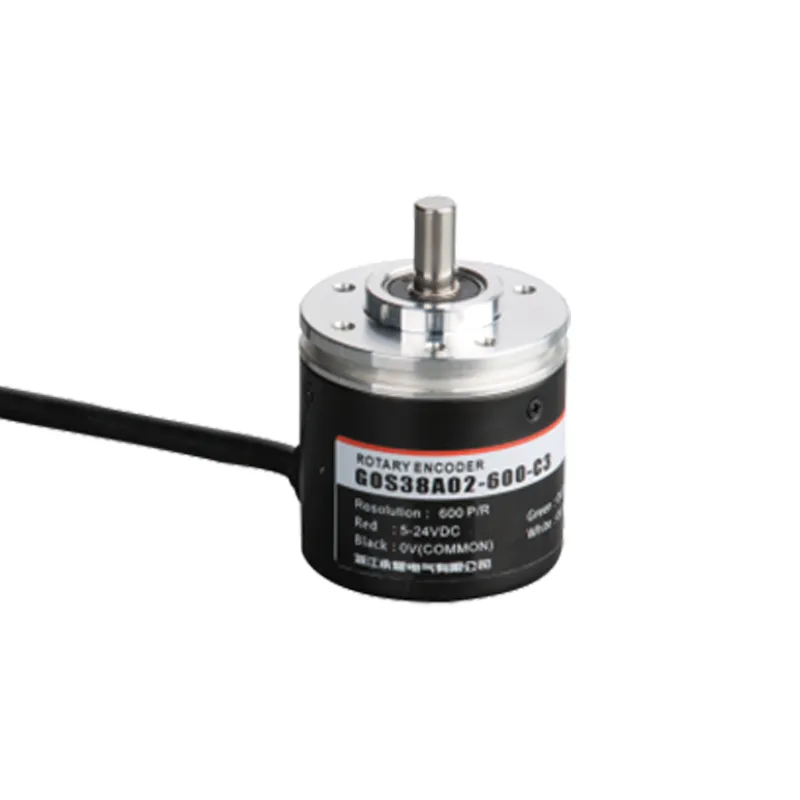
Rotary incremental encoders are typically shaft-mounted devices that measure angular position or rotational speed. These encoders use a rotating code disk attached to a motor or shaft. As the shaft turns, the encoder generates quadrature signals (A, B channels, plus the index pulse Z) to track rotation precisely. They’re ideal for applications needing accurate rotational tracking, like servo motors, robotics, and CNC machines.
On the other hand, linear incremental encoders measure direct linear displacement rather than rotation. They work with a fixed scale or glass strip that moves relative to a sensor head. This design offers precise position and speed data over linear distances. Linear optical encoders are common in automated assembly lines, CNC machines, and inspection systems where exact linear feedback is critical.
Mounting and configuration considerations differ between these two:
Rotary encoders require either a solid shaft or hollow-shaft mounting and often need shaft coupling to avoid misalignment.
Linear encoders need precise alignment between the scale and the sensor head, with considerations for mounting stability to prevent vibrations or contamination.
Choosing between rotary and linear incremental optical encoders depends on whether your application measures rotation or linear movement. For more on linear types and their uses, check out our dedicated page on incremental linear encoder.
Advantages and Limitations of Optical Incremental Encoders
Incremental optical encoders stand out for their high resolution and fast response, making them ideal for precise position and speed feedback. Thanks to their optical sensing method, they offer excellent magnetic immunity, so they won’t be affected by electromagnetic interference like some magnetic encoders. These encoders also enjoy a long operational life due to minimal wear—since the optical components don’t make physical contact during measurement.
However, optical incremental encoders do have some drawbacks. They require a clean optical path, so contamination by dust, oil, or moisture can degrade performance or even cause signal loss. This sensitivity means they often need to be fitted in protective housings or kept in controlled environments. Additionally, since they rely on light passing through or reflecting off the code disk, any dirt or scratches on the disk can affect accuracy.
When comparing optical vs magnetic encoders, optical encoders usually provide better resolution and speed, but magnetic encoders offer greater robustness in dirty or harsh industrial environments. Both types have strengths depending on the application, but for high precision and clean conditions, an incremental optical encoder remains the preferred choice.
Incremental optical encoders are widely used across many industries thanks to their reliability and precision. In industrial automation, they play a crucial role in servo motors, robotics, and pick-and-place machines, providing accurate position and speed feedback needed for smooth operation. Their quadrature encoder outputs (A, B, and Z signals) allow precise detection of direction and position changes, which is essential for closed-loop control systems.
In machine tools like CNC machines, milling machines, and lathes, incremental rotary encoders ensure accurate angular positioning and speed control, directly impacting machining quality and repeatability. Similarly, incremental linear encoders are used in systems requiring precise linear measurement and control.
They also find important roles in medical equipment, automated guided vehicles (AGVs), printing presses, packaging lines, and elevator systems, where reliable displacement and speed feedback is critical for safety and efficiency. Using quadrature feedback from these encoders helps reduce errors and improves control responsiveness.
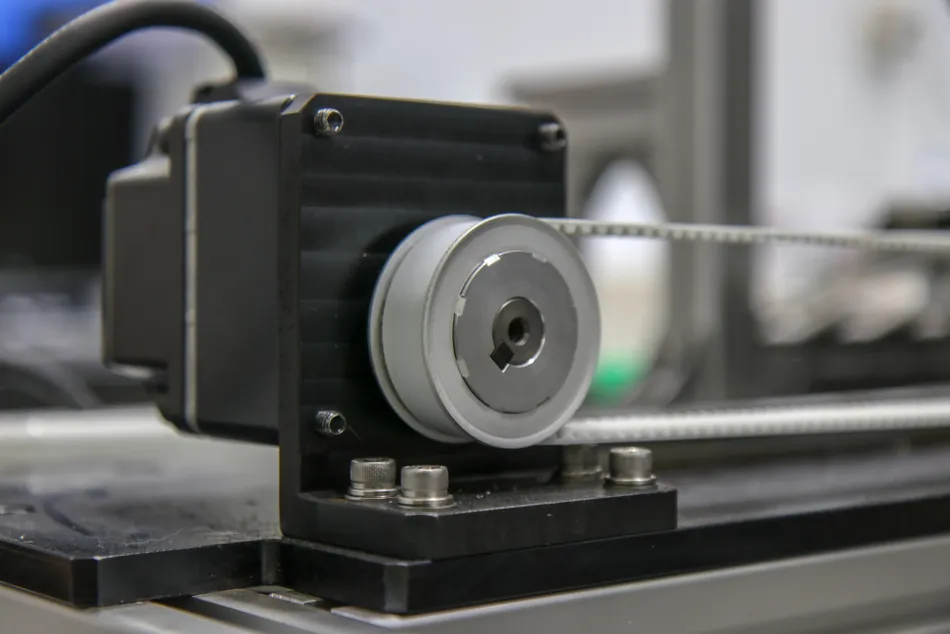
For mounting options suited to these applications, products like metal wheels and flexible couplings from Sensyor can help integrate incremental rotary encoders efficiently into your mechanical systems.
How to Select the Right Incremental Optical Encoder
Choosing the right incremental optical encoder starts with clear definition of your key requirements:
Resolution: Determine the pulses per revolution (PPR) or lines per millimeter needed for your application. Higher resolution means finer position feedback.
Speed: Consider the maximum operating speed or frequency your system demands.
Range & Mounting: Decide if you need a rotary encoder for angular measurements or a linear encoder for direct linear positioning. Also, check if shaft-mounted or hollow-shaft (bore) mounting fits your setup.
Output Type: Identify the required signal output—TTL, open collector, or differential quadrature signals (A, B, Z channels) to ensure compatibility with your controller or quadrature decoder.
Environment: Factor in operating conditions like temperature, vibration, dust, or moisture that could affect encoder performance.
Ask yourself these key questions:
Is it a rotary or linear incremental encoder?
What encoder resolution pulses per revolution do you need?
Do you require an index pulse (Z channel) for reference positioning?
Which encoder interface quadrature decoder will you be using?
Beyond specs, prioritize quality manufacturing and signal integrity. A well-built incremental rotary encoder delivers reliable, jitter-free output, ensuring smooth control in automation or CNC systems.
Why Choose sensyor for Your Incremental Optical Encoder Needs
When it comes to incremental optical encoders, sensyor stands out as a trusted manufacturer and supplier with a strong global presence. We specialize in delivering incremental rotary encoder and incremental linear encoder solutions tailored to your exact needs.
sensyor Strengths at a Glance
Feature
Benefit
Precision Design
High accuracy and reliability for demanding applications
Cost-effective options without compromising quality
In-House Production
Faster turnaround and stringent quality control
Full Technical Support
Expert consultation, detailed datasheets, and integration help
What Makes sensyor Different?
Precision Design: Our encoders ensure consistent output with high resolution pulses per revolution and clean quadrature signals (A, B, Z channels).
Custom Solutions: Whether you need a shaft or hollow-shaft encoder, TTL or differential outputs, or special mounting options, we can customize accordingly.
Fast Delivery: With complete in-house manufacturing, we control quality and speed, reducing lead times.
Dedicated Support: Our team offers technical guidance on encoder interface quadrature decoder compatibility and helps optimize your incremental optical encoder integration.
Choosing sensyor means you get a reliable partner for high-performance incremental rotary encoders and optical linear encoders designed to meet global industrial automation demands.
As a professional incremental encoder supplier, Sensyor is committed to providing high-quality, high-performance encoder solutions for industrial automation customers. This article will provide an in-depth introduction to the classification, functions, product advantages, and frequently asked questions about incremental encoders, helping you better understand and select the right incremental encoder to improve your equipment’s precise control […]
Incremental encoder are electromechanical devices that measure changes in motion and direction. These units generate A/B digital outputs, with pulses per revolution (PPR) determining their resolution. By encoding the shaft’s angular displacement, they reveal velocity and relative position. Because they provide near-instant feedback, incremental encoders are ideal for high-precision motion control and positioning tasks, such […]
We use cookies to enhance your browsing experience, serve personalised ads or content, and analyse our traffic. By clicking "Accept All", you consent to our use of cookies.