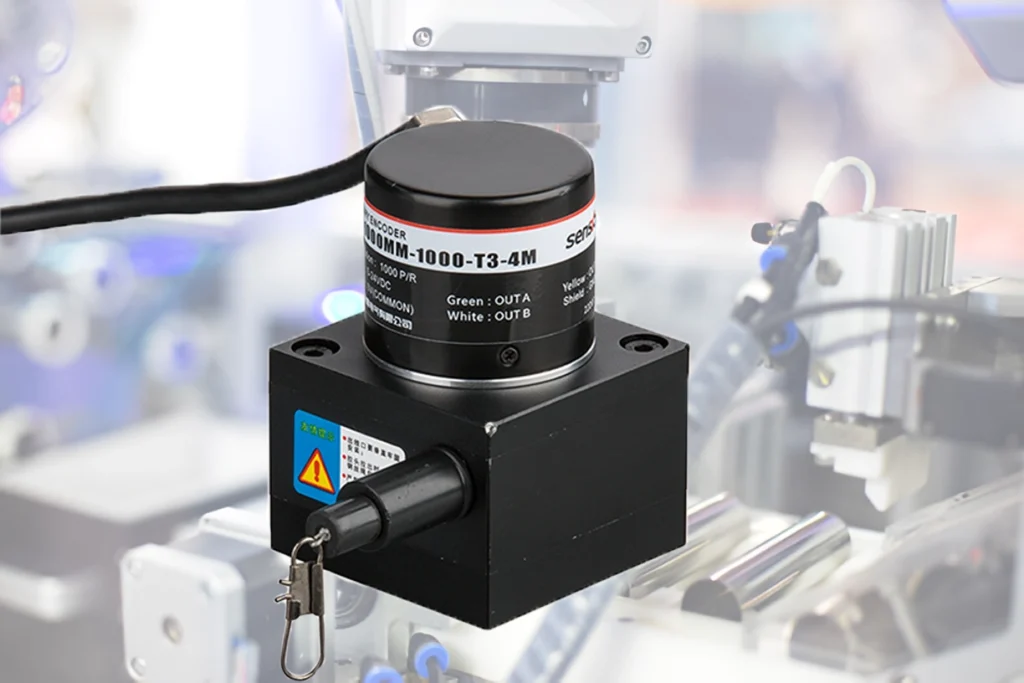
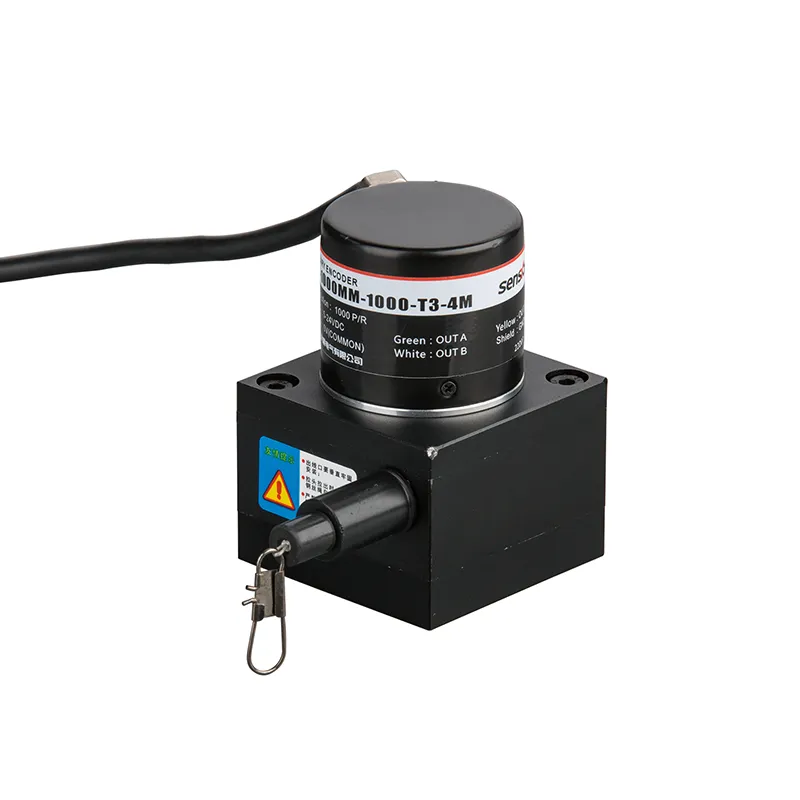
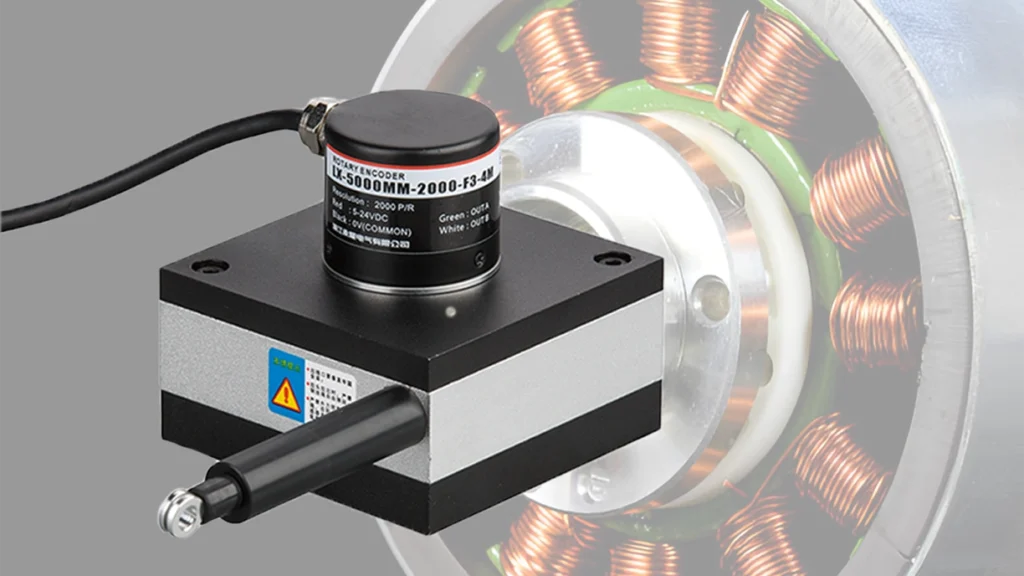
Have you ever wondered how machines know their exact position in space? That’s where the linear encoder steps in. Whether it’s in CNC machines, automated production lines, or robotics, linear encoders play an indispensable role. They are measuring devices that convert an object’s linear movement into electronic signals, enabling precise position monitoring and control.
In this article, we will take a deep dive into what linear encoders are, how they work, their types, key performance parameters, application fields, advantages and challenges, plus the latest technology trends. We’ll also guide you on how to choose and maintain one. Let’s explore together!
What is a Linear Encoder?
A linear encoder is a type of sensor or sensing device used for measuring linear displacement. It converts the linear movement of an object into electrical signals for reading and control purposes. Unlike rotary encoders, linear encoders focus on position changes along a straight line.
Feature
Description
Measurement type
Linear displacement measurement
Main components
Scale and readhead
Output
Analog or digital signals
Typical applications
CNC machines, robotics, 3D printers, automation equipment
The core function of a linear encoder is to electronically convert an object’s movement along a linear axis into positional information—kind of like a ruler with a pointer, but in an electronic form.
How Does a Linear Encoder Work?
You may wonder: how exactly does a linear encoder detect the object’s location? It basically depends on two key parts:
Scale: Fixed along the motion path, featuring repeated specific markings, such as optical stripes, magnetic poles, or capacitive electrodes.
Readhead: Mounted on the moving part, sliding along the scale and reading its markings in real-time to calculate position.
In simple terms, the readhead senses physical changes on the scale (like light passing through stripes or magnetic field variations) and converts those into electronic signals.
Component
Function
Working Principle Example
Scale
Provides periodic physical marks
Optical stripes, magnetic marks
Readhead
Reads information and outputs signals
Photodetectors sensing light changes; Hall sensors detecting magnetic fields
A simple analogy: the scale is like subway tracks, and the readhead is like the subway wheels. Each time the wheels pass a track mark, the sensor sends a signal. Counting these signals and their frequency tells the system the position and speed of the carriage (or part).
Two main feedback types:
Incremental encoders: Calculate movement by counting pulses between positions.
Absolute encoders: Each position on the scale has a unique code, so the system immediately knows the exact position—even after power loss.
Common types of encoder
Linear encoders are classified based on sensing principles, each with unique advantages and suitable scenarios:
Type
Principle & Features
Suitable Applications
Optical Encoder
Uses LED light and photodetectors, offering very high resolution
Semiconductor manufacturing, precision CNC
Magnetic Encoder
Employs Hall effect sensors to detect magnetic field changes, resistant to dust & oil
Industrial automation, harsh environments
Capacitive Encoder
Measures position via capacitance changes, suitable for cost-sensitive, low-precision needs
Digital calipers, general measuring tools
Inductive Encoder
Uses electromagnetic induction; robust in dirty or oily environments
Heavy industry, machines with coolant fluids
All these technologies aim to provide continuous, accurate positional data by sensing different physical phenomena. Choosing the right type improves device stability and precision.
Key Performance Parameters of Encoder
To select a suitable linear encoder, understanding these parameters is essential:
Parameter
Explanation
Typical Values
Accuracy
How close the measurement is to the true value
Micrometer or even nanometer levels
Resolution
Smallest distinguishable movement
Sub-micrometer to micrometer range
Repeatability
Consistency across multiple measurements
Very low error, crucial for quality
Measurement Speed
Maximum response speed
Varies by application; some reach meters per second
Your application dictates which parameters matter most. Precision machining demands extreme accuracy and resolution, whereas automation may prioritize reliability and noise immunity.
Need expert advice?
Discover how linear encoder boost your machine’s accuracy and efficiency. Choose the right encoder today to elevate your production quality!
Verify interface compatibility and installation space.
Maintenance Tips
Regularly clean readhead and scale to prevent dust buildup.
Check mounting stability and maintain proper gap between components.
Troubleshoot signal irregularities by inspecting cables and connectors first.
Protect devices against strong vibrations and contaminants.
Linear encoder are a cornerstone of modern industrial automation and precision measurement. By converting linear motion into accurate feedback signals, they enhance intelligent control and guarantee product quality. Whether you’re a newcomer or a seasoned expert, understanding linear encoder principles, performance, and applications helps you make smarter purchasing and maintenance decisions.
If you want to dive deeper into any topic or need specific product recommendations and selection advice, feel free to reach out. Let’s empower your automation journey together!
FAQ
Q: What’s the difference between incremental and absolute linear encoders?
Incremental encoders count pulses to compute displacement but lose position info when powered off. Absolute encoders have unique codes at each scale position and keep track of exact location even after power loss.
Q: Which environments are magnetic linear encoders best suited for?
Industrial sites with oil, dust, and harsh conditions.
Discover high-precision incremental linear encoders with optical and magnetic types offering reliable position feedback for industrial automation and CNC systems
Did you know that linear encoder are the “invisible heroes” in modern industrial automation and precision measurement? Whether in CNC machines, automated assembly lines, or high-precision measuring instruments, linear encoders play a crucial role. They help machines “see clearly,” precisely feed back positions, and ensure every step in the process is accurate. In this article, […]
An absolute linear encoder is a high-precision position sensor that gives a unique position value at every point along the measuring stroke, even immediately after power-up. For B2B buyers in automation, robotics, machine tools, packaging, and semiconductor equipment, it is often the most reliable way to get accurate linear feedback without homing cycles and downtime. […]
We use cookies to enhance your browsing experience, serve personalised ads or content, and analyse our traffic. By clicking "Accept All", you consent to our use of cookies.