Modern automation systems depend heavily on precise motion feedback, and incremental encoder are one of the most reliable solutions to achieve it. These compact, cost-effective sensors play a crucial role in measuring speed, direction, and position across countless industrial and automation fields. But when sourcing or integrating them, one detail often raises questions among engineers and technical buyers alike — the output signal type.
So, what exactly are the output types of incremental encoders, and how should you select the right one for your application? Let’s dive deep into how these outputs differ, what they mean for performance, and how B2B purchasers can make informed decisions for their systems.
What Are Incremental Encoder?
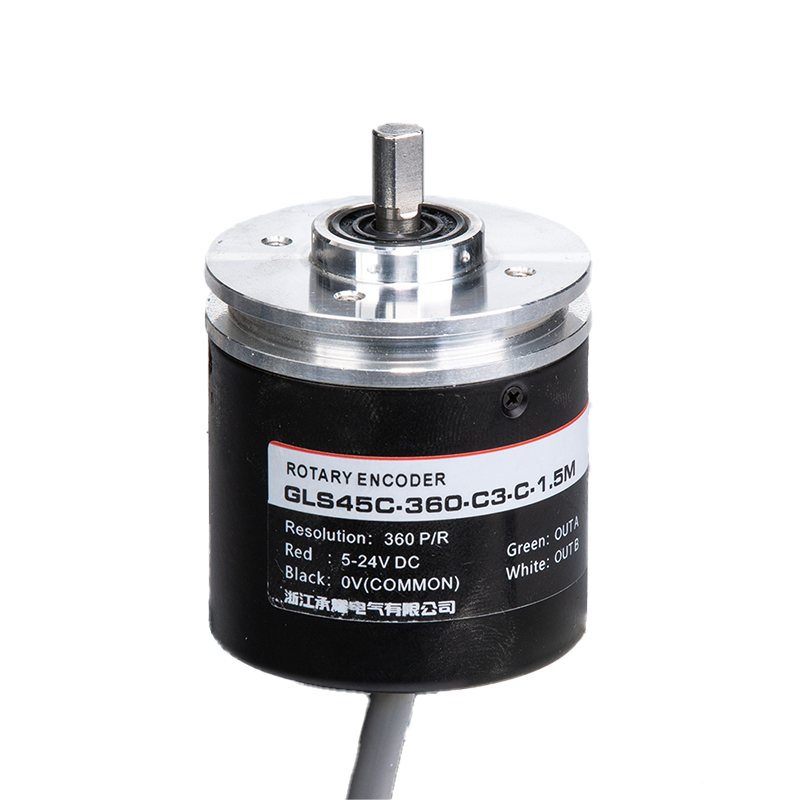
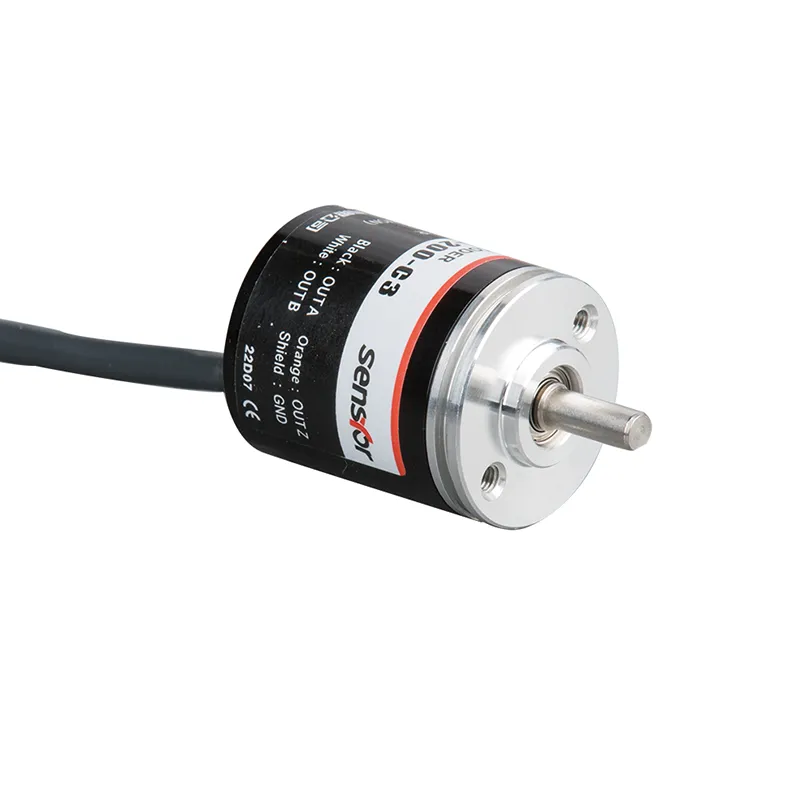
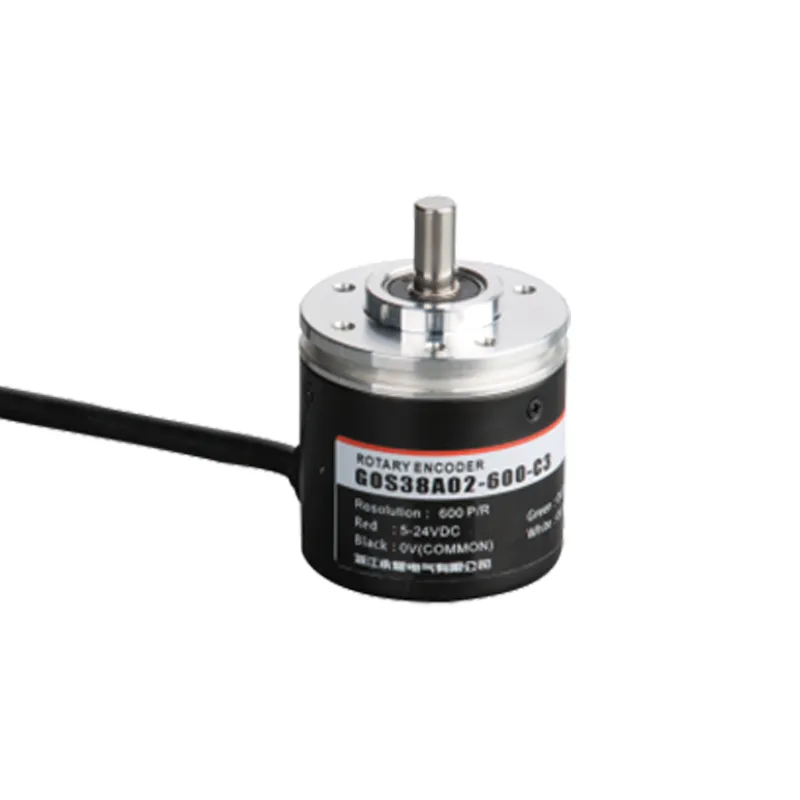
An incremental encoder is a type of rotary or linear sensor that converts mechanical motion into electrical pulses. These pulses represent the incremental change in position rather than absolute coordinates. Because of this, incremental encoders are ideal for real-time speed, position, and direction feedback in automation systems, robotics, and conveyor operations.
Each pulse that the encoder generates corresponds to a fixed angle of rotation. By counting these pulses, the control system calculates motion parameters such as:
Speed (RPM or linear velocity)
Position relative to a reference point
Direction of rotation
This makes incremental encoders a backbone component of motors, servo systems, CNC machines, elevators, and robotic actuators.
When choosing an encoder, output signal type is a core specification — as it determines signal quality, cable length, compatibility, and noise immunity.
The output type defines how an incremental encoder transmits its pulse signals to the receiving controller, PLC, or drive system. Using the wrong type of output can lead to:
Signal distortion or noise interference.
Miscounts or loss of position accuracy.
Incompatibility with your control electronics.
Therefore, understanding the distinctions among major output circuits — TTL (Line Driver), Open Collector (NPN/PNP), Push-Pull (HTL), and Differential Line Driver — is essential before finalizing a purchase.
Common Output Types of Incremental Encoders
Let’s examine the four most common output types used in industrial incremental encoders.
1. TTL (Line Driver) Output
TTL, or Transistor-Transistor Logic, is one of the most widely used output forms for incremental encoders. The encoder outputs clean digital pulses between 0 V and 5 V (standard TTL levels). It’s best suited for short-distance, high-frequency applications, such as embedded robotic systems and lab automation.
Advantages:
High-speed signal transmission (up to several MHz).
Sensitive to voltage drops and electromagnetic noise.
Parameter
Spec Range
Typical Use Case
Voltage Level
5 V DC
CNC controllers
Drive Type
Differential (RS-422)
Precision motion control
Max Frequency
Up to 1 MHz
High-speed servo motors
2. Push-Pull (HTL) Output
Push-Pull or HTL (High Threshold Logic) output provides both source and sink capabilities, typically operating in the 10 V–30 V range. It ensures strong, reliable pulses even in noisy industrial environments.
Advantages:
Wider voltage range for robust operation.
Better cable length endurance (20–50 m).
Compatible with PLCs and industrial automation interfaces.
Limitations:
Slightly higher current consumption.
Not suitable for extremely long-distance transmission without a repeater.
Parameter
Spec Range
Typical Use Case
Voltage Level
10–30 V DC
Industrial PLC input
Drive Type
Single-ended
Conveyor feedback systems
Cable Length
20–50 m
Factory automation
3. Open Collector (NPN/PNP) Output
Encoders with open collector outputs (either NPN or PNP) act like electronic switches. The signal lines require pull-up resistors, and the actual voltage is defined by the external circuit.
NPN (Sinking) outputs pull to ground when active.
PNP (Sourcing) outputs provide positive voltage when active.
Advantages:
Flexible integration with various voltage levels.
Cost-effective and simple design.
Ideal for basic feedback and monitoring.
Limitations:
Lower switching frequency.
Prone to noise and slower response at long cable lengths.
Output Type
Polarity
Voltage Range
Application
NPN Open Collector
Sinking
5–30 V DC
General-purpose motion control
PNP Open Collector
Sourcing
5–30 V DC
Industrial sensors and packaging lines
4. Differential Line Driver (RS-422) Output
When long cable distances or high EMI conditions are present, differential line driver outputs are the go-to choice. Using paired complementary signals (A/Ā, B/B̄, Z/Z̄), they achieve superior noise immunity even over tens of meters.
Advantages:
Excellent signal integrity over long distances (up to 100 m+).
High-speed pulse frequency stability.
Compatible with differential receivers (RS-422 interface).
Limitations:
Requires differential receiver circuitry.
Slightly higher cost.
Specification
Typical Value
Application
Output Standard
RS-422
Long cable runs
Signal Pairs
A/Ā, B/B̄, Z/Z̄
Industrial motor drives
Distance
Up to 100 m
Robotics and automation lines
We specialize in OEM and B2B orders. Contact our sales team for custom incremental encoder solutions, or samples for testing.
Choosing the right encoder output often involves balancing distance, signal speed, and controller compatibility.
Output Type
Voltage Level
Max Distance
Noise Immunity
Typical Use
TTL (Line Driver)
5 V
10 m
High
High-speed robotics
HTL (Push-Pull)
10–30 V
50 m
Medium
Automation systems
Open Collector
5–30 V
20 m
Low
General equipment
Line Driver (RS-422)
5 V
100 m+
Very High
Servo control, long cables
Tip for engineers: Always match your Incremental Encoder output with your controller’s expected input. A mismatch may lead to missed pulses or motor instability.
Key Considerations When Selecting Incremental Encoder
Selecting the proper encoder involves more than just choosing an output type. For B2B procurement and system design, here are essential parameters to evaluate:
Shaft Type (Solid or Hollow): Affects installation method and mechanical durability.
Ingress Protection (IP Rating): Crucial for harsh environments like packaging or outdoors.
Operating Temperature Range: For example, encoders in steel mills or cold storage require specific ratings.
Connector Type (Cable or M12/M23): Determines ease of installation, maintenance, and signal reliability.
When sourcing for industrial production or OEM projects, aligning all these aspects ensures long-term reliability and compatibility.
Common Applications of Incremental Encoder
Incremental encoders are found across industries, each leveraging their precision and adaptability:
Automation & robotics: Real-time motion feedback for actuators and arms.
Servo drives & motors: Synchronizing rotation and controlling position.
Packaging & labeling machines: Maintaining line speed accuracy.
Textile & printing equipment: Monitoring roller speed and shaft rotation.
Elevators & lifts: Detecting cabin movement and floor position.
These use cases often dictate what signal output engineers should choose — for example, RS-422 differential in noisy environments or HTL Push-Pull for moderate distances.
Why Partner with a Reliable Encoder Supplier?
For engineers and purchasing managers, sourcing from an experienced encoder manufacturer ensures:
Stable supply chain and OEM customization options.
Technical consultation on parameter matching.
Quality control that meets industrial standards (CE, RoHS, ISO).
If you’re planning a new automation upgrade or mass procurement, reach out for a customized encoder solution that fits your machinery’s exact needs. Our team can help you compare incremental and absolute versions, evaluate output compatibility, and select optimal encoder models for your project.
Incremental encoders remain a cornerstone of motion control technology, enabling precision and efficiency in automation, manufacturing, and robotics. Understanding their output types — from TTL and HTL to Open Collector and RS-422 — helps engineers design stable control systems and allows procurement teams to make cost-effective, reliable sourcing decisions.
Choosing the right encoder is not just about specifications; it’s about ensuring signal integrity, system compatibility, and long-term reliability. By paying attention to these output details today, you ensure smoother, smarter automation tomorrow.
FAQ
How can I identify the output type of an encoder?
Check the part datasheet or label — most manufacturers specify “TTL,” “HTL,” “NPN,” or “RS-422” on the model number.
Can I directly replace an NPN encoder with TTL output?
Not always. You must confirm the controller’s input interface matches the encoder output logic and voltage.
Which output type works best for long-distance transmission?
RS-422 differential line driver outputs provide the best noise immunity and distance capability.
Are line driver encoders more expensive?
Typically yes, but they offer superior performance, which offsets the cost in high-precision or high-noise applications.
Can incremental encoders provide absolute position?
No, incremental encoders only count relative motion. After a power cycle, a reference or homing procedure is needed.
Discover high-precision ATEX incremental encoders with robust design, IP67 protection, customizable resolutions, and certified safety for hazardous areas
As a professional incremental encoder supplier, Sensyor is committed to providing high-quality, high-performance encoder solutions for industrial automation customers. This article will provide an in-depth introduction to the classification, functions, product advantages, and frequently asked questions about incremental encoders, helping you better understand and select the right incremental encoder to improve your equipment’s precise control […]
Discover how optical incremental shaft encoders deliver precise position feedback with high resolution and customizable options for industrial motion control.
We use cookies to enhance your browsing experience, serve personalised ads or content, and analyse our traffic. By clicking "Accept All", you consent to our use of cookies.