When working with motion control systems, you’ve probably encountered the term “PPR” in the specifications of an incremental rotary encoders. But what exactly does PPR mean? And why does it matter so much in applications like CNC machines, robotics, automation, and servo motors? In this post, we’ll dive deep into PPR (Pulses Per Revolution), explore how it affects accuracy and performance, compare different encoder resolutions, and show you what to consider when selecting the right incremental rotary encoder for your system.
Incremental Rotary Encoders principle
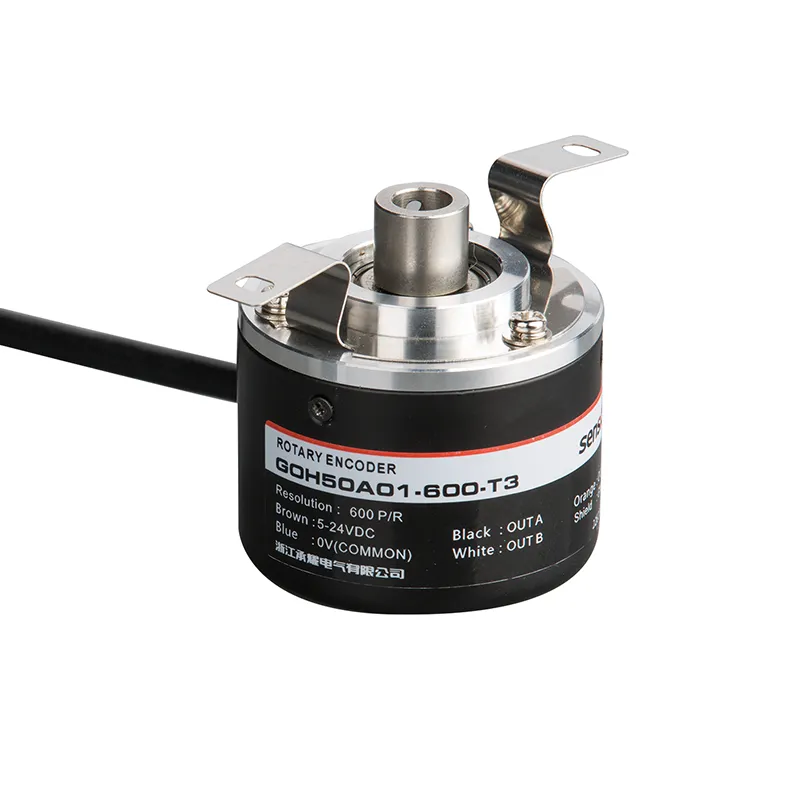
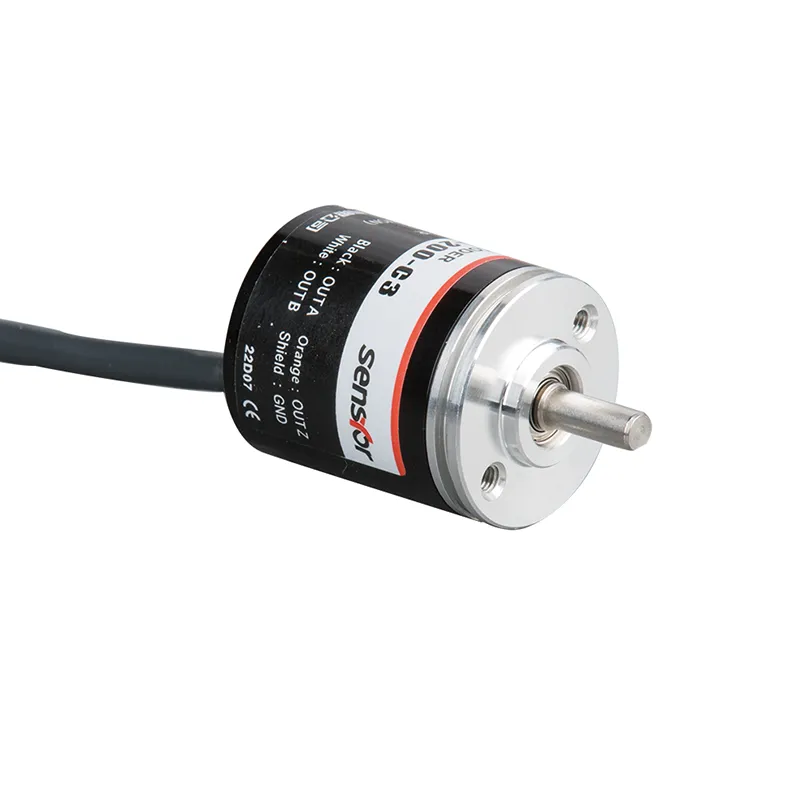
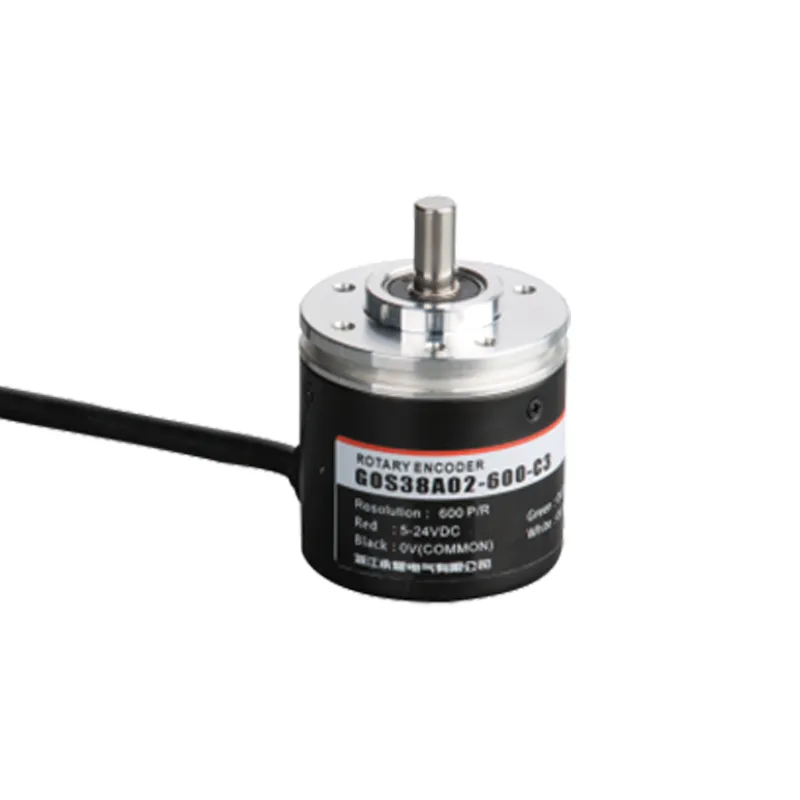
An incremental rotary encoder is an electromechanical device that converts rotational motion into a series of digital pulses. These pulses represent incremental changes in position, which can be processed by a controller to determine speed, direction, and position.
They are widely used in:
Industrial automation and robotics
Servo and stepper motor feedback systems
Conveyor belt speed control
CNC machinery and 3D printers
Wind turbine monitoring and axis positioning
Unlike absolute rotary encoders, which retain position data even after power loss, incremental encoders only output pulses relative to movement. This makes them simpler and more cost-effective in many motion control applications.
PPR stands for Pulses Per Revolution. It describes how many digital pulses an encoder produces for each full 360° rotation of the shaft. In other words, it’s a measure of the encoder’s resolution — how finely it can measure rotational movement.
For example:
A 100 PPR encoder produces 100 pulses for one full rotation.
A 1024 PPR encoder generates 1024 pulses, giving much finer resolution.
The higher the PPR value, the more precisely the system can detect changes in position or speed. Engineers often use high-PPR encoders for applications requiring precision control, such as robotic arms or servo feedback loops.
PPR vs CPR vs LPR
You may also come across similar terms like Counts Per Revolution (CPR) or Lines Per Revolution (LPR). Although sometimes used interchangeably, they can differ depending on the manufacturer’s pulse counting method.
Term
Meaning
Typical Usage
PPR
Pulses generated per full rotation
Industrial and encoder datasheets
CPR
Total counts per revolution after signal quadrature
CNC and motor control systems
LPR
Number of lines on encoder disk
Optical encoder terminology
When choosing your encoder, always check how the manufacturer defines these terms — a 1000 PPR encoder may actually provide 4000 counts per revolution (due to 4X decoding).
Why PPR Matters in Motion Control
The PPR value directly influences system accuracy, speed feedback, and noise immunity. A high-PPR encoder can track tiny movements and provide smooth control, while a low-PPR one is suitable for faster but less precise motion.
Let’s explore how resolution impacts performance:
PPR Range
Applications
Advantages
Limitations
100–500
Basic conveyors, fans, machine tools
Low cost, low latency
Coarse feedback
500–1024
Mid-range automation, robotics
Balanced precision and speed
Moderate cost
2048–5000
Servo drives, CNC systems
High accuracy and smooth speed control
Higher cost, more signal noise
Choosing the right PPR is all about balancing resolution and speed requirements. For example, if your system spins at high RPMs, too high a PPR may overwhelm the controller with pulses.
How Incremental Rotary Encoders Work
Inside every incremental encoder lies a simple yet elegant mechanism: a rotating disk with transparent and opaque segments, an LED light source, and optical sensors that detect interruptions in the light path. As the shaft rotates, the sensors register light-and-dark transitions, translating them into pulses.
Usually, an encoder has two output channels (A and B), spaced 90° apart. This setup allows determination of:
Direction of rotation (via phase difference)
Speed (through pulse frequency)
Distance or displacement (by counting pulses)
Some encoders include a third Z-channel or index pulse, which provides a reference once per revolution — helpful for homing functions.
For example, a 1024 PPR incremental encoder with quadrature output generates 4096 counts per turn when decoded (4x mode). That means each count represents about 0.088° of shaft rotation — incredibly precise feedback.
When you integrate an incremental rotary encoder with a servo motor, your system gains real-time motion feedback that ensures high repeatability and minimal vibration. The result: stable performance in complex automation environments.
How to Choose the Right PPR for Your Application
When selecting an incremental rotary encoder, the following factors help determine the ideal PPR value:
Target accuracy – The finer your motion control needs, the higher PPR you should choose.
Maximum RPM – High PPR at high speed can cause data overflow or missed counts.
Controller capability – Check if your PLC or drive can process the expected pulse frequency.
Signal interface – Choose the right output type (TTL, HTL, open collector, differential driver).
Mechanical design – Shaft or hollow type, mounting flexibility, and operating environment.
Here’s a quick selection guide:
Application
Recommended PPR
Output Type
Conveyor systems
200–500
Open collector
Stepper motors
500–1000
TTL
Servo feedback
1000–5000
Differential (RS422)
Robotics and CNC
2048–4096
HTL or differential
Need advice on choosing the right model? Contact our technical team or send an inquiry today — we’ll help you match your system with the best high-performance incremental encoder.
Understanding what PPR means in an incremental rotary encoders is fundamental for achieving optimal motion control performance. From servo drives to industrial robots, your choice of resolution impacts how smoothly your machines operate, how accurately they move, and how efficiently they communicate with controllers.
The next time you compare encoders, remember that PPR defines how “smart” your motion feedback can be. Choose wisely to balance accuracy, cost, and system speed.
If you’re currently sourcing incremental rotary encoders or looking for OEM alternatives with specific PPR values, reach out to our support team today — we provide custom encoder solutions tailored to your application needs.
FAQ
What is the difference between incremental and absolute rotary encoders?
Incremental encoders provide relative position data through pulses, while absolute encoders give a unique position code for every angle — maintaining position even after power loss.
Can I use a high-PPR encoder for a low-speed system?
Yes, but note that higher resolution may increase noise sensitivity and processor load. Using mid-range PPR (e.g., 1024) is usually optimal.
What’s the output signal type in incremental rotary encoders?
Common types include TTL (5V), HTL (10–30V), and differential RS422. Each suits different cable lengths and noise environments.
How do I calculate pulse frequency?
Use the formula: Pulse frequency = (RPM × PPR) / 60 So, a 1000 PPR encoder at 1200 RPM outputs 20,000 pulses per second.
What environment factors should I consider?
Look at ambient temperature, vibration, shaft alignment, and IP protection. Encoders used in humid or dusty industries should have at least IP65 sealing.
As a professional incremental encoder supplier, Sensyor is committed to providing high-quality, high-performance encoder solutions for industrial automation customers. This article will provide an in-depth introduction to the classification, functions, product advantages, and frequently asked questions about incremental encoders, helping you better understand and select the right incremental encoder to improve your equipment’s precise control […]
Explore high-precision incremental optical encoders with superior resolution speed and reliability for industrial automation and motion control applications.
In today’s world of industrial automation and smart manufacturing, encoders play an essential role. They help machines “see” position and movement, making precise control and feedback possible. Whether it’s a robot, CNC machine, or automated production line, encoders are key sensor devices. As a professional encoder supplier, we understand that every customer has unique needs. […]
We use cookies to enhance your browsing experience, serve personalised ads or content, and analyse our traffic. By clicking "Accept All", you consent to our use of cookies.