Absolute vs Incremental Encoder Choosing the Right Solution
In modern automation and motion control, precision is everything. Whether you’re designing a robotic arm, upgrading a conveyor system, or developing industrial machinery, one question always surfaces: Should you choose an absolute encoder or an incremental encoder?
At first glance, both devices seem to perform the same task — measuring position and speed. But when you dig deeper, the differences can significantly impact your system’s performance, reliability, and cost efficiency. In this guide, we’ll break down the absolute vs incremental encoder debate, explain how each works, compare their strengths, and help you identify which best matches your application requirements.
And of course, if you’d like expert guidance or a custom quote for industrial-grade encoders, you can always contact our team — we’re here to help you select the best-fit solution for your project.
Understanding the Basics
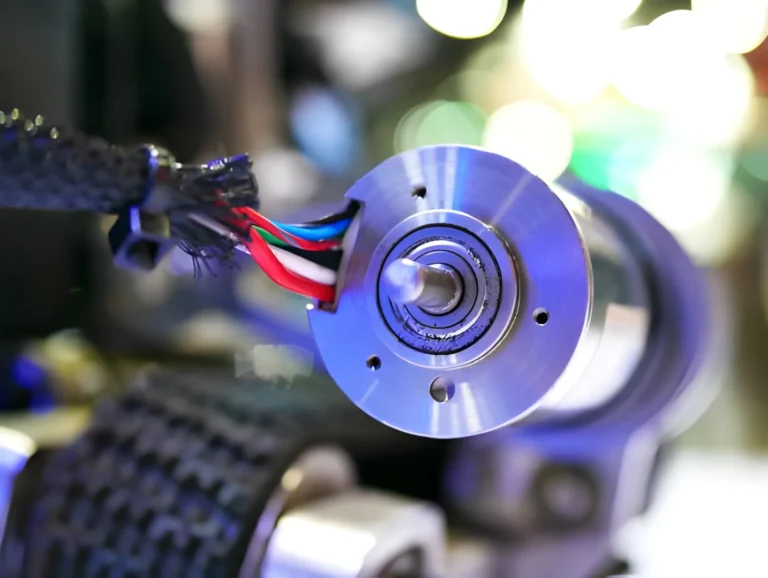
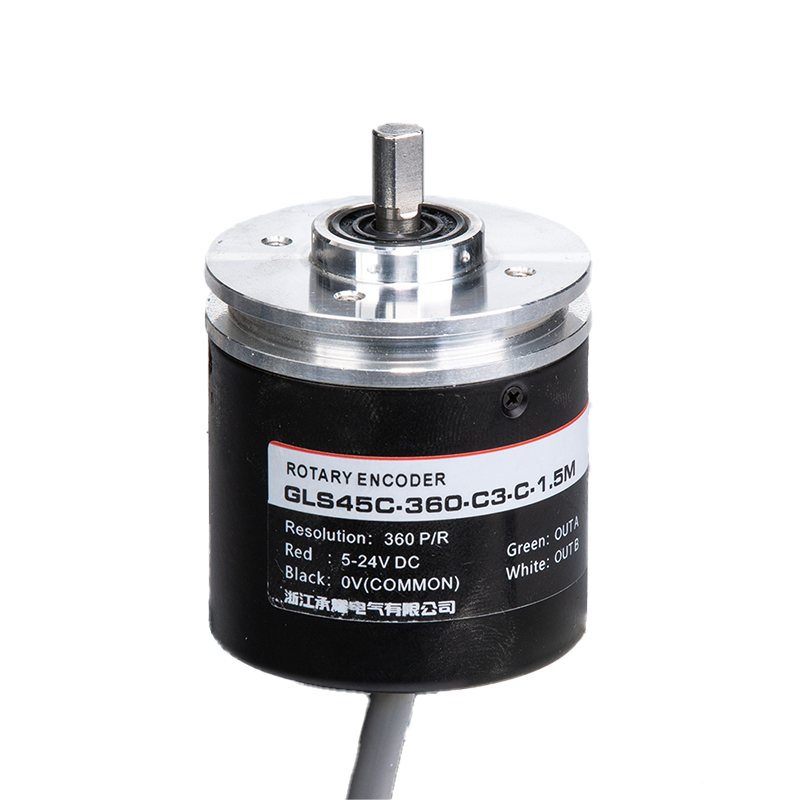
Before we dive into the differences, let’s quickly define what these encoders do. In simple terms, an encoder converts mechanical motion into electrical signals that represent position, velocity, or direction. They’re commonly used in motors, servo systems, robotics, packaging machines, and CNC equipment.
There are two main types:
- Incremental encoder — Provides relative position information by generating pulses as the shaft rotates.
- Absolute encoder — Provides a unique code (digital position value) for each shaft position, even after power loss.
Absolute vs Incremental Encoder Core Principle of Operation
Each Absolute vs Incremental Encoders type determines position differently:
| Encoder Type | Signal Output | Position Retention After Power Loss | Suitable For | Typical Application |
|---|---|---|---|---|
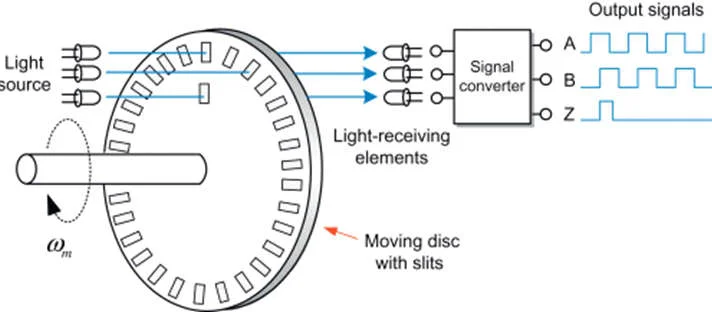
| Incremental Encoder | Pulse train (A, B, Z channels) | No retention; requires homing at startup | Speed and direction feedback | Conveyor systems, speed monitoring |
| Absolute Encoder | Unique digital code per position | Yes; retains position without power | Precise position tracking | Robotics, CNC, servo motors |
As seen above, the core difference lies in data retention and precision. Absolute encoders remember exactly where they are — incremental ones don’t.
Advantages of Incremental Encoders
Incremental encoders are widely used because they’re cost-effective, simple to integrate, and highly responsive. When you only need relative motion tracking, incremental encoders are often the logical choice.
Key advantages include:
- Lower cost: Ideal for systems with tight budgets.
- High speed performance: Perfect for velocity feedback and dynamic control loops.
- Simpler wiring and setup: Minimal hardware configuration reduces commissioning time.
- Widespread compatibility: Supported by nearly all standard PLCs and motion controllers.
For engineers working on conveyor systems, textile machinery, or automated printing lines, incremental encoders provide excellent performance for real-time motion feedback.
Advantages of Absolute Encoders
Absolute encoders shine when precision and reliability are critical. They use digital codes (binary or Gray code) to represent each unique shaft position, which can be single-turn (measures one revolution) or multi-turn (tracks multiple revolutions).
Key benefits:
- Power-down position memory: No need for homing or recalibration.
- High resolution and accuracy: Ideal for precision positioning.
- Robust against noise interference: Digital signals minimize drift errors.
- Enhanced safety: Especially important in applications like elevators or robotics.
If your device operates in a complex motion environment — such as robotic arms, medical imaging devices, or logistics automation — an absolute encoder significantly shortens startup time and improves safety.
Absolute vs Incremental Encoder Key Differences
The following comparison table summarizes the absolute vs incremental encoder debate for quick reference:
| Feature | Absolute Encoder | Incremental Encoder |
|---|---|---|
| Position tracking | Absolute (each position has a unique code) | Relative (requires referencing) |
| Startup process | Immediate; no homing required | Homing needed after power-up |
| Data output | Parallel, SSI, or fieldbus | TTL/HTL pulse outputs |
| Cost | Higher | Lower |
| Accuracy | Very high | Moderate |
| Maintenance | Minimal | Requires periodic calibration |
| Typical use | Robotics, automation, CNC | Conveyor, fans, simple motors |
For engineers comparing encoder types for system upgrades, the total cost of ownership — not just initial purchase price — should guide your decision. While absolute encoders cost more upfront, they save time and prevent production losses in complex systems.
We specialize in OEM and B2B orders. Contact our sales team for custom absolute vs incremental encoder solutions, or samples for testing.
Encoder Interface Types and Protocols
Modern automation systems often depend on fast and noise-resistant communication protocols. Here’s a quick overview:
| Protocol | Common Use | Supported Encoder Type | Typical Data Speed |
|---|---|---|---|
| SSI (Synchronous Serial Interface) | Industrial servo control | Absolute | Up to 1 MHz |
| BiSS-C | Robotics, automation | Absolute | Up to 10 MHz |
| HTL/TTL | Basic motion feedback | Incremental | 100 kHz to 1 MHz |
| CANopen, EtherCAT, PROFINET | Smart factories, PLC integration | Absolute | > 10 Mbps |
Choosing the right interface ensures seamless communication with your PLC, motion controller, or servo drive, which is essential in Industry 4.0 environments.
Environmental and Mechanical Considerations
Depending on your operational environment, encoder durability can make or break reliability. Here’s what you should consider before choosing:
- Temperature range: Industrial encoders often operate from -40°C to +100°C.
- Ingress protection (IP rating): For outdoor or dusty environments, look for IP65 or above.
- Vibration and shock resistance: Critical in heavy machinery or mobile robotics.
- Housing material: Stainless steel or anodized aluminum adds longevity.
You should always match the encoder’s specifications with your environmental conditions to avoid premature failure or data inaccuracy.
How to Choose Between Absolute and Incremental Encoder
When comparing absolute vs incremental encoders, the decision often depends on system requirements:
Choose an incremental encoder if:
- You only need speed or relative motion feedback.
- System cost and simplicity are priorities.
- Homing after power-up is acceptable.
Choose an absolute encoder if:
- Your machine needs precise position data even after power loss.
- Startup calibration time must be minimized.
- Safety or synchronization is critical (e.g., robotics, CNC).
A general rule of thumb: Incremental encoders for speed. Absolute encoders for position.
Emerging Trends in Encoder Technology
As automation evolves, so do Absolute vs Incremental Encoder. Today’s trends include:
- Integration with IoT platforms: Encoders that transmit diagnostic data via Ethernet-based protocols.
- Miniaturization: Compact absolute encoders for collaborative robots (cobots).
- Magnetic and optical hybrid designs: Offering both precision and ruggedness.
- AI-driven maintenance prediction: Detecting potential encoder wear before failure.
Manufacturers seeking a competitive advantage in industrial automation increasingly combine encoders with smart sensors and predictive maintenance tools.
Absolute vs Incremental Encoder Applications Across Industries
| Industry | Application | Recommended Encoder Type |
|---|---|---|
| Robotics | Joint and arm positioning | Absolute |
| Packaging | Conveyor and label alignment | Incremental |
| CNC & machine tools | Axis control | Absolute |
| Elevators & lifts | Position reference | Absolute |
| Printing machines | Web tension feedback | Incremental |
| Food & beverage automation | Hygiene-sensitive actuators | Absolute (sealed type) |
Each sector prioritizes different attributes — cost, accuracy, environmental protection, or data connectivity. Choosing an encoder tailored to your environment ensures maximum uptime and performance.
The absolute vs incremental encoder comparison comes down to understanding your application’s priorities. If you need fast, cost-effective feedback, go incremental. If you require accurate, power-loss resistant position tracking, go absolute.
Both play critical roles in today’s automation ecosystem — from manufacturing floors to robotics labs — and the right selection directly affects system performance, reliability, and lifecycle cost.
So, before finalizing your next motion control project, get expert input on your encoder specification. And if you’re ready to explore industrial-quality encoders or need engineering support, reach out to our team today — we’ll help you find the perfect fit for your system.
FAQ
u003cstrongu003eCan I replace an incremental encoder with an absolute one?u003c/strongu003e
Yes, as long as your motion controller supports the communication interface (e.g., SSI or EtherCAT). However, you may need firmware updates.
u003cstrongu003eDo absolute encoders need batteries?u003c/strongu003e
Some multi-turn absolute encoders use batteries or energy-harvesting systems to track revolutions. Single-turn types do not.
u003cstrongu003eAre magnetic encoders as accurate as optical encoders?u003c/strongu003e
Magnetic encoders are more robust, but optical encoders generally offer higher resolution and accuracy.
u003cstrongu003eWhat is the most common failure cause for encoders?u003c/strongu003e
Mechanical misalignment, electrical noise, or contamination. Regular inspection and correct installation are key to reliability.
u003cstrongu003eWhere can I buy industrial-grade encoders in bulk?u003c/strongu003e
We specialize in u003cstrongu003eOEM and B2B ordersu003c/strongu003e. Contact our sales team for custom encoder solutions, quantity pricing, or samples for testing.
We specialize in OEM and B2B orders. Contact our sales team for custom absolute vs incremental encoder solutions, or samples for testing.