What Is a Rotary Encoder? Types and Technologies Explained
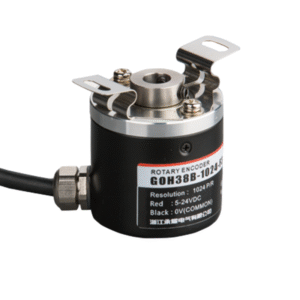
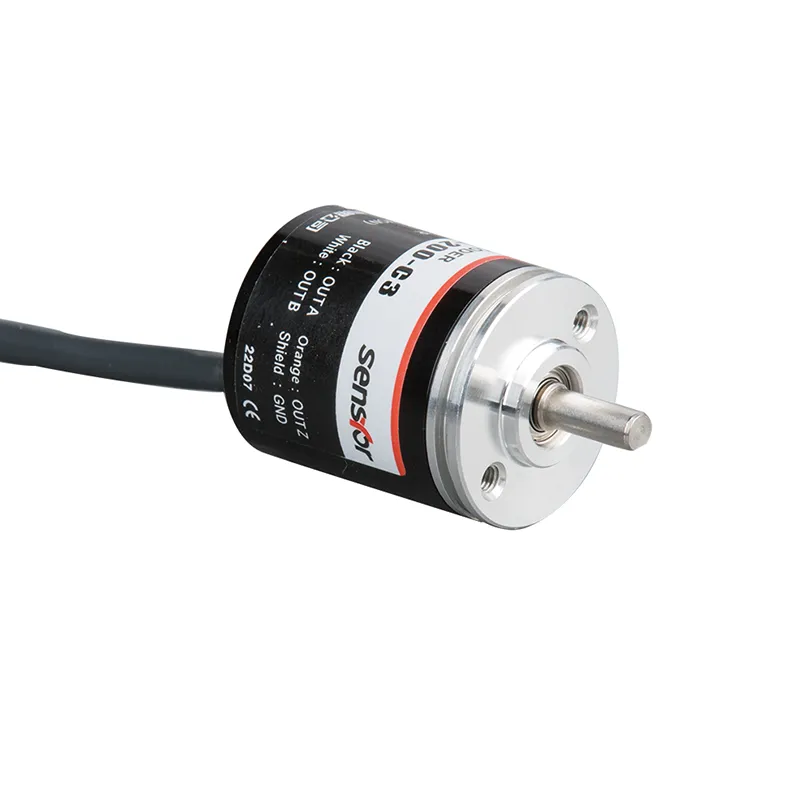
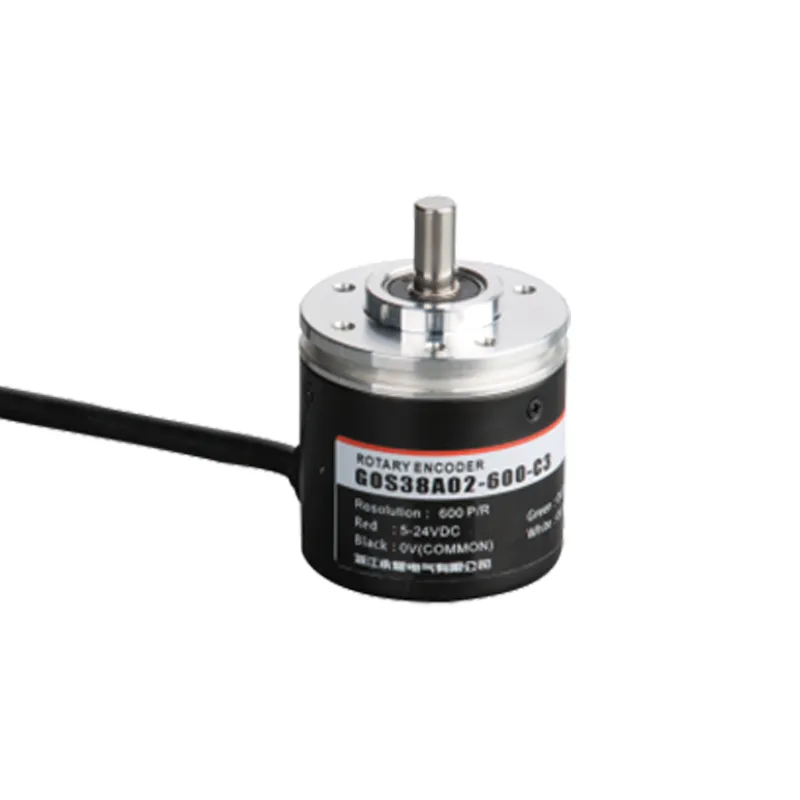
If you’re trying to measure position, speed, or direction in a machine or system, you’ve likely heard of rotary encoders. Simply put, a rotary encoder is a sensor that converts the angular position or motion of a shaft into an electrical signal. This signal helps control systems track movement accurately—crucial in everything from robotics to factory automation.
Rotary vs. Linear Encoders: What’s the Difference?
Rotary encoders measure rotational motion—think of a motor shaft turning.
Linear encoders track straight-line movement, such as a sliding machine table.
Both serve vital roles but excel in different applications.
Common Sensing Technologies in Rotary Encoders
There are three main sensing types you’ll come across in rotary encoders:
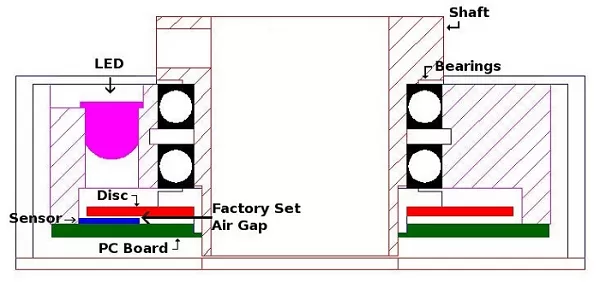
Optical Encoders: Use light and photodetectors to read patterns on a disc. They provide high accuracy and resolution but can be sensitive to dust and dirt.
Magnetic Encoders: Detect changes in a magnetic field using Hall-effect sensors or magnetoresistive elements. These are robust and more resistant to harsh environments.
Inductive Encoders: Rely on changes in inductance caused by a moving target. They offer excellent durability and work well where optical or magnetic solutions might fail.
Why Does This Matter?
Choosing the right rotary encoder type and sensing technology is essential for getting accurate position feedback and reliable performance under your specific operating conditions. Whether you need precise speed control or accurate direction sensing, understanding these basics sets you on the right path.
How Incremental Encoders Work
Incremental rotary encoders work by generating pulses as the shaft rotates. They use two output channels, commonly called A and B, which produce quadrature signals. These signals are offset in phase, allowing the system to detect both the direction and speed of rotation. Additionally, some incremental encoders include a Z-index pulse, giving a reference point once per revolution for precise alignment or homing.
The number of pulses per revolution (PPR) defines the encoder’s resolution—the more pulses, the finer the position details. By counting these pulses, a control system can track relative motion, but it can’t determine the absolute position without a reference. This makes incremental encoders ideal for applications where speed and relative positioning matter more than absolute position.
Absolute encoders work by generating a unique code for each shaft position, using patterns like Gray code or binary. This means every position corresponds to a specific digital value, allowing the system to know the exact angle or location instantly—no need to count pulses or reset after power loss.
There are two main types of absolute encoders:
Single-turn absolute encoders: Track positions within one full rotation (360°). Once the shaft completes a turn, the position resets but always stays accurate within that single turn.
Multi-turn absolute encoders: Keep track of multiple rotations by counting how many full turns the shaft has made. This is crucial for applications requiring exact position data over several revolutions.
For communication, absolute encoders use several interfaces such as SSI (Synchronous Serial Interface), BiSS (Bidirectional Serial Synchronous), parallel outputs, or sometimes analog signals. These interfaces serve different system needs for speed, wiring simplicity, and reliability in industrial settings.
If you’re exploring different options or want to understand the features better, check out this detailed guide on choosing the right absolute encoder for CNC or automation applications.
Key Differences: Incremental vs Absolute Encoders
When choosing between incremental rotary encoder and absolute encoder, understanding their core differences helps decide which fits your application best.
Feature
Incremental Encoder
Absolute Encoder
Position Feedback
Relative position, counts pulses from a reference point
True absolute position with unique code for each angle
Power Loss Behavior
Requires homing or zeroing on restart
Retains exact position immediately after power loss
Resolution & Accuracy
Depends on pulses per revolution (PPR); can lose count due to missed pulses
High precision, steady accuracy regardless of power cycle
Complex digital output (Gray code, SSI, BiSS interfaces)
Noise Susceptibility
More prone to noise and error accumulation over time
More robust against noise, minimal error buildup
Incremental encoders offer straightforward, cost-effective solutions when you can afford the homing process at startup and monitor position changes incrementally. Absolute encoders are ideal when you need immediate position feedback after power loss and higher accuracy without additional referencing steps.
For a deeper dive into how incremental rotary encoders manage position sensing and pulse generation, you might find this detailed guide on incremental rotary encoders useful.
Choosing the right encoder involves balancing accuracy, system complexity, and how the device handles power interruptions — crucial for reliable industrial encoder applications.
Comparison Table: Incremental Encoder vs Absolute Encoder
Feature
Incremental Encoder
Absolute Encoder
Position Feedback
Relative (counts pulses from zero)
True absolute position at all times
Power Loss Handling
Requires homing to reset position
Maintains position on power loss
Resolution
Defined by Pulses Per Revolution (PPR)
High resolution, based on code patterns
Output Signals
Quadrature signals (A, B channels), Z-index
Digital code (Gray code, binary), SSI, BiSS, parallel
Direction & Speed Detection
Via quadrature pulse phase difference
Direct position reading
Types Available
Mainly rotary (incremental rotary encoder)
Single-turn and multi-turn options
Signal Complexity
Simpler, easier to decode
More complex, requires decoding logic
Noise Susceptibility
Higher, prone to error accumulation
Lower, more stable
Cost
Generally more affordable
Usually higher initial cost
Applications
Motion control, servo motors, position tracking
Robotics, CNC machines, multi-turn tracking
Homing Requirement
Yes
No
This quick table highlights the core differences between the two popular rotary encoder types, helping you decide based on your motion control encoder needs, accuracy demands, and budget constraints. For practical use, our range of industrial quality encoders like the Glt8030b rotary encoder is built to suit various application environments with reliable performance.
Advantages and Disadvantages of Incremental vs Absolute Encoders
When choosing between incremental rotary encoders and absolute encoders, it helps to weigh their pros and cons based on your application needs.
Incremental Encoder Pros and Cons
Pros:
Simple and cost-effective: Incremental encoders tend to be less expensive compared to absolute ones, making them a budget-friendly choice.
High resolution and speed: They offer excellent pulse density (PPR – pulses per revolution) suitable for fast motion control tasks.
Easy integration: Their output, like quadrature signals, is straightforward for many servo motor encoder systems.
Widely used: Mature technology with lots of supplier and custom-made options available.
Cons:
Needs homing on startup: Since they provide only relative position feedback, the system must find a reference point after power loss.
Error accumulation: Small missed pulses can lead to position drift over time.
Susceptible to noise: Signal accuracy can degrade in harsh environments without proper shielding.
Absolute Encoder Pros and Cons
Pros:
True absolute position feedback: Each position has a unique code (like Gray code), so you always know the exact position, even after power loss.
Single-turn and multi-turn options: Multi-turn absolute encoders are great when tracking multiple rotations without resetting.
Robust signal output: Interfaces like SSI or BiSS reduce wiring complexity and improve noise immunity.
Ideal for critical applications: Position retention is vital in industrial encoder applications such as robotics and automation.
Cons:
Higher cost: More complex design usually leads to a higher price tag.
More complex system integration: Requires compatible controllers and protocols for data handling.
Potentially lower max speed: Some absolute encoders prioritize precision over speed, which may limit usage in ultra-high-speed setups.
By understanding these trade-offs, you can better select between an incremental or absolute encoder based on factors like your encoder resolution comparison, environment, and budget. For example, incremental models are often preferred in cost-sensitive motion control encoders, while absolute encoders dominate in high-reliability industrial environments.
For tailored solutions, exploring products like Sensyor’s customizable high-quality encoders ensures you get the right fit for your application.
Common Applications of Incremental and Absolute Encoders
Incremental encoders are widely used in applications where relative position and speed need to be tracked. They are common in industrial automation, conveyor systems, and servo motor control where precise motion control and speed feedback are essential. Their ability to provide quick pulse outputs makes them ideal for tasks like counting rotations and measuring speed in packaging machines, CNC tools, and robotics.
On the other hand, absolute encoders find their strength in applications requiring exact position feedback, even after power loss. These encoders are often used in robotics, elevator positioning, and wind turbines where knowing the true position immediately is critical. Multi-turn absolute encoders are especially valuable in large machinery and automated warehouses, where maintaining position history over many revolutions simplifies system start-up and error recovery.
Both encoder types are crucial in motion control encoders, but the choice depends on the need for either relative position with homing or true position retention. For high-quality rotary encoders that fit various industrial settings, companies often look toward suppliers offering customizable solutions like the reliable GLT58 rotary encoder series, designed for a range of precision tasks.
In :
Incremental encoders excel in speed measurement, counting, and simple positioning where homing routines are acceptable.
Absolute encoders are preferred where precise, power-loss resistant position data is essential.
Choosing the right encoder type ensures better system performance and reliability tailored to your application needs.
Factors to Consider When Choosing an Incremental Encoder vs Absolute Encoder
When selecting between incremental and absolute encoders, several important factors should guide your decision:
Application Requirements
Position and Speed: If your system needs precise speed monitoring with relative position tracking, incremental rotary encoders often suffice. For exact position feedback without needing a reference move, absolute encoders are better.
Budget: Incremental encoders generally cost less upfront, making them suitable for budget-sensitive projects. Absolute encoders, with more complex technology, have higher initial costs but can save money long-term by eliminating homing routines.
Environmental Factors
Vibration and Contamination: Harsh industrial conditions can impact encoder reliability. Magnetic or inductive absolute encoders typically handle dust and vibration better than optical incremental ones.
EMI (Electromagnetic Interference): Environments with high EMI may require encoders with shielded outputs or differential signals, common in many absolute encoders.
System Integration
Wiring and Protocols: Consider your existing system connections. Incremental encoders commonly provide simple A/B pulse outputs, easy to integrate with basic motion controllers. Absolute encoders support complex interfaces like SSI or BiSS, helpful in advanced automation.
Multi-turn Needs: For applications needing full shaft rotation tracking beyond one revolution, multi-turn absolute encoders are essential. Incremental encoders lack true multi-turn capability without extra hardware.
Cost-Benefit Analysis
Initial vs Long-Term: Incremental encoders save cost upfront but may increase setup time and maintenance due to homing requirements after power loss. Absolute encoders maintain position instantly, reducing downtime and improving system reliability, which can lower operational costs over time.
By balancing these factors based on your application, environment, and budget, you can choose the right encoder type that delivers reliable, accurate motion control. For tailored solutions, consider reaching out to suppliers specializing in both types of encoders to discuss customization and performance options.
A good example of an incremental rotary encoder designed for industrial use is available through specialized suppliers, ensuring both quality and competitive pricing.
Sensyor Encoder Solutions
Sensyor offers a wide range of incremental rotary encoders and absolute encoders, designed to meet diverse industrial needs. Whether you need high-precision position feedback for motion control encoders or robust solutions for harsh environments, Sensyor provides customizable options to fit your exact requirements. From custom-made encoders to standard models, their portfolio ensures competitive pricing without compromising quality.
Their incremental encoders deliver reliable pulse output for accurate speed and direction measurement, perfect for servo motor encoder applications. Meanwhile, Sensyor’s absolute encoders feature multi-turn and single-turn variants, supporting various signal outputs like SSI and BiSS, ensuring your system retains position data even after power loss.
With a strong focus on durability and precision, Sensyor encoders perform consistently in industrial settings where vibration, contamination, and EMI are concerns. For tailored solutions, you can explore their wide selection of products such as the LX40S wire type encoder and the GOS63 rotary encoder, both known for accuracy and ease of integration.
Sensyor stands out as a reliable supplier and trusted manufacturer in the encoder market, combining expert craftsmanship with modern technology to support your automation and control systems efficiently.
When working with motion control systems, you’ve probably encountered the term “PPR” in the specifications of an incremental rotary encoders. But what exactly does PPR mean? And why does it matter so much in applications like CNC machines, robotics, automation, and servo motors? In this post, we’ll dive deep into PPR (Pulses Per Revolution), explore how […]
Discover high-precision optical incremental encoders with customizable resolution and rugged design ideal for industrial motion control and automation.
Incremental encoder are electromechanical devices that measure changes in motion and direction. These units generate A/B digital outputs, with pulses per revolution (PPR) determining their resolution. By encoding the shaft’s angular displacement, they reveal velocity and relative position. Because they provide near-instant feedback, incremental encoders are ideal for high-precision motion control and positioning tasks, such […]
We use cookies to enhance your browsing experience, serve personalised ads or content, and analyse our traffic. By clicking "Accept All", you consent to our use of cookies.