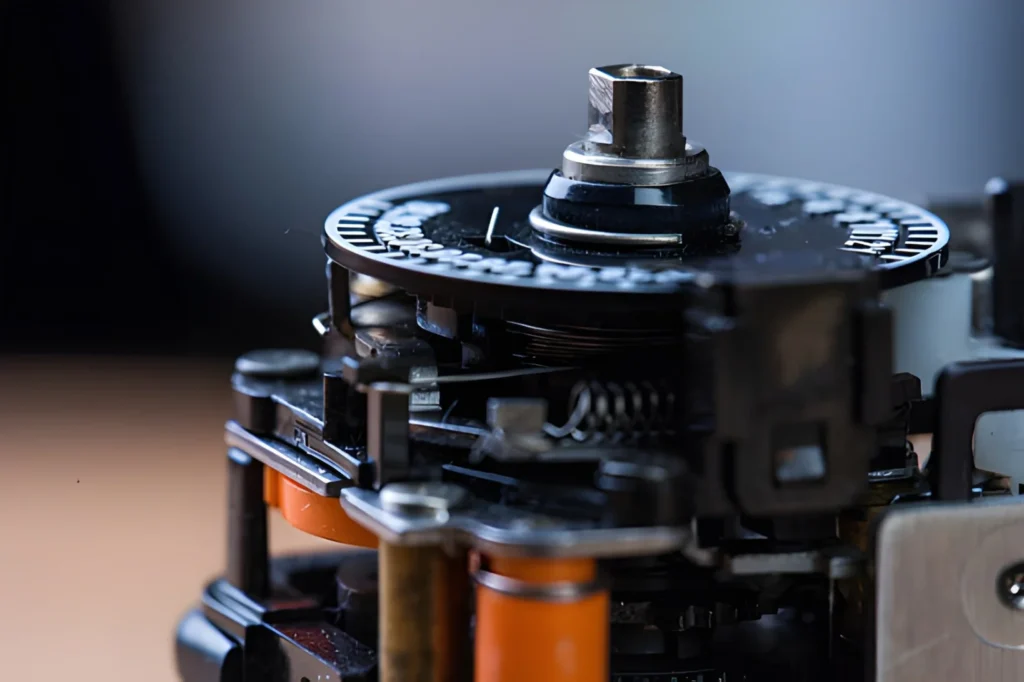
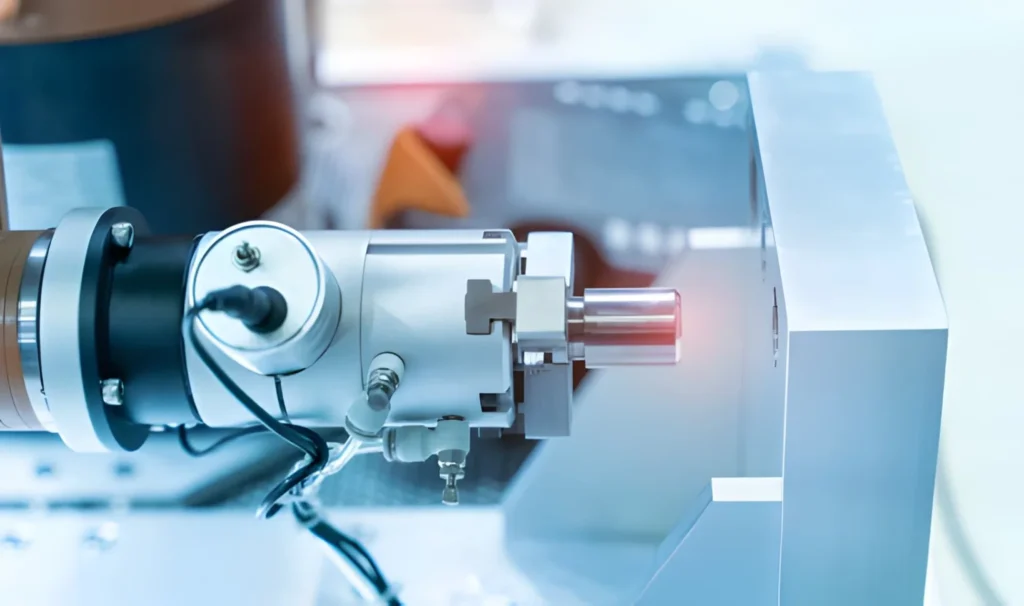
Have you ever wondered how machines track precise movement or position? That’s where incremental encoders come in. These devices convert motion into electrical signals, helping systems measure rotation, speed, or linear displacement accurately and efficiently.
How Incremental Encoders Work
Incremental encoders generate signals that correspond to movement, primarily through:
Quadrature signals (A/B channels): Two output channels produce square waves shifted by 90 degrees. This phase difference helps systems detect direction and count pulses accurately.
Index pulse (Z channel): A single pulse per revolution that acts as a reference point or zero position for resetting counters.
Pulse generation: The encoder produces pulses as the shaft or scale moves. The number of pulses per revolution (PPR) determines the resolution of the measurement.
Incremental vs. Absolute Encoders
While both use pulses, the key difference lies in data:
Incremental encoders track relative motion, providing pulses to measure changes in position but needing a reference point on startup.
Absolute encoders deliver a unique position value instantly on power-up, offering absolute position knowledge without reset.
Understanding this helps decide which encoder suits your application best.
Common Types of Incremental Encoders
Incremental rotary encoders come in various designs to fit different needs:
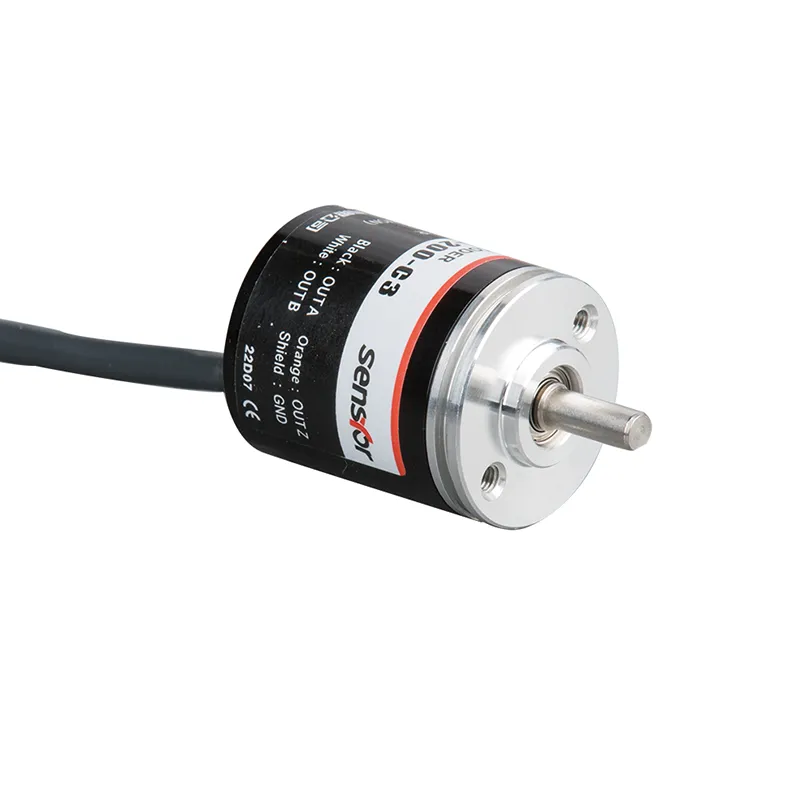
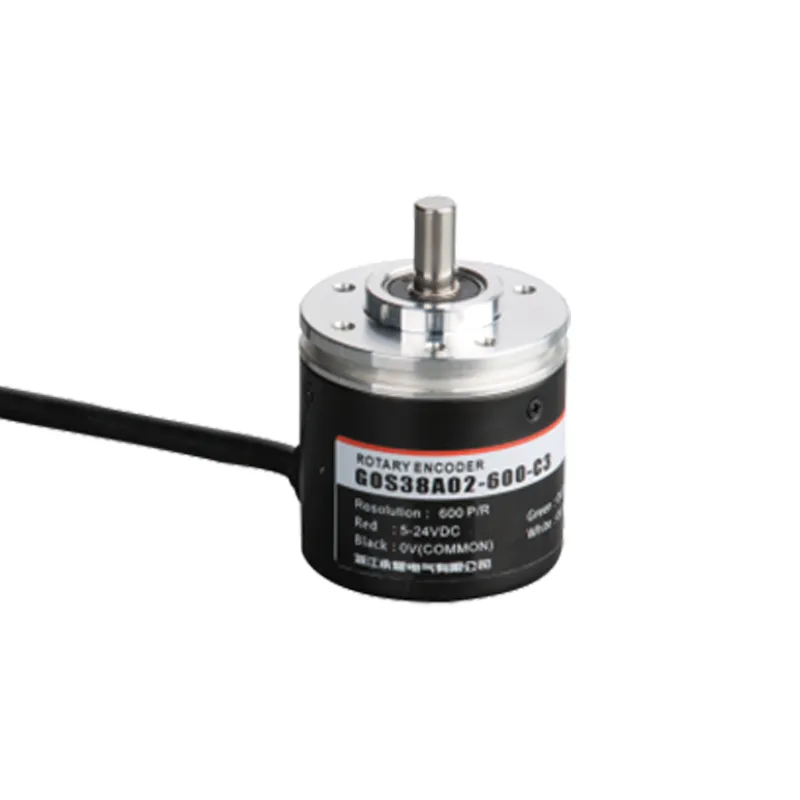
Solid shaft encoders: The encoder shaft is solid and connects directly to the motor or shaft.
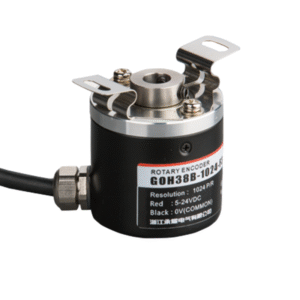
Hollow shaft encoders: Feature a hollow center to fit over a shaft, simplifying installation in tight spaces.
Thru-bore encoders: Similar to hollow shaft but with extended clearance, ideal for certain motor feedback applications.
Linear incremental encoders: Measure linear displacement rather than rotation, perfect for CNC machines and automation systems.
Advantages of Incremental Encoders
Why choose incremental encoders? They offer several benefits:
Cost-effectiveness: Generally more affordable than absolute encoders.
High-speed performance: Can handle fast rotation rates without signal loss.
Simplicity: Easier to implement and troubleshoot — perfect for many industrial applications.
By understanding these basics and differences, you can better decide how incremental encoders fit your project’s requirements, especially when considering customization options to optimize performance.
Why Customize Incremental Encoders?
Off-the-shelf incremental encoders often fall short in meeting unique application needs. Standard models may not fit tight spaces, handle extreme environments, or deliver the exact precision required for certain systems. This is where customization becomes valuable.
Limitations of Standard Incremental Encoders
Fixed resolution options that don’t match specific speed or accuracy demands.
Standard shaft sizes that may not fit your machinery or mounting style.
Limited housing materials and IP ratings unsuitable for harsh environments.
Generic electrical outputs that don’t align with your control systems.
Benefits of Customizing Incremental Encoders
Benefit
Description
Improved precision
Tailored resolution and pulses per revolution (PPR) for accurate feedback
Better integration
Customized shaft diameter, mounting style, and electrical signals for seamless system fit
Enhanced durability
Special housing materials and IP ratings designed for tough conditions
Reduced system costs
Minimizes need for additional components or adaptations in your design
When Customization Is Essential
Space constraints: Small or unusual encoder footprints prevent using standard models.
Key Customization Options for Incremental Encoders
Custom incremental encoders come with a wide range of options to fit specific application needs. Here’s a quick breakdown of the main customization areas:
Feature
Options & Details
Resolution & PPR
From low counts up to ultra-high pulses per revolution (10,000+ PPR) for ultra-precise feedback.
Mechanical Features
Shaft diameter/type (solid, hollow), housing material (metal, plastic), mounting styles (flange, servo, bearingless), plus IP ratings for dust and water protection.
Electrical Outputs
TTL, HTL, push-pull, line driver, open collector, and various voltage levels to match your control system.
Signal Configurations
Standard quadrature channels (A/B), index pulse (Z) options, and complementary signals for better noise immunity. For details on quadrature output signals, explore this guide on how to identify A, B, and Z phases.
Additional Features
Programmable resolutions, commutation tracks for motor control, different cable or connector types, and extended operating temperature ranges.
Technology Choice
Optical encoders offer high accuracy and resolution, while magnetic encoders provide increased durability and resistance to harsh environments. Choosing between these depends on your performance priorities.
These customization options allow you to optimize your incremental encoder for precision, environment, and integration with your existing systems, ensuring you get the most reliable and efficient feedback solution.
The Customization Process with sensyor
At sensyor, customizing your incremental encoder starts with a straightforward process designed to meet your exact needs. First, we begin with an initial consultation to understand your application requirements and define key specifications like resolution, shaft type, and output signals.
Next, we move to specification definition, where details such as pulses per revolution (PPR), mechanical features, and housing options are finalized. Following this, we develop prototypes to validate design and performance. These prototypes undergo rigorous testing to ensure reliability before moving into full production.
We understand that time and cost matter. sensyor offers competitive lead times and flexible minimum order quantities to suit businesses of all sizes. Because all our manufacturing happens in-house, we maintain tight quality control and enable quick design iterations—meaning faster delivery without sacrificing precision.
To support your project from start to finish, sensyor provides easy-to-use product configurators, detailed technical datasheets, and responsive engineering support. This comprehensive approach ensures your custom incremental encoder matches your exact operational needs, whether for rotary or linear applications, and comes backed by expert guidance every step of the way.
Explore sensyor’s precision components like our CY7 high-frequency counter to complement your customized incremental rotary encoder system.
Applications Benefiting from Customized Incremental Encoders
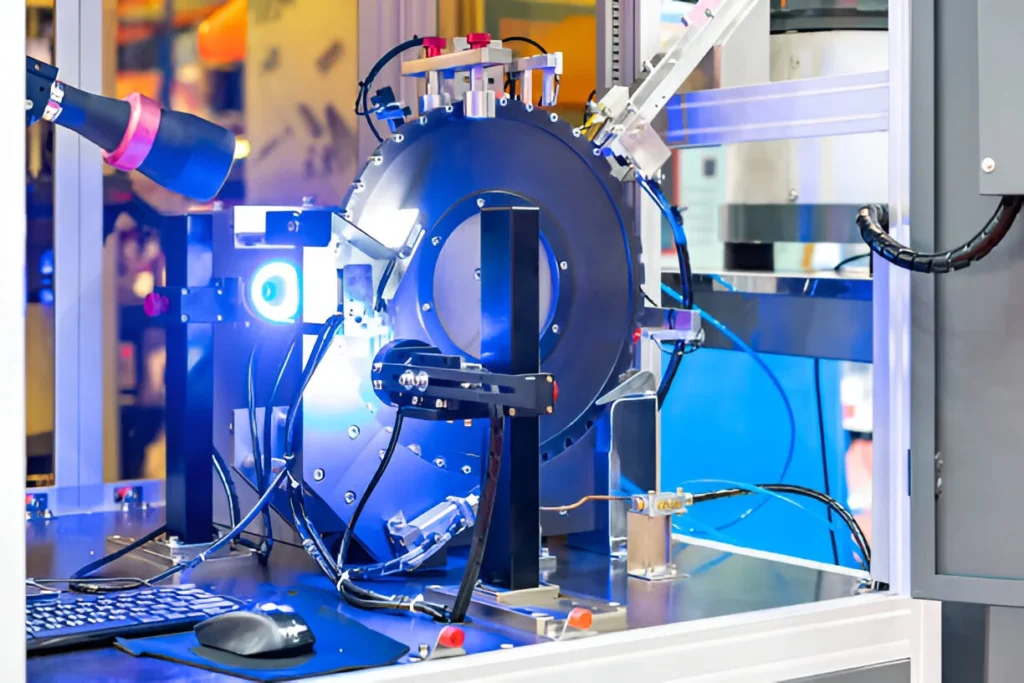
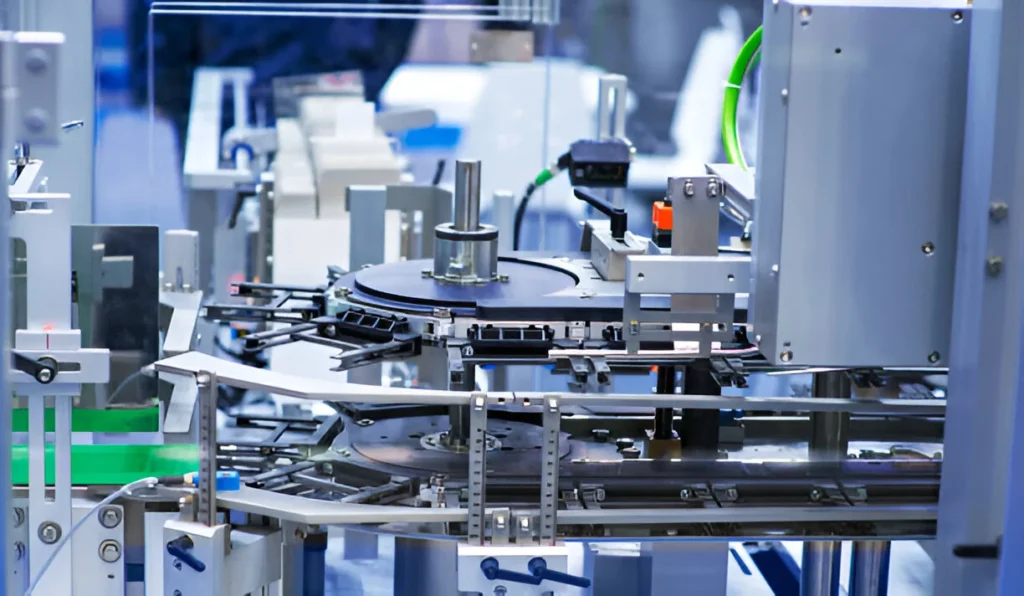
Customized incremental encoders play a crucial role across various industries where precision and reliability matter. In industrial automation and robotics, these encoders provide accurate position and speed feedback, helping machines perform repeatable, high-speed tasks with confidence. Their adaptability makes them ideal for tailored solutions in complex robotic arms and automated assembly lines.
For motor feedback in servo and BLDC systems, customized incremental rotary encoders optimize performance by matching exact resolution and signal output requirements. This ensures smooth motor control and efficient operation, especially in applications with strict speed and torque demands.
In CNC machinery, conveyor systems, and packaging equipment, tailored encoders improve accuracy and reliability, fitting unique shaft sizes and housing constraints while withstanding harsh operational environments. Custom features like specific pulses per revolution (PPR) and IP-rated housings enhance durability and precision in these demanding setups.
Medical devices and renewable energy sectors also benefit from customized incremental encoders designed to meet strict standards and rugged conditions. For example, vibration-resistant encoders with specialized sealing protect sensitive equipment in wind turbines or diagnostic machines.
Real-world case studies highlight how custom incremental encoders deliver measurable performance gains: enhanced precision, longer service life, and better integration, cutting overall system costs. When off-the-shelf solutions fall short, customized encoders unlock new potential in your equipment, making them indispensable components across critical applications.
Choosing the right partner for incremental encoder customization is crucial to get the best results for your project. Start by evaluating key factors such as manufacturing expertise, relevant quality certifications, supply chain reliability, and clear pricing transparency. These ensure you get a product that meets your standards without unexpected delays or hidden costs.
When comparing suppliers, focus on their flexibility to adapt to unique needs, commitment to innovation, and the ability to offer long-term technical support. Custom projects often require close collaboration and ongoing adjustments, so a responsive partner is essential.
At sensyor, we stand out with competitive pricing and a proven track record in delivering custom rotary and linear incremental encoders. Our dedicated factory capabilities mean faster turnaround times and consistent quality control throughout the production process. With sensyor, you get the reliability and expertise to support high-performance, tailored encoder solutions that fit your exact application.
An incremental encoder is an electromechanical device that tracks changes in motion and its direction. It produces digital output signals, usually labeled A and B, that pulse a set number of times per shaft rotation. These pulses encode angular movement so a system can work out speed or relative position. Because it gives almost instant […]
When working with motion control systems, you’ve probably encountered the term “PPR” in the specifications of an incremental rotary encoders. But what exactly does PPR mean? And why does it matter so much in applications like CNC machines, robotics, automation, and servo motors? In this post, we’ll dive deep into PPR (Pulses Per Revolution), explore how […]
Compare incremental encoder vs absolute encoder to choose the best rotary encoder for accuracy speed and reliable position feedback in industrial applications
We use cookies to enhance your browsing experience, serve personalised ads or content, and analyse our traffic. By clicking "Accept All", you consent to our use of cookies.