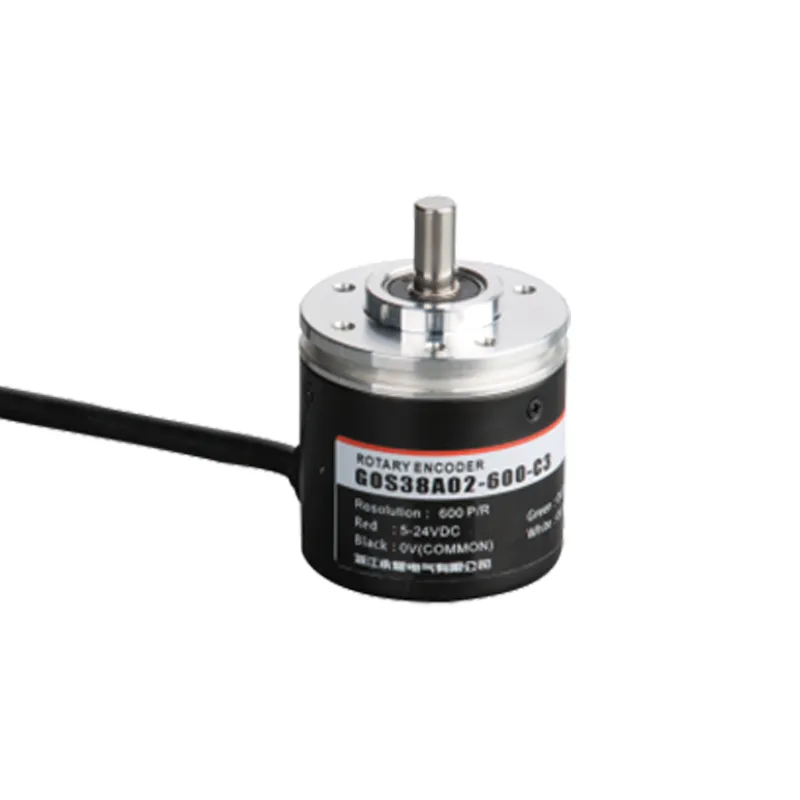
Core Components and What Is an Incremental Optical Encoder?
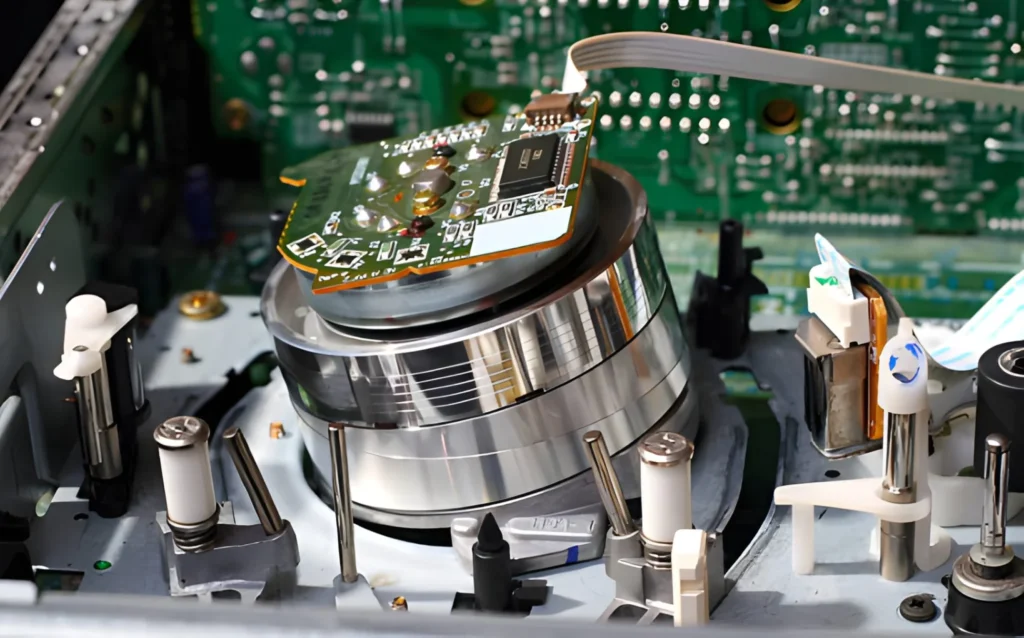
An incremental encoder is a precise electromechanical device that converts angular or linear position into digital pulses. It primarily consists of three core components:
Code disk: A rotating disc with evenly spaced transparent and opaque segments
Light source: Usually an LED shines light through or onto the code disk
Photodetector array: Senses the light interruptions created by the code disk’s pattern
As the disk rotates or moves linearly, the photodetector generates a series of pulses corresponding to movement increments. These pulses enable precise measurement of position, speed, or direction, which is critical in industrial automation, robotics, and motion control systems.
How Incremental Optical Encoders Differ
Unlike absolute encoders that provide a unique position value at any shaft angle, incremental encoders only produce relative position changes by counting pulses from a known reference point. This means incremental encoders require a homing procedure to establish a “zero” position on startup.
Compared to magnetic encoders, incremental optical encoders generally offer higher resolution and better noise immunity in clean environments but may be more sensitive to dust and contaminants. Optical rotary encoders typically rely on light passing through or reflecting off the disk, providing very fine positional feedback.
Optical Quadrature Technology: A, B, and Z Signals
The principle behind many incremental optical encoders is optical quadrature technology. This uses two output channels, commonly called A and B signals, which generate square waves offset by 90 electrical degrees:
A and B signals allow determination of rotation direction and increased positional resolution by counting rising and falling edges.
The Z signal (index pulse) provides a once-per-revolution reference marker to establish an exact position.
Together, these signals form the foundation of quadrature incremental encoders, ensuring reliable velocity and position feedback with fine resolution. This technology makes them indispensable in precision motion control and industrial automation.
How Incremental Optical Encoders Work
Incremental optical encoders use a simple but effective method to track position and movement. At their core, they feature an LED light source shining onto a rotating or moving disc, which is the heart of the pulse code generation system. This disc can be transmissive, where light passes through slots or transparent areas, or reflective, where light reflects off patterns on the disc surface. As the disc turns, the light is alternately blocked or allowed through, creating a series of pulses.
These pulses are picked up by photodetectors and converted into electrical signals—most importantly the quadrature signals A and B. These two channels are offset by 90 degrees, which allows detecting both the direction and speed of motion. The number of pulses generated per full rotation is known as the pulses per revolution (PPR), a key factor in determining resolution.
Additionally, many incremental optical encoders include a third output known as the index pulse (Z signal). This pulse marks a fixed reference point, providing a way to reset position counters or improve accuracy during operation. For even higher resolution, interpolation techniques can be applied to the quadrature signals, effectively increasing the encoder’s output pulses without mechanical changes.
Understanding these basics is crucial for selecting the right incremental optical encoder, especially when matching resolution and performance to your specific application. For more details on how these signals work and how to distinguish them, check out this guide on incremental rotary encoder main output signals and how to identify A, B, Z phases.
Key Specifications and Performance Factors of Incremental Optical Encoders
When choosing incremental optical encoders, resolution is a top factor. It defines how many pulses are generated per revolution (PPR), directly affecting precision. Higher resolution means finer motion detection, essential in precision motion control encoder applications. Common resolutions range widely, and matching the encoder’s PPR to your system’s needs ensures optimal performance.
Output signal types also matter. Incremental optical encoders typically provide TTL, HTL, open collector, or differential (RS422) outputs. TTL is standard for low-voltage, simple systems. HTL outputs suit industrial environments due to higher noise immunity. Differential signals like RS422 are excellent for long cable runs and reduce signal interference, which is vital in noisy industrial settings.
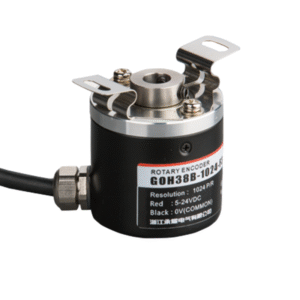
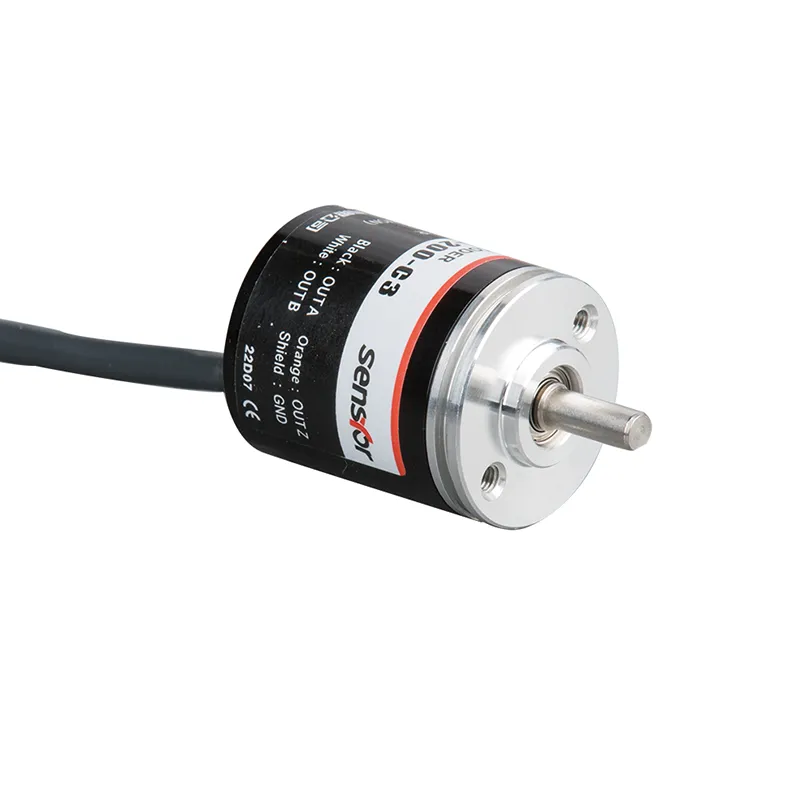
Shaft design impacts installation and application flexibility. Encoders come with solid or hollow shafts. Solid shafts are common and robust, while hollow shafts allow direct mounting over a shaft, simplifying integration. Output designs often include push-pull stages for robust signals compatible with various controllers.
Speed performance is critical. Incremental optical rotary encoders typically support from a few thousand to tens of thousands of revolutions per minute (RPM). Consider your application’s maximum speed to avoid pulse loss or inaccuracies.
Environmental ratings protect encoders against harsh conditions. Look for IP-rated housings—IP65 or higher is common for dust and water resistance. Temperature ranges vary from industrial-grade (-40°C to 85°C) to extended temperature models. Shock and vibration ratings ensure reliability, especially in CNC machines or robotics.
For detailed options on rotary incremental encoders with robust housing and diverse output types, explore Sensyor’s GOS58FO3 rotary encoder and GOS58FO4 models, designed to meet varied industrial needs.
Environmental Ratings and Mounting Options
When choosing incremental optical encoders, it’s crucial to consider environmental ratings and mounting styles to ensure reliable performance in your application.
Shaft and Mounting Choices
Shaft types: Solid shafts fit most traditional setups, while hollow shafts offer easier installation on existing shafts without couplings.
Mounting options: Flange, servo, and blind hollow shaft mounts are common to suit different mechanical designs.
Proper alignment during installation prevents premature wear and keeps signal quality high.
Environmental Ratings
Incremental optical encoders often come with IP ratings like IP54 or IP65, protecting against dust and moisture. Some units are designed to withstand:
Temperature ranges from -40°C to +85°C
Vibration and shock typical in industrial settings
Contaminants like oil, dust, or coolant sprays
Comparison with Absolute Encoders
Feature
Incremental Optical Encoder
Absolute Encoder
Position feedback
Relative, needs homing for zero point
Absolute, no homing needed
Complexity & cost
Simpler and more cost-effective
More complex, higher cost
Environmental tolerance
Moderate, can be sealed or open
Often better sealing for harsh use
Signal output
A, B, Z quadrature signals
Multibit absolute data
Common Pitfalls to Avoid
Noise interference: Electrical noise can cause false pulses—shielded cables and differential outputs help reduce this.
Quadrature errors: Misalignment in the optical disk or sensors causes phase shifts. Precision mounting and calibration can fix this.
Disk contamination: Dust or grease on the optical disk can disrupt pulse generation. Use sealed encoders or regular cleaning for maintenance.
Speed effects: At very high rotational speeds, pulses can blur or get skipped. Choose encoders rated for your max RPM to avoid this.
Selecting suitable environmental protection and proper mounting ensures your incremental optical encoder lasts longer and performs reliably under real-world conditions. For sturdy, industrial-ready options, check high-quality rotary encoders like the GOS58B05 rotary encoder designed for demanding environments.
Incremental vs Absolute Optical Encoders
When deciding between incremental and absolute optical encoders, it’s all about what your application really needs. Incremental encoders provide relative position data by outputting pulses as the shaft turns. This makes them ideal for systems where you only need to track movement or speed, like conveyor belts or basic motor feedback.
Absolute encoders, on the other hand, give you a unique position value for every point on the shaft. This is crucial when you need exact position information immediately on startup or after power loss, such as in robotics or precision CNC machines.
When incremental encoders are sufficient:
Systems with continuous power where zeroing or homing can be done
Speed measurement and direction sensing tasks
Cost-sensitive applications where high resolution is not critical
When absolute encoders are required:
Applications needing position retention after power intermittent drops
Systems demanding exact position data without referencing moves
Safety-critical environments where reliable position feedback is mandatory
For more insights into how incremental encoders compare with absolute types, check out this detailed guide on key advantages of incremental encoders over absolute encoders and get a clearer picture of the differences. This will help you pick the right optical rotary encoder that fits your project needs and budget.
Rotary vs Linear Incremental Encoders: Differences and Applications
Incremental optical encoders come mainly in two types: rotary incremental encoders and linear incremental encoders. Both measure position changes but serve different motion profiles and applications.
Fundamental Differences
Rotary incremental encoders detect angular position by converting shaft rotation into electrical pulses. They’re widely used in motors, robotics, and CNC machines where rotational measurement is critical.
Linear incremental encoders measure straight-line displacement by tracking the movement along a linear scale or rail. These are common in precision machining, conveyor systems, and any application requiring direct linear position feedback.
Key Applications
Encoder Type
Typical Uses
Rotary Incremental Encoder
Motor feedback, robotics, servo drives, CNC rotary axes
Linear Incremental Encoder
Precision linear stages, material handling, position tracking on conveyor belts
Pros and Cons Table
Feature
Rotary Incremental Encoder
Linear Incremental Encoder
Position Measurement
Angular, ideal for rotating parts
Linear, best for straight movement
Cost
Generally more affordable and widely available
Often more expensive due to scale length and precision
Complexity
Easier to integrate; compact design
Requires mounting along a linear axis; more installation care needed
Integration
Common in many machines; well-supported outputs (TTL, HTL, RS422)
Requires proper alignment; linear scales may need protection
Both types use optical quadrature technology producing A, B, and Z signals for precise position and speed detection. Choosing between rotary and linear depends on your application’s motion type and accuracy needs.
For a deeper dive into rotary encoders and their performance, check out this detailed guide on incremental rotary encoders.
This comparison helps narrow down the right incremental optical encoder style whether your project demands rotational or linear position feedback.
Top Applications of Incremental Optical Encoders
Incremental optical encoders are widely used across various industries due to their precision and reliability. Key applications include:
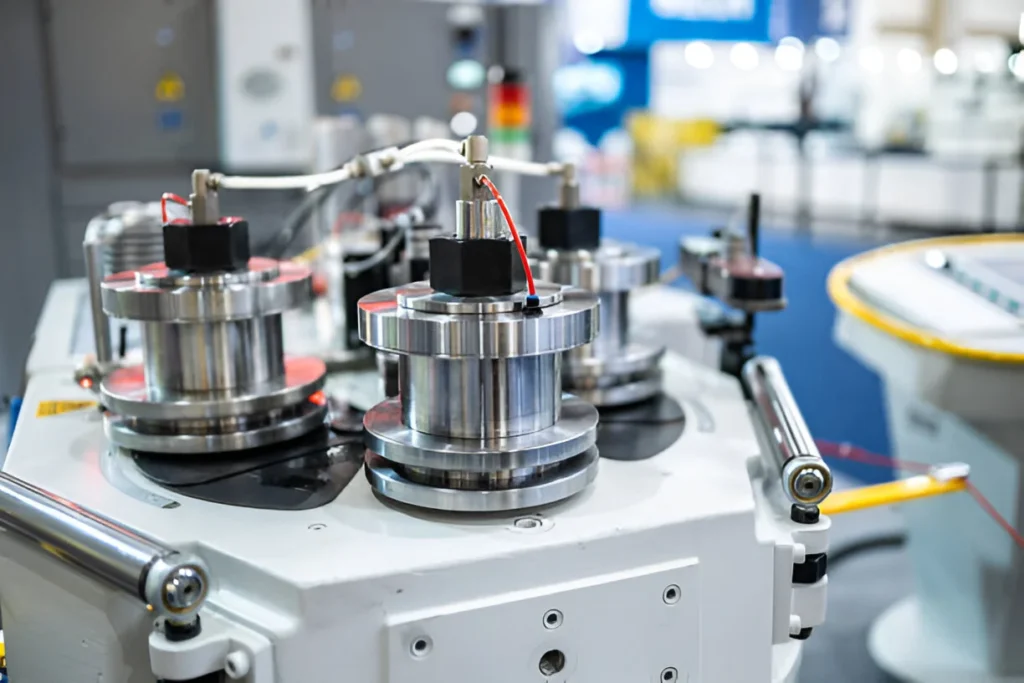
CNC Machines: They provide accurate position feedback for precise tool control, ensuring high-quality machining and repeatability.
Robotics: Used for joint position sensing and motion control, enabling smooth and coordinated movements.
Automated Guided Vehicles (AGVs): Help track wheel rotation and navigation for reliable autonomous movement.
Medical Devices: Offer precise control in equipment like imaging systems and robotic surgical tools where accuracy is critical.
Conveyor Systems: Monitor belt speed and position to manage material flow efficiently.
Additionally, incremental encoders are essential in servo motor feedback for closed-loop control systems, offering real-time position and speed data that help maintain system stability and performance during operation.
These applications highlight why incremental optical encoders remain a top choice for precision motion control across global markets.
Types of Incremental Optical Encoders
Incremental optical encoders come in several types to fit various industrial and automation needs. The most common are rotary incremental encoders, which measure angular position, and linear incremental encoders, designed for straight-line movement. Besides these, you’ll find modular encoders and kit options, which offer flexible assembly and customization for specialized applications.
When choosing the right incremental optical encoder, use this quick buyer’s checklist:
Resolution: Match pulses per revolution (PPR) or line count to the precision your application demands.
Size and form factor: Consider shaft diameter and mounting space constraints.
Output type: TTL, HTL, or RS422 signals depending on your controller requirements.
Environmental factors: Make sure the encoder’s IP rating and temperature range are suitable for your setting.
For specialized needs, many suppliers offer custom and high-resolution models, enabling ultra-precise position feedback, especially in CNC machines or robotics.
If you’re working with linear setups, take a look at Sensyor’s detailed overview of linear encoder types to find the best fit for your system. This guide helps match encoder specs to your application, ensuring you get accurate and reliable feedback every time.
Pricing, Suppliers, and Manufacturing of Incremental Optical Encoders
When it comes to pricing incremental optical encoders, costs mainly depend on resolution, encoder type, and housing quality. Basic rotary incremental encoders with standard resolutions are generally affordable, while high-resolution or custom models can be more expensive due to intricate manufacturing processes. Factors such as rugged housings for harsh industrial use or specialized designs for medical devices also increase the price.
Choosing the right incremental encoder supplier makes a big difference. Sensyor stands out by offering competitive pricing paired with quality manufacturing, customizable options, and reliable delivery schedules. Sensyor’s ability to provide bulk pricing and quick lead times ensures businesses can get exactly what they need without long waits or budget overruns.
For projects requiring precise matching of encoder size and resolution, Sensyor’s expertise in incremental rotary encoder production and custom solutions is a key advantage. Their manufacturing plant is equipped to handle both standard and high-resolution optical encoders, backed by consistent quality control.
To explore options suited to your project, check out Sensyor’s detailed guidance on how to choose the right encoders for your B2B project and consider their high-frequency counter products for enhanced system integration.
Installation, Wiring, and Troubleshooting Tips for Incremental Optical Encoders
Proper installation and wiring are crucial to get the best performance from incremental optical encoders. Start with careful mounting and alignment—any shaft misalignment or loose fittings can cause signal errors and premature encoder wear. Use the recommended mounting kits and rigid brackets to ensure stability.
When wiring, know the common output types: TTL, HTL, push-pull, open collector, or differential signals (RS422). Follow the wiring diagrams specific to your encoder model to connect power, ground, and signal wires correctly. For example, Sensyor’s GLS58B02 rotary encoder offers clear output specifications that help streamline installation.
Common issues with incremental encoders include missed pulses, noise, and signal distortion—often caused by electrical interference, dirt on the optical disk, or improper cable shielding. To reduce noise:
Use twisted-pair shielded cables
Keep encoder wiring away from high-voltage lines
Ensure connectors are secure and corrosion-free
Missed pulses might also stem from excessive shaft vibration or speed exceeding limits—verify that your encoder’s specs match your application’s rotation or linear motion speed.
Regular maintenance ensures long encoder life: clean the optical disc gently using lint-free cloths and avoid exposure to dust or moisture. Choose sealed encoder models for harsh environments if needed.
By following these tips, you can avoid common pitfalls and keep your incremental optical encoder running smoothly in demanding industrial setups. For advanced troubleshooting or to select the right encoder for your system, check out detailed product guides like the GOS58 rotary encoder from Sensyor.
Advantages and Limitations of Incremental Optical Encoders
Incremental optical encoders offer high resolution and cost-effective solutions for many industrial applications. They are popular because of their simple interfacing and relatively robust design, making them easy to integrate with control systems. The quadrature signals (A, B, and index Z) they generate provide precise pulse output that’s perfect for position and speed feedback in motors or machinery.
However, these encoders do have some limitations:
Contamination susceptibility: Since they rely on optical sensing, dust, oil, or dirt on the pulse disc can cause signal degradation or missed pulses.
Noise sensitivity: Electrical or mechanical noise can introduce quadrature errors, affecting accuracy.
Homing delays: Incremental encoders don’t provide absolute position after power loss, so systems need additional homing routines.
To tackle these issues, many incremental optical encoders come with sealed housing options that protect against dust and moisture, helping maintain signal quality. Also, proper shielding and grounding reduce noise problems.
For a reliable option that balances precision and durability, consider models like Sensyor’s GOS5008AO1 rotary encoder or the GLT48 rotary encoder, which are designed with these mitigation features in mind.
In , incremental optical encoders remain a solid choice where high resolution and cost matter most—just keep in mind the environment and support features needed to avoid common pitfalls.
Why Incremental Optical Encoders Remain Essential
Incremental optical encoders continue to be vital in many industries due to their balance of accuracy, cost-efficiency, and adaptability. Whether you’re working in robotics, CNC machinery, or conveyor systems, these encoders provide reliable position feedback necessary for precise motion control. Their simplicity and proven performance make them a go-to choice for applications where absolute position isn’t mandatory but high-speed, precise incremental feedback is critical.
Step-by-Step Selection Checklist for Incremental Optical Encoders
To find the right incremental optical encoder, consider these key points:
Resolution: Match pulses per revolution (PPR) to your system’s accuracy needs.
Output Type: Choose between TTL, HTL, push-pull, or differential outputs based on your control system.
Shaft and Mounting: Pick solid or hollow shafts and ensure compatible mounting options.
Speed and Environment: Verify the encoder’s max speed ratings and environmental protection like IP ratings.
Signal Types: Check availability of A, B, and Z (index) signals to fit your quadrature decoding requirements.
Size and Form Factor: Ensure the encoder fits your mechanical design constraints.
How Sensyor Supports Your Needs
Sensyor stands out as a trusted supplier of high-quality incremental optical encoders tailored to global standards. With a wide range of rotary and linear encoders, including specialized high-resolution models, Sensyor offers:
Customization: Options to fine-tune resolution, shaft design, and output formats.
Reliable Quality: Rigorously tested products built for harsh industrial environments.
Comprehensive Support: Technical assistance from initial selection through installation.
Competitive Pricing: Flexible solutions that balance cost and performance.
Fast Delivery: Reasonable lead times and bulk pricing for large projects.
Explore Sensyor’s lineup of proven incremental rotary encoders such as the GOS63 rotary encoder or the high-performance GLT8030B rotary encoder to get started with dependable motion feedback.
By following this checklist and partnering with a supplier like Sensyor, you can confidently choose incremental optical encoders that meet your application’s precision, durability, and budget demands—keeping your systems running smoothly and accurately.
Discover expert incremental encoders customization with tailored resolution, mounting, signals, and housing for precise industrial motion control solutions.
When you work with motion control systems, a core decision is choosing the right encoder to track position and speed. Among the many options, absolute encoder and incremental encoder are the two most common types. Each has its own strengths, limitations, and ideal applications. Understanding how they differ—and how they can complement your design—helps you […]
In today’s fast-paced industrial and automation landscape, incremental encoder are everywhere—hidden in robotics, conveyors, packaging lines, and even your favorite coffee machine. But, here’s something people often overlook: the real-world environment where these nifty gadgets operate. Does it matter? Absolutely. Sure, incremental encoders are versatile and accurate, but environmental factors can make or break their performance and […]
We use cookies to enhance your browsing experience, serve personalised ads or content, and analyse our traffic. By clicking "Accept All", you consent to our use of cookies.