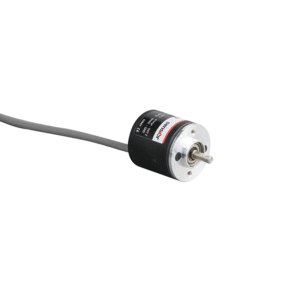
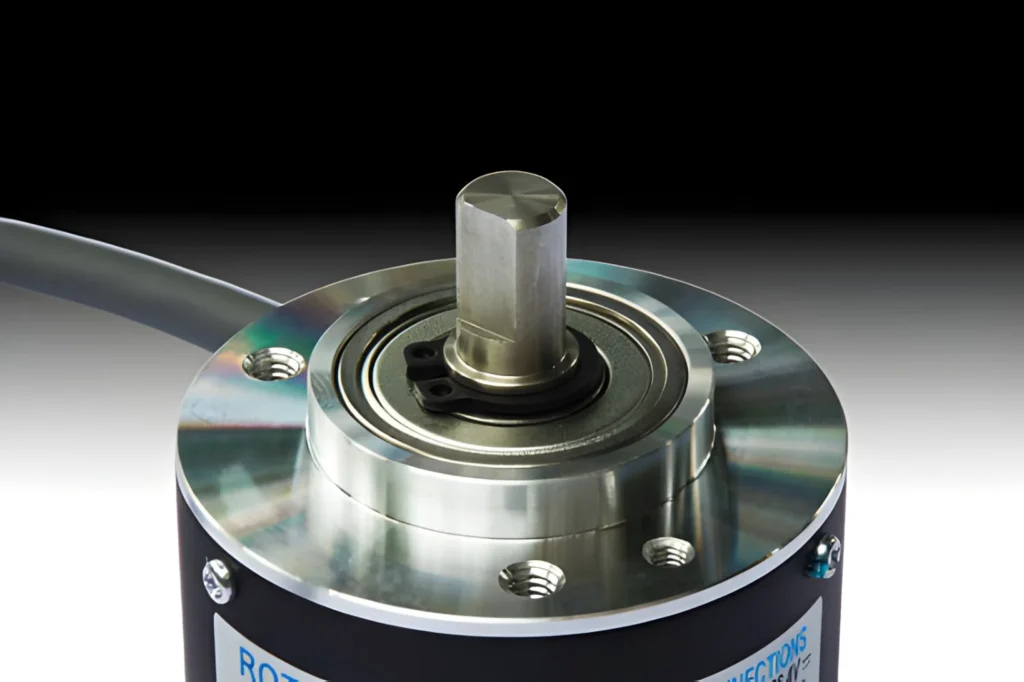
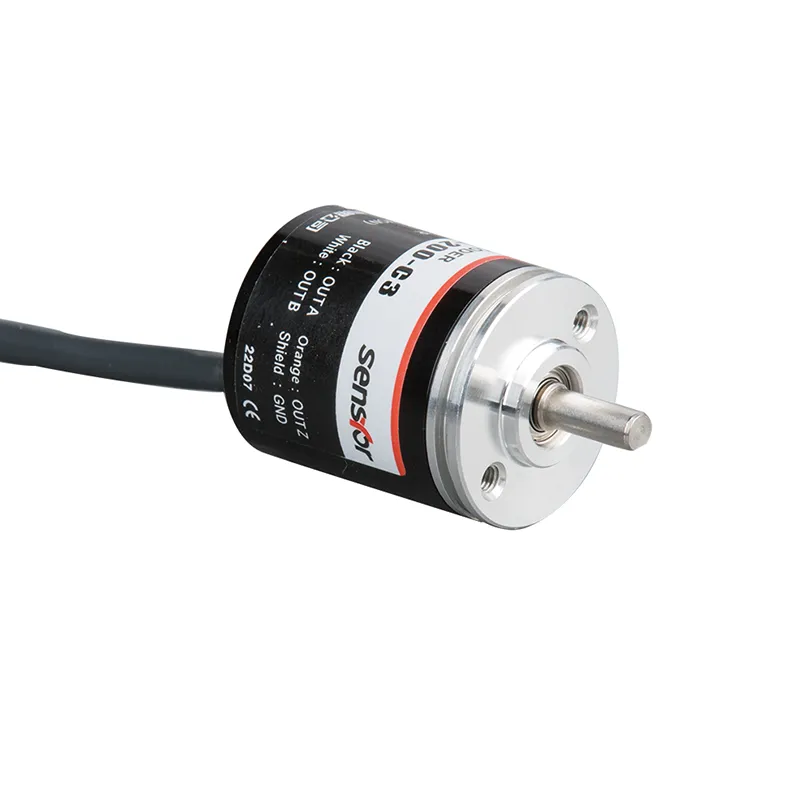
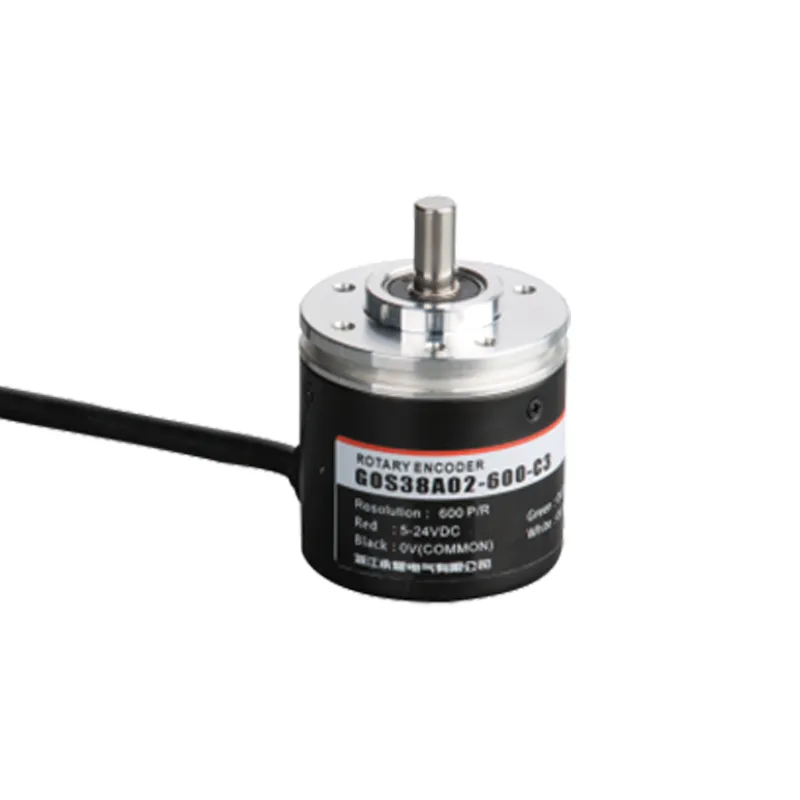
An incremental rotary encoder is a precise angular position sensor designed to convert rotational motion into a stream of digital pulses. This core function allows control systems to measure the relative position and speed of rotating shafts, making it essential in industrial automation feedback and motion control feedback loops.
How It Works: Conversion of Angular Motion Into Pulses
Incremental encoders generate a pulse train by detecting changes as the shaft turns. Each pulse corresponds to a small angular movement, allowing devices such as PLC high-speed counters or servo motor speed feedback systems to accurately track motion.
The basic output signals include:
Channels A and B: These produce a quadrature encoder output—two pulse streams 90 degrees out of phase—to detect both position increments and direction.
Channel Z: Known as the zero index pulse, it provides a single reference pulse per revolution, essential for establishing an absolute zero position.
Optical vs. Magnetic Sensing Technologies
Two predominant sensing technologies power incremental rotary encoders:
Optical rotary sensors use light interruption with a slotted disc, providing high resolution and low noise, ideal for applications requiring precision.
Magnetic encoders rely on magnetic field variations, offering better resistance to dust, oil, and vibration, suited for harsh industrial environments.
Understanding the Pulse Train: Position and Speed Calculations
The number of pulses per revolution (PPR) determines resolution.
Counting the pulses from Channels A and B lets controllers calculate relative angular position.
Speed is derived from pulse frequency.
Quadrature outputs allow the system to determine rotation direction by comparing the phase difference between Channels A and B.
Together, these elements make incremental rotary encoders indispensable as affordable, reliable angular position sensors for everything from servo motor feedback to shaft encoder coupling in diverse mechanical systems.
Key Specifications: How to Select the Right Incremental Rotary Encoder
Choosing the right incremental rotary encoder mainly depends on your application’s needs. Here are the key specs to consider:
Resolution (PPR – Pulses Per Revolution)
Defines how many pulses the encoder outputs per full shaft rotation.
Common ranges: from 100 PPR for basic speed sensing to 5000+ PPR for high precision position feedback.
Higher PPR means better angular resolution but requires a controller capable of handling increased pulse frequency.
Balance precision with your PLC or controller’s high-speed counter limits to avoid missed pulses.
Electrical Interfaces
Interface Type
Description
Typical Use
Open Collector (NPN)
Requires pull-up resistor, common in industrial setups
Flexible wiring, lower cost
Voltage Output (PNP)
Provides positive voltage pulses
Easily compatible with many PLCs
Push-Pull (HTL)
High Threshold Logic, robust against noise
Industrial environments needing noise immunity
Line Driver (TTL/RS422)
Differential signaling for long cable runs
High noise immunity over long distances
Opt for Push-Pull or Line Driver RS422 outputs when your setup faces electrical noise or long cable runs.
Mechanical Constraints
Shaft Type: Decide between solid shafts (most common, easy coupling) and hollow shafts (blind or through, save space, direct coupling).
Sizing matters. Standard diameters include φ30mm, φ40mm, and φ50mm housings. Smaller housings like φ30mm fit tight spaces such as compact motors or AGVs.
For detailed product comparisons and to find models fitting your mechanical and electrical needs, see our guide on incremental optical encoders.
By matching PPR, output type, and shaft size, you ensure reliable angular position sensing and seamless integration with your motion control systems.
Incremental vs. Absolute Encoders: Making the Right Choice
When choosing between incremental and absolute rotary encoders, understanding the impact of power loss is crucial. Incremental rotary encoders lose their position data once power is cut, requiring a homing routine to recalibrate position on startup. This is a key consideration in applications where maintaining absolute position after power cycling is essential.
From a cost-benefit perspective, incremental encoders are often the go-to solution for speed and relative position feedback. They are generally more affordable than absolute encoders and offer reliable performance for many industrial automation feedback applications. Their simpler design makes them a cost-effective standard where precise absolute position is less critical.
Integration and simplicity also lean in favor of incremental encoders. They easily connect to PLC high-speed counters and motion control feedback loops without complicated wiring or logic. The quadrature encoder output with channels A and B provides clear direction and speed signals, making setup and troubleshooting straightforward.
For more insight on encoder types and selection, consider visiting Sensyor’s detailed guide on what is an incremental encoder. This resource explains these core differences and helps you decide which encoder suits your specific project needs.
Spotlight on Compact Precision: The Sensyor GOS30C Series
Overview: Introduction to GOS30C (φ30mm) Rotary Encoder
The Sensyor GOS30C is a compact incremental rotary encoder designed with a φ30mm housing, perfect for tight spaces without sacrificing performance. Its small footprint makes it ideal for applications needing precise angular position sensing where standard-sized encoders simply won’t fit.
Why Size Matters: Solving Space Constraints for AGVs, Textile Machinery, Small Motors
Many industries struggle to integrate encoders due to limited mounting room. The GOS30C solves this by offering high precision in a smaller form factor, perfect for automated guided vehicles (AGVs), textile machines, and compact servo motors. This ensures reliable motion control feedback even in confined environments.
Key Specs of the GOS30C
Robust housing design: Built to withstand industrial conditions with an IP rating suitable for dust and moisture protection.
Flexible mounting options: Compatible with various shaft types and coupling solutions, enabling easy integration with existing equipment.
High reliability in industrial environments: Engineered to maintain performance despite vibration, shock, and temperature fluctuations.
For a closer look at Sensyor’s range of rotary encoders tailored for industrial automation feedback, check out the comprehensive GOS5006B rotary encoder model for additional insights.
Customization: When Standard Off-the-Shelf Won’t Work
The Sensyor Advantage: Beyond Catalog Items
Sometimes, standard incremental rotary encoders don’t fit your exact needs. That’s where Sensyor steps in with tailored solutions, ensuring your motion control feedback works perfectly without compromise.
Customizable Parameters at a Glance
Parameter
Options Provided by Sensyor
Shaft diameter & length
Modified to fit unique shaft encoder coupling requirements
Cable length & connector types
Choice of M12, M23, and Military grade connectors for different industrial setups
Pulses per Revolution (PPR)
Specific PPR settings beyond usual 100 to 5000+ ranges to match your application
IP Rating upgrades
Enhanced protection with IP65/IP67 for harsh, dusty, or wet environments
By customizing these key features, Sensyor ensures the incremental encoder perfectly matches your industrial automation feedback demands and space constraints.
For more on flexible sensing technologies and output options, check out our range of optical incremental encoders designed for rugged and precise applications.
Installation and Maintenance Best Practices
Proper installation and maintenance are key to maximizing the life and accuracy of incremental rotary encoders. Here are some essential tips to keep your encoder performing reliably:
Coupling Selection: Avoid Shaft Misalignment and Bearing Load Damage
Use flexible couplings designed for shaft encoder coupling to prevent misalignment.
Avoid rigid couplings that transmit excessive side loads to the encoder bearings.
Misalignment or shaft stress can cause premature bearing failure and inaccurate angular position signals.
Wiring Integrity: Shielding and Grounding Techniques for EMI Prevention
Shielded cables help block electromagnetic interference (EMI) common in industrial automation feedback loops.
Ground the shield at one end only to avoid ground loops that cause signal noise.
Use twisted pair wiring for channels A and B to maintain signal integrity in quadrature encoder output.
Check connectors and cables regularly for corrosion or damage to prevent intermittent signal loss.
Environmental Protection: Safeguarding the Optical Disc from Dust and Moisture
For optical rotary sensor types, ensure proper sealing to prevent dust and moisture ingress.
Use encoders with appropriate IP65 or IP67 ratings for harsh industrial environments.
Regularly inspect and clean the encoder housing and shaft area, especially if the application involves textiles or dusty conditions.
Following these simple best practices extends your encoder’s service life and ensures smooth, precise speed and position feedback for your motion control feedback loop. For more details on installation and shielding methods, explore the technical resources available from reliable encoder manufacturers.
Why Partner with Sensyor as Your Encoder Supplier?
Choosing the right incremental rotary encoders supplier can make all the difference for your project. Here’s why Sensyor stands out:
Advantage
What You Gain
Supply Chain Stability
Fast turnaround for both standard and custom incremental encoders ensures you meet deadlines without compromise.
Technical Support
Access real engineering help, not just sales—perfect for troubleshooting quadrature encoder output or customizing specifications.
Quality Assurance
Rigorous testing against vibration, shock, and temperature keeps your optical rotary sensors and magnetic encoders reliable in tough industrial settings.
By partnering with Sensyor, you get dependable delivery alongside expert advice that helps optimize your choice of encoders for PLC high-speed counters and motion control feedback loops. Explore more about securing your project with reliable incremental rotary encoders supplier options and tailored incremental encoders customization.
Have you ever wondered how machines “know” their position or speed? The answer often lies in a key component—the encoder. Encoders are sensors that convert mechanical motion into electrical signals, acting as the “hidden heroes” of modern industrial automation and smart manufacturing. Whether it’s the precise positioning of a robotic arm or the efficient operation […]
Explore high-precision incremental optical encoders with superior resolution speed and reliability for industrial automation and motion control applications.
We use cookies to enhance your browsing experience, serve personalised ads or content, and analyse our traffic. By clicking "Accept All", you consent to our use of cookies.