Precision. Efficiency. Control. These are the promises that modern automation demands. And behind many of these advancements lies a small but incredibly important device — the linear encoder.
If your business involves CNC machining, robotics, semiconductor manufacturing, or any system requiring accurate linear motion, understanding how a linear encoder works — and choosing the right one — can directly influence your production quality, cost efficiency, and long-term reliability.
Let’s break down what a linear encoder is, how it works, where it’s used, and how to select one that drives your business forward.
What Exactly Is a Linear Encoder?
A linear encoder is a measurement device that converts linear position — the movement along a straight path — into an electrical signal that a controller or display can read. In short, it tells a machine exactly where something is along a line.
A typical linear encoder system consists of two key components:
Component
Description
Scale (or track)
The stationary part with markings that represent position—these can be optical, magnetic, or capacitive patterns.
Readhead (or sensor)
The moving element that scans the scale and converts the markings into electrical signals.
The interaction between these two components allows the encoder to detect changes in position and report them with extreme precision — often down to the nanometer level in high-performance systems.
How It Works
Linear encoders work by reading the changes in position along their measurement scale. When the sensor moves relative to the scale, it generates signals that represent displacement. The controller then translates these signals into motion data such as speed, position, and direction.
Different technologies exist, including:
Optical linear encoders – use light beams to detect position; known for high precision and clean environments.
Magnetic linear encoders – use magnetic fields; ideal for harsh or contaminated industrial conditions.
Inductive and capacitive encoders – robust options for unique industrial setups.
Key Types of Linear Encoders
There isn’t just one kind of linear encoder—each has a unique design and application advantage.
Type
Sensing Principle
Environment Suitability
Common Applications
Optical Linear Encoders
Uses light interference patterns
Clean environments
CNC machines, semiconductor tools
Magnetic Linear Encoders
Detects magnetic field changes
Dirty or oily environments
Robotics, packaging, factory automation
Inductive Linear Encoders
Uses electrical induction
Rugged/debris-heavy areas
Heavy machinery, transport systems
Capacitive Linear Encoders
Detects capacitance variations
Moderate environments
Measurement instruments, lab automation
Each type balances between accuracy, durability, and cost. For example, optical systems often deliver sub-micron precision but may need protective housing in oily or dusty factory floors.
Why Linear Encoders Matter in Modern Industry
In B2B manufacturing, accuracy equals value. A small measurement error can yield wasted parts, downtime, and increased rework. Linear encoders solve this by delivering consistent, high-resolution position feedback for smooth and precise movements.
Here’s how they add measurable value:
Improved Process Control – Encoders give real-time position feedback, enabling adaptive corrections during machining or automated movement.
Higher Product Quality – Precision positioning ensures tighter tolerances, essential for aerospace, automotive, or electronics production.
Reduced Downtime – Real-time monitoring prevents mechanical drift or misalignment before causing errors.
Energy and Cost Efficiency – Smarter motion control minimizes wasted motion and extends equipment lifespan.
Linear encoders truly form the backbone of any advanced mechatronic system, where motion precision defines the quality output.
Common Applications of Linear Encoders
Linear encoders play a crucial role in various sectors. Let’s look at where they’re used most often.
Industry
Common Equipment
Purpose
CNC Machining
Lathes, milling machines, grinding systems
Workpiece positioning, feedback for tool control
Robotics
Collaborative robots, pick-and-place arms
Motion tracking, smooth linear actuation
Semiconductor Manufacturing
Wafer stages, lithography machines
Nanometer-scale movement measurement
Metrology and Testing Equipment
Coordinate measuring machines (CMMs)
Precision measurement reference
Printing and Packaging Machines
Rollers, cutting systems
Alignment and feed control
If your production line involves any linear motion requiring accuracy beyond a few microns, a linear encoder is not just an accessory — it’s essential.
To get the most reliable encoder for your production line, contact our engineering team today. We specialize in high-precision linear encoders tailored to industrial and automation applications.
How to Choose the Right Linear Encoder
Selecting the right linear encoder is not a one-size-fits-all decision. The ideal solution depends on your needed resolution, environmental conditions, and interface requirements.
Here’s a breakdown of what to consider:
Factor
Why It Matters
Example Choice
Resolution
Determines smallest measurable movement
Sub-micron for semiconductor equipment
Measuring Length
Must cover full motion range
500 mm to 5000 mm typical in CNC setups
Environmental Resistance
Oil, dust, or vibration resistance critical
Magnetic encoders for harsh factories
Interface Type
Connectivity with your control system
Digital TTL, analog, or serial outputs
Maintenance & Durability
Lower maintenance reduces downtime
Non-contact encoders last longer
Modern encoders even come with digital interfaces like SSI, BiSS, or EnDat, compatible with the latest industrial automation systems.
Advantages of Digital Linear Encoders
While traditional analog systems remain in use, digital linear encoders now dominate modern motion feedback design.
Digital technologies offer:
Noise immunity leading to cleaner signals.
Higher resolution for sub-micron precision.
Compatibility with advanced control systems.
Simplified calibration and integration.
In industries where uptime equals revenue, a digital linear encoder simply offers better performance per dollar over its lifetime.
Maintenance and Installation Tips
Even the best linear encoder requires proper handling and setup to operate optimally.
Clean the Scale Surface: Dirt, oil, or metal shavings can distort readings.
Mount Securely: Ensure the encoder is mechanically aligned to avoid vibration errors.
Check Cable Routing: Avoid sharp bends and isolate from high-voltage cables.
Use Protective Covers: Especially in machining or milling environments.
Regular Calibration: Schedule checks to maintain accuracy over time.
Following these steps maintains both accuracy and equipment life, protecting your investment.
Linear Encoder vs Rotary Encoder
You may have heard of rotary encoders, which measure angular motion instead of linear displacement. Both serve the same fundamental goal — feedback for position and motion control — but in different motion types.
Feature
Linear Encoder
Rotary Encoder
Measures
Straight-line movement
Rotational movement
Typical Use
CNC tables, gantries, robot arms
Motor shafts, drive systems
Accuracy
Sub-micron possible
High, but angle-dependent
Mounting
Along a linear axis
On a rotating shaft
For systems like CNC machine axes or robot arms that require precise straight-line tracking, a linear encoder is the better choice.
A linear encoder isn’t just a measuring device — it’s the foundation of modern precision engineering. Whether used in a CNC machining line, an automated robot, or high-end measurement tool, the right encoder brings repeatability, reliability, and data-driven control to your process.
In a global manufacturing world where precision translates to profit, investing in the right linear encoder can transform your performance.
If your business is ready to enhance automation precision, contact us for a custom solution or sample inquiry today.
FAQ
What is the function of a linear encoder?
A linear encoder measures the position or displacement in a straight line and converts that data into an electrical signal for machine control.
What is the difference between an optical and a magnetic linear encoder?
Optical encoders use light patterns for ultra-high precision but need clean environments. Magnetic types are slightly less accurate but excellent for dirty or oily conditions.
Where are linear encoders used?
They appear in CNC machines, robotics, semiconductor equipment, metrology instruments, and other systems that need precise linear feedback.
How long do linear encoders last?
With proper installation and maintenance, high-quality encoders can operate for millions of cycles. Non-contact types typically last longer due to no mechanical wear.
Can a linear encoder improve CNC accuracy?
Absolutely. Adding a high-resolution encoder improves positioning accuracy, reducing scrap and increasing manufacturing consistency.
How to choose the right supplier?
Look for suppliers offering customizable encoder lengths, environmental sealing, and technical support for your control systems. Working directly with a manufacturer ensures better quality control and price efficiency.
Have you ever wondered how machines know their exact position in space? That’s where the linear encoder steps in. Whether it’s in CNC machines, automated production lines, or robotics, linear encoders play an indispensable role. They are measuring devices that convert an object’s linear movement into electronic signals, enabling precise position monitoring and control. In this article, […]
An absolute linear encoder is a high-precision position sensor that gives a unique position value at every point along the measuring stroke, even immediately after power-up. For B2B buyers in automation, robotics, machine tools, packaging, and semiconductor equipment, it is often the most reliable way to get accurate linear feedback without homing cycles and downtime. […]
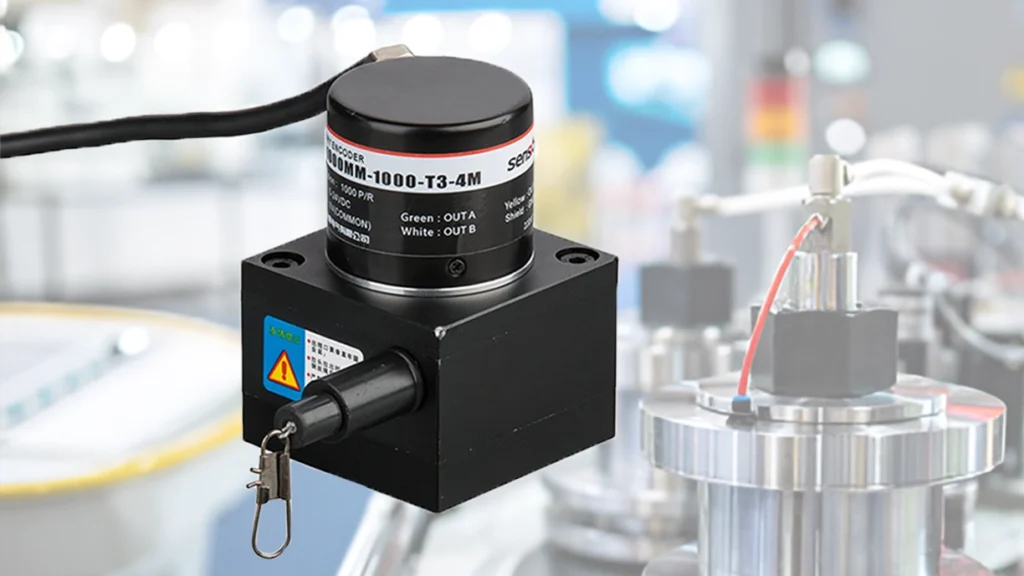
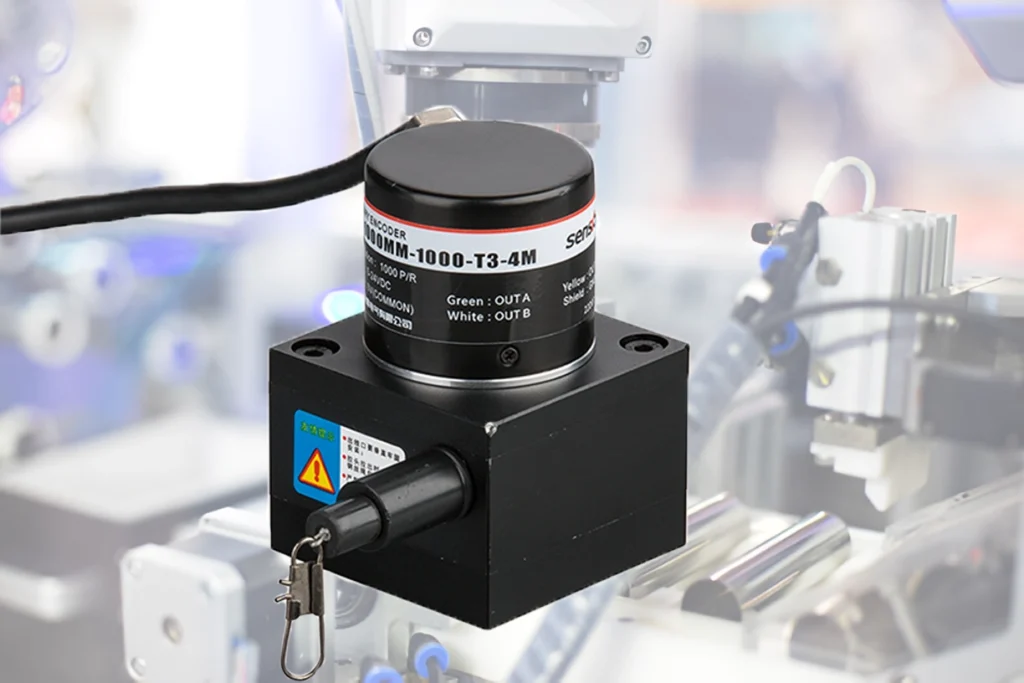
Sensyor Draw Wire Encoder – Reliable Linear Position Feedback with Spring-Loaded Cable Mechanism Featuring the Sensyor draw wire encoder in action, this precise linear cable encoder delivers outstanding accuracy and durability for demanding industrial applications. Engineered with a robust spring-loaded cable mechanism, it ensures consistent position feedback over a wide measuring range without compromise. Core […]
We use cookies to enhance your browsing experience, serve personalised ads or content, and analyse our traffic. By clicking "Accept All", you consent to our use of cookies.