
How do I choose the right absolute linear encoders for CNC or automation?
How do you choose the right absolute linear encoders for CNC or automation? The short answer: match the encoder’s measuring principle, resolution, interface, and mechanical design to your machine accuracy, environment, and budget—and make sure it integrates smoothly with your existing CNC or PLC controller. When you get those four points right, an absolute linear encoder becomes a quiet but powerful upgrade to your machine’s precision, uptime, and safety.
Absolute Linear Encoders
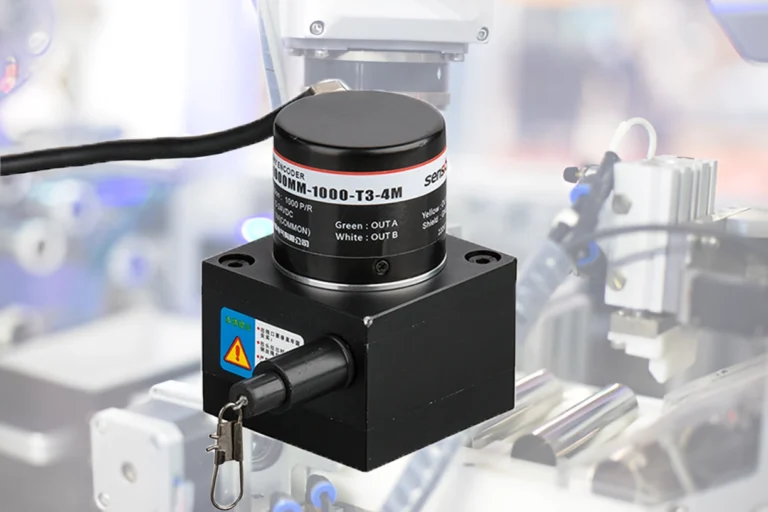
What is an absolute linear encoder? An absolute linear encoder is a position sensor that converts straight‑line motion into a digital code that represents the exact position on the scale, even after power loss. Unlike incremental encoders, it does not need to “go home” after every power‑up because every point along the measuring length has a unique absolute code word. For CNC and industrial automation, this means instant position feedback, shorter start‑up time, and fewer risks related to homing errors or lost counts.
Typical absolute linear encoders consist of a scale (rule) mounted along the axis and a readhead that scans the code pattern using optical, magnetic, inductive, or capacitive technology. The readhead sends a digital position value—via SSI, BiSS, EnDat, or a fieldbus/Ethernet protocol—to the CNC or motion controller, which then closes the servo loop.
If your CNC or automation line cannot tolerate mis‑positioning after power interruptions or emergency stops, an absolute linear encoder is usually the safer and more productive choice.
When do you really need an absolute linear encoder?
Not every axis needs an absolute encoder, but some situations almost demand it. Before looking at technical specs, check whether your CNC or automation project falls into one of these cases.
You should seriously consider an absolute linear encoder if:
- Your machine must restart quickly after power loss or emergency stop and cannot afford long homing cycles (e.g., large gantry CNC, palletizing robots, or packaging lines).
- The axis operates in a confined or hazardous space where homing movement is risky (e.g., machine tools near operators, press automation, or collaborative robots with linear slides).
- You require high repeatability over long measuring lengths, such as long‑travel CNC routers, plasma or laser cutters, and coordinate measuring machines.
- You are designing functional‑safety or high‑availability systems where losing position could damage tools, workpieces, or fixtures.
In contrast, purely cost‑sensitive, low‑risk applications like simple material transfer might still use incremental encoders. But once your project involves multi‑axis synchronization, high speeds, or expensive workpieces, the extra cost of an absolute linear encoder is usually easy to justify.
If you already see your project in the “recommended” or “strongly recommended” rows, that is a good signal to move ahead with an absolute linear encoder and start comparing detailed specs.
Key selection factors for CNC and automation
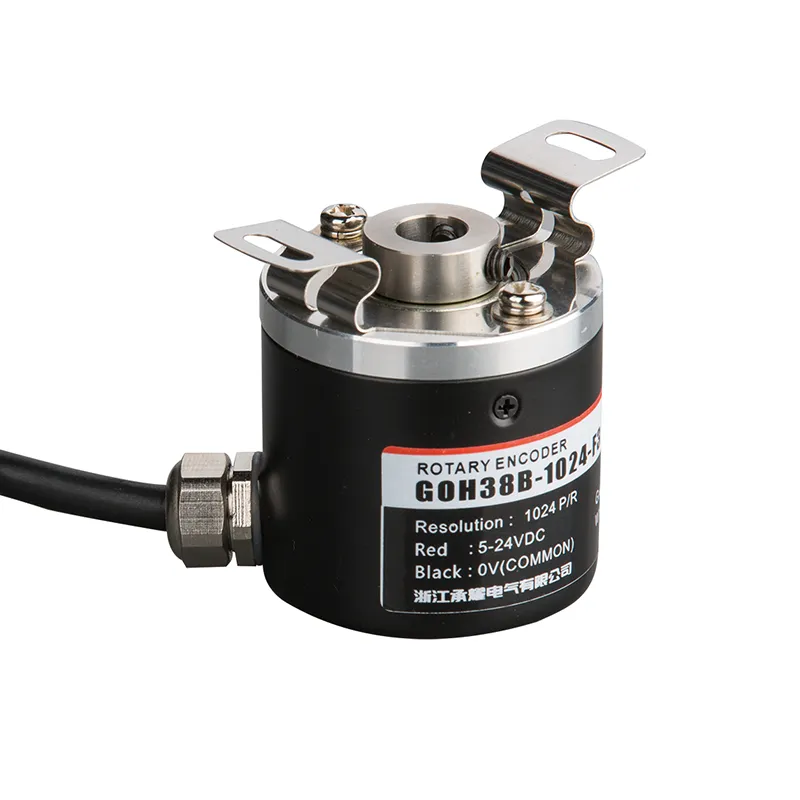
Choosing the right GOS38H absolute linear encoder is all about matching specification to reality: machine accuracy, dynamic performance, environment, and control system. Here are the main parameters you should look at when comparing different encoder models.
Important selection factors include:
- Measuring length and mechanical form factor. Verify that the available measuring range covers your full stroke with some margin and that the profile fits into your axis design (slim profile, enclosed housing, tape scale, etc.).
- Accuracy and resolution. Accuracy defines how closely the reported position matches real position over the entire measuring length, while resolution is the smallest detectable step, often in micrometers or nanometers.
- Repeatability and interpolation error. For high‑precision CNC, low interpolation error and high repeatability are often more important for surface finish than the headline resolution value alone.
- Maximum speed and update rate. Fast CNCs and linear motors need encoders that support high traverse speeds and high data update rates, especially with high‑resolution scales.
- Interface protocol. Common absolute interfaces include SSI, BiSS‑C, EnDat, and various industrial Ethernet protocols; choose one that your CNC/PLC supports natively.
- Electrical and mechanical robustness. Check IP rating, shock and vibration resistance, cable options, and temperature range to match your real operating environment.
- Installation and alignment tolerances. Some encoder technologies are more forgiving during installation, which can save assembly and service time.
If you share your axis stroke, target accuracy, and controller brand, a sales engineer can usually shortlist one or two suitable absolute linear encoder series within minutes—feel free to send a quick RFQ and ask for a tailored selection suggestion.
Optical vs magnetic vs inductive absolute linear encoders
Absolute linear encoders come in several sensing technologies, each with different strengths for CNC and automation. Understanding these will help you narrow down the right solution faster and avoid over‑ or under‑specifying the system.
- Optical absolute linear encoders use a coded scale read by an optical sensor and deliver very high resolution and accuracy. They are the first choice for high‑precision CNC machines, coordinate measuring equipment, and advanced automation with demanding tolerances.
- Magnetic absolute linear encoders use a magnetized scale and magnetic sensor, making them more tolerant of dust, oil, and vibration. Their resolution and accuracy are typically lower than high‑end optical systems, but often more than sufficient for general automation, packaging, and material handling.
- Inductive absolute linear encoders rely on changes in inductance between sensor and scale, providing robust operation in harsh industrial environments. They are resistant to many contaminants, though they may require careful design to handle electrical noise.
For most CNC machine tools where micrometer‑level precision and smooth surface finish are critical, optical absolute linear encoders are usually the preferred option. For long‑stroke automation in dirty environments, magnetic or inductive absolute linear encoders often deliver the best balance between performance and robustness.
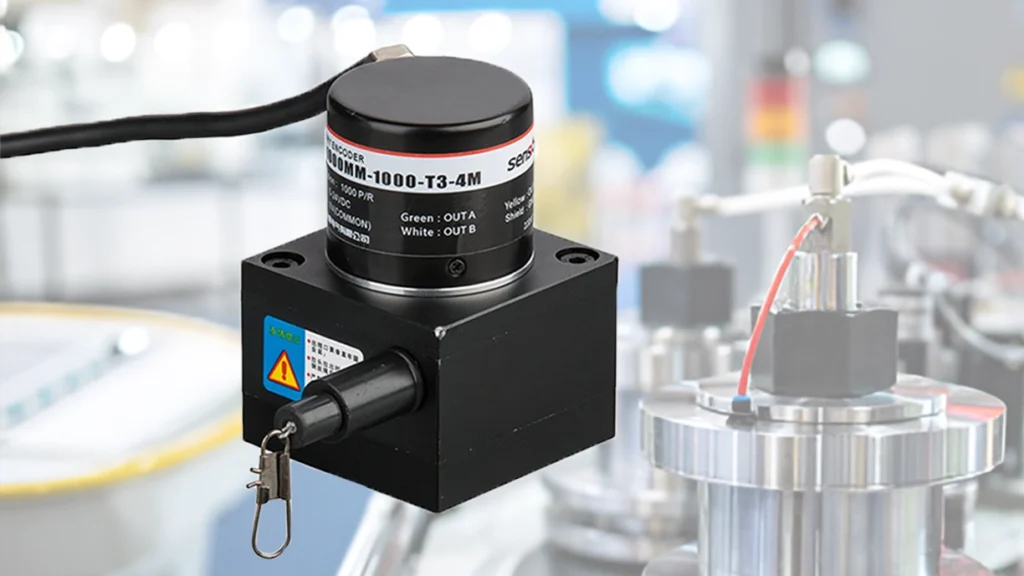
Discover how Absolute Linear Encoder boost automation accuracy and efficiency,today for tailored encoder solutions that fit your.
Choosing resolution, accuracy, and speed
Many engineers start by looking at the highest available resolution, but that is not always the right strategy. Instead, resolution, accuracy, and speed must be balanced against mechanical design and motion profile so that the entire system works harmoniously.
Here are simple guidelines:
- Match resolution to machine mechanics. If your ball screw pitch, linear guide quality, or structural stiffness limit you to a few micrometers of repeatability, specifying nanometer‑level encoder resolution will not improve real‑world accuracy.
- Consider servo bandwidth and interface speed. Very high resolution increases data rates; your controller’s interface and servo loop must be able to handle it without excessive latency.
- Look at system accuracy over the full measuring length, not just per‑increment values. For long CNC axes and automation gantries, total accuracy over stroke (e.g., ±10 µm over several meters) often matters more than the smallest step size.
- Do not forget maximum traverse speed and acceleration. Ensure the encoder can handle your rapid traverse speeds and duty cycle without signal degradation.
A supplier experienced in CNC or linear automation can help calculate realistic resolution and accuracy requirements from your part tolerances, stroke length, and motion profile—this is a perfect topic to include in your inquiry email.
Interfaces and integration with CNC/PLC controllers
Even the best absolute linear encoder will disappoint if it cannot communicate properly with your control system. For modern CNC machines and automation lines, interface compatibility and diagnostic features are almost as important as accuracy.
Popular absolute encoder interfaces include:
- SSI (Synchronous Serial Interface): A well‑established, simple serial protocol widely used for absolute encoders; good for many PLC‑based systems.
- BiSS‑C: An open, high‑speed serial interface commonly used for absolute linear encoders and drives, supporting high update rates and advanced diagnostics.
- EnDat: A digital interface from major encoder manufacturers that supports position data and comprehensive diagnostic information for CNC systems.
- Industrial Ethernet and fieldbus (EtherCAT, PROFINET, etc.): Some encoders integrate directly into Ethernet‑based automation networks, simplifying wiring and diagnostics.
Before finalizing an absolute linear encoder, confirm that:
- The interface is supported by your controller without extra converters or custom firmware.
- Cable length, shielding, and connector types match your cabinet layout and EMC requirements.
- Available diagnostic features (temperature monitoring, signal quality, error flags) integrate into your maintenance strategy.
This is a good place to involve both your controls engineer and the encoder supplier so that wiring diagrams and parameter settings are correct from the start.
Mechanical installation and environmental conditions
For reliable operation, the absolute linear encoder must fit your mechanics and survive real‑world conditions on the shop floor. Poor mounting, contamination, or vibration can easily destroy the theoretical accuracy promised in the datasheet.
Pay close attention to:
- Mounting tolerances and alignment instructions in the encoder’s technical documentation.
- Available mounting styles: enclosed scale, exposed tape scale, profile rail with integrated scale, or directly integrated into linear guides.
- Environmental ratings: IP protection against coolant, dust and chips; shock and vibration resistance; and allowable temperature range.
- Cable routing and strain relief to avoid mechanical damage and electrical noise pickup.
For CNC machines with coolants or abrasive dust, an enclosed optical absolute linear encoder or a robust magnetic/inductive type may be the best compromise. If you would like a recommendation that fits your machine layout, you can send your axis drawings and environmental description with your inquiry to get a proposal optimized for installation and protection.
Cost, total cost of ownership, and typical trade‑offs
Absolute linear encoders usually cost more upfront than incremental versions, but focusing only on unit price can be misleading. In many CNC and automation projects, the real question is: will this encoder reduce downtime, scrap, and setup time enough to pay back the difference?
Key cost factors include:
- Encoder purchase price and accessories such as cables and mounting brackets.
- Installation time and difficulty; some encoders with generous mounting tolerances can reduce assembly cost.
- Start‑up and homing time saved by avoiding incremental homing cycles, especially on long axes.
- Potential reduction in crashes, scrap parts, and maintenance calls caused by lost position.
For many B2B buyers, the safest approach is to evaluate total cost of ownership over the expected service life of the machine, not just the per‑unit encoder cost. If you share your expected machine utilization and downtime cost, an encoder supplier can help estimate payback time for upgrading to absolute linear encoders on key axes.
Simple selection checklist for your project
To make your decision process easier, here is a quick checklist you can walk through during design or procurement. Answering these questions clearly will help any encoder vendor recommend the right absolute linear encoder for your CNC or automation project.
- What is your axis type and stroke length (e.g., X‑axis, 1.5 m travel)?
- What accuracy and repeatability do you need at the workpiece or process level?
- Which controller, drive, and interface do you use (e.g., specific CNC brand, SSI, BiSS, EnDat, EtherCAT)?
- What is the maximum speed and acceleration of the axis?
- How harsh is the environment (coolant, dust, chips, outdoor, high temperature)?
- Do you have safety, restart‑time, or collision‑risk constraints that make homing cycles undesirable?
- What are your budget and volume targets (single machine vs. OEM series)?
If you send this basic information along with your RFQ, you will usually receive a much more accurate recommendation and quotation from the encoder manufacturer or distributor.
If you are planning a new CNC or automation project and would like a concrete proposal, you can share your axis specs, controller brand, and environment details to receive a tailored absolute linear encoder recommendation and pricing for your next purchasing cycle.
FAQ
Why choose an absolute linear encoder instead of an incremental one?
An absolute linear encoder keeps track of the exact position even after power loss, so your CNC or automation system can restart without homing, which improves safety and reduces downtime.
Is an absolute linear encoder necessary for every CNC axis?
Not always; it is most valuable on critical axes with high accuracy, collision risk, or long travel where homing is time‑consuming or dangerous.u003ca href=u0022https://mechtex.com/blog/incremental-vs-absolute-encoders-a-comprehensive-comparisonu0022 target=u0022_blanku0022 rel=u0022noreferrer noopeneru0022u003eu003c/au003e
What resolution is suitable for CNC machining?
For typical precision CNC machines, resolutions in the sub‑micrometer range are common, but the choice should match your mechanical stiffness and part tolerances rather than chasing the smallest possible value.
Which interface is best: SSI, BiSS, or EnDat?
All three are widely used; “best” depends on your controller and performance needs, so you should follow your CNC or drive manufacturer’s recommendations.
Can absolute linear encoders work in dirty or wet environments?
Yes, but you should select suitable protection, such as enclosed optical encoders or robust magnetic/inductive types with appropriate IP ratings.
Are absolute linear encoders difficult to install?
Modern encoders often include installation tools and clear tolerances, but you still need to follow the manufacturer’s instructions for mounting, alignment, and cable routing.
Are absolute linear encoders more expensive to maintain?
Typically no; they often reduce maintenance related to lost position and homing issues, which can lower lifecycle costs despite higher initial price.
Can I retrofit absolute linear encoders on an existing machine?
In many cases yes, as long as there is enough space on the axis and the CNC or PLC can handle the absolute interface, possibly with an additional module or converter.
What is the difference between an absolute linear encoder and an absolute rotary encoder in CNC?
A linear encoder measures straight‑line motion along an axis, while a rotary encoder measures angular motion on a shaft; many high‑end machines use linear encoders on axes and rotary encoders on motors or rotary tables.
How do I start a project with absolute linear encoders?
Prepare your axis data, accuracy needs, interface, and environmental description, then send them to an encoder supplier to receive model suggestions, technical drawings, and a formal quotation.
Discover how Absolute Linear Encoder boost automation accuracy and efficiency,today for tailored encoder solutions that fit your.