
Optical Incremental Shaft Encoder Detailed Features and Specs
What Is an Optical Incremental Shaft Encoder?
An optical incremental shaft encoder is a sensor designed to measure the relative position, speed, and direction of a rotating shaft. It’s widely used in motion control systems to provide precise shaft position feedback essential for smooth and accurate motor or machine operation.
Core Function
The main job of an optical incremental shaft encoder is to convert mechanical rotation into a stream of digital pulses. These pulses correspond to the rotational movement of the shaft, enabling systems to track changes in position or speed rather than absolute position.
Key Characteristics
- Pulses per Revolution (PPR): Defines how many pulses the encoder generates for one full shaft rotation. Higher PPR means finer resolution and more accurate feedback.
- Quadrature Output: The encoder produces two output signals, commonly referred to as channels A and B, which are 90° out of phase. This quadrature signal allows detection of rotational direction as well as speed.
- Optional Index Pulse (Z channel): A single pulse per revolution providing a fixed reference or “home” position for the control system.
Role in Feedback Systems
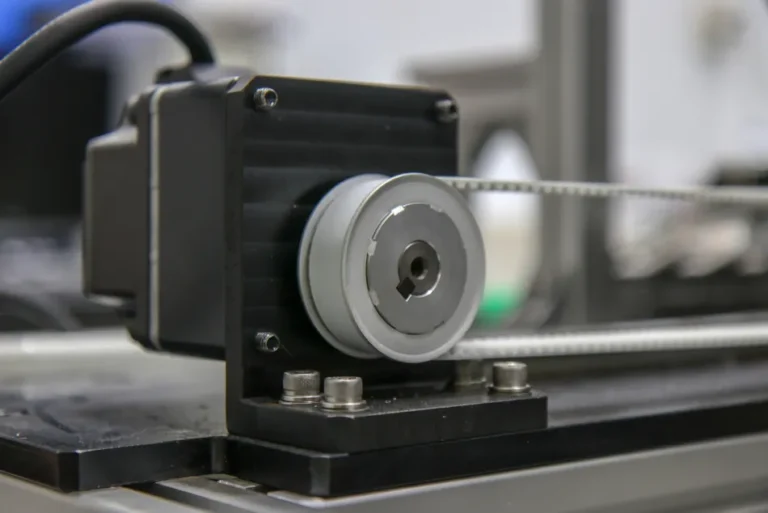
Optical incremental shaft encoders play a crucial role in motor speed sensing, robotics, CNC machinery, and other industrial automation applications. They feed real-time rotary position and speed data into controllers and drives, ensuring precise movement, synchronization, and efficient system performance. Their ability to provide fast and reliable feedback makes them indispensable in modern motion control feedback loops.
How Optical Incremental Shaft Encoders Work
An optical incremental shaft encoder works by converting the mechanical rotation of a shaft into electrical signals that represent position, speed, and direction. Here’s a simple step-by-step overview of its working principle:
Light Source and Coded Disc
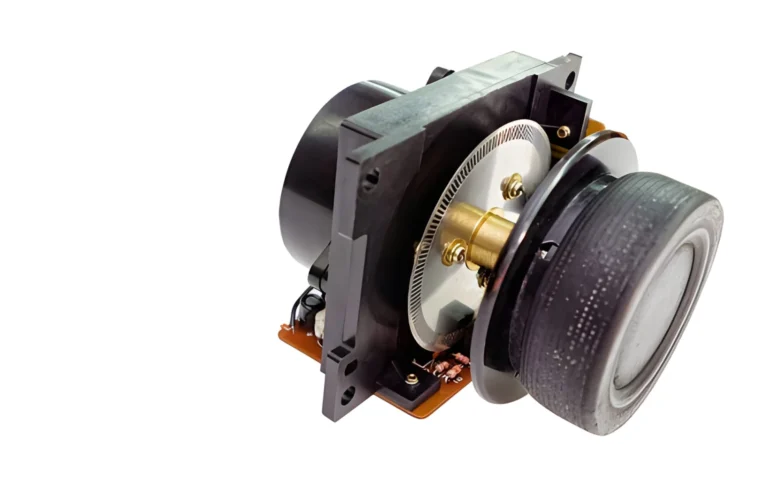
At the heart of the encoder is an LED light source shining through a coded disc mounted on the rotating shaft. This disc has precise slots or transparent markings arranged in a circular pattern.
Photodetectors Capture Light Pulses
As the shaft spins, the disc interrupts the LED light. The light passes through the slots and falls on photodetectors positioned on the opposite side. These sensors convert the light signals into electrical pulses.
Generation of Quadrature Signals (A and B Channels)
The encoder typically has two photodetectors spaced to create two output signals, known as channels A and B. These signals are in quadrature—meaning they are 90° out of phase. This setup is essential for detecting both the direction and speed of rotation by analyzing which signal leads or lags.
Pulse Counting for Position and Speed
Each pulse equates to a fraction of a shaft revolution, commonly expressed as pulses per revolution (PPR). Counting these pulses lets systems track relative position and calculate rotational speed.
Z (Index) Channel for Reference Positioning
Apart from A and B, many optical incremental encoders include a third channel called the Z channel or index pulse. It produces a single pulse per revolution, providing a precise reference point for zero or home position, ensuring accurate long-term tracking.
Light Interruption Creates Output Pulses
In essence, as the disc spins, the alternating light and shadow pattern causes the photodetectors to generate digital pulses. These pulses form the raw data needed for shaft position feedback and motor speed sensing in motion control systems.
For a deeper dive into how to distinguish quadrature signals and the roles of A, B, and Z channels, you can explore our guide on incremental rotary encoder main output signals and how to identify A, B, Z phases.
Incremental vs. Absolute Encoders: Key Differences
When choosing between optical incremental shaft encoders and absolute encoders, it’s important to understand their key differences in output, functionality, and application.
| Feature | Incremental Encoder | Absolute Encoder |
|---|---|---|
| Output Type | Pulses per revolution (PPR), A/B phase signals with optional Z index pulse | Unique position code for every shaft angle |
| Position Tracking on Power Loss | No, position resets, requires homing | Yes, retains exact position |
| Complexity | Simpler design, fewer components | More complex electronics needed |
| Cost | Generally more affordable | More expensive due to added features |
| Best Suited For | Speed feedback, direction sensing, cost-sensitive projects | Safety-critical absolute positioning and precise angle measurement |
When Incremental Encoders Excel
Incremental encoders are ideal for motor speed sensing and applications where relative position or speed feedback is enough. Their simple output—the quadrature signals (A and B channels)—makes them cost-effective and easy to integrate into many industrial rotary encoder systems.
When Absolute Encoders Are Preferred
For tasks requiring guaranteed position tracking even after power loss, like in safety-critical machinery or high-precision robotic arms, absolute encoders provide reliable, unique positional data without the need for re-homing.
For a deeper dive into the practical uses and benefits of incremental versus absolute encoders, check our detailed comparison on incremental encoder vs absolute encoder and the key differences and industry applications.
Types of Optical Incremental Shaft Encoders
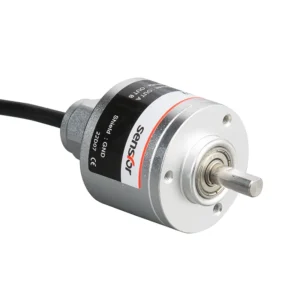
Optical incremental shaft encoders come in different designs to suit various applications. The two most common types are solid shaft and hollow shaft (or thru-bore) encoders. Solid shaft encoders feature a fixed shaft that connects directly to the rotating part, while hollow shaft encoders slide over the motor shaft, making installation easier and reducing alignment issues.
Resolution varies widely among optical rotary encoders, typically expressed as pulses per revolution (PPR). Resolutions can range from a few hundred to tens of thousands of pulses, depending on the precision needed. This flexibility allows you to choose the right encoder for everything from basic speed sensing to high-accuracy motion control.
Output interfaces also differ, with common options including TTL, HTL, push-pull, and open collector signals. Selecting the right output type ensures compatibility with your controllers and drives.
For tougher environments, many optical incremental shaft encoders offer enhanced durability. You’ll find versions with high IP ratings for resistance to dust and water, plus rugged designs built to withstand shock and vibration. These features make them reliable choices for demanding industrial settings.
To explore specific encoder options with detailed specifications, you can check out our range of incremental shaft encoder solutions.
Technical Specifications to Consider
When choosing an optical incremental shaft encoder, key specs ensure the device fits your application perfectly. Here’s what matters most:
| Specification | Description |
|---|---|
| Pulses per Revolution (PPR) | Number of pulses generated per shaft turn — affects encoder resolution and precision. Higher PPR means finer measurement of shaft position and speed. |
| Shaft Diameter & Load | Match the encoder’s shaft size with your equipment. Check mechanical load limits (radial & axial) to avoid premature wear. |
| Rotational Speed Limits | Maximum shaft speed the encoder can accurately track without signal loss or damage. Critical for high-speed motors. |
| Supply Voltage | Typical range: 5 V to 24 V DC, depending on the encoder model. Ensure compatibility with your control system’s power supply. |
| Output Signals | Common signals include TTL, HTL, push-pull, or open collector. This affects how the encoder interfaces with PLCs or drives. |
| Cable Options | Shielded cables reduce electromagnetic interference (EMI). Cable length and flexibility should suit your setup. |
| Operating Temperature | Encoders may operate between –20°C to +85°C or wider for harsh environments. Choose based on your installation site. |
| Protection Class (IP Rating) | Defines resistance to dust, water, and contaminants. IP65 or higher is common for industrial use. |
| Durability | Look for shock and vibration resistance ratings if your application involves heavy motion or harsh conditions. |
Selecting the right specs ensures reliable shaft position feedback, precise speed sensing, and long encoder life. For example, models like the GLT58 rotary encoder offer a range of PPR settings and robust build quality suited for industrial feedback systems.
By considering these factors carefully, you can fine-tune your motion control feedback setup with an optical incremental encoder that ticks all boxes for performance and durability.
Advantages and Limitations of Optical Incremental Shaft Encoders
Advantages:
- High resolution: Optical incremental shaft encoders provide precise shaft position feedback thanks to their ability to generate many pulses per revolution (PPR). This makes them ideal for accurate speed sensing and motion control feedback.
- Cost-effectiveness: Compared to absolute encoders, incremental encoders are generally less expensive while still delivering reliable quadrature encoder signals.
- Fast response: They offer quick and consistent output signals (A/B phase output), which is crucial for real-time motor speed and position monitoring.
- Simplicity: The straightforward design ensures easy integration and maintenance without complex electronics or programming.
Limitations:
- Need for homing/reference on power-up: Since incremental encoders measure relative position, they don’t provide absolute shaft position after power loss. A homing sequence or external reference is required to reset the position.
- Potential pulse loss in noisy environments: Electrical noise or mechanical vibrations can cause missed or false pulses, impacting accurate counting and direction detection.
Mitigation Strategies for Reliable Performance:
- Use shielded cabling and proper grounding to minimize electrical interference.
- Implement signal conditioning or filtering electronics.
- Employ high-quality quadrature decoding methods that can detect and compensate for missed pulses.
- Combine the incremental encoder with an index pulse (Z channel) for reliable reference positioning on startup.
By understanding these advantages and limitations, you can select the right optical incremental shaft encoder that best fits your application’s needs and ensure consistent, precise feedback for your motor or machinery system. For enhanced signal accuracy and reliable pulse counting, consider integrating with advanced signal processing tools like the CY7 high-frequency counter, which supports precision timing and noise reduction in encoder feedback systems.
Common Applications of Optical Incremental Shaft Encoders
Optical incremental shaft encoders play a vital role in many industries by providing reliable shaft position feedback and helping control motion precisely.
- Industrial Automation: These encoders are essential in CNC machines for accurate positioning, conveyor systems for speed monitoring, and packaging equipment to ensure synchronized operations. Their ability to deliver precise quadrature encoder signals makes them a trusted choice for complex automation tasks. For more on their industrial use, see our detailed guide on incremental rotary encoder applications in industrial automation.
- Robotics and Motor Control: In servo motors and robotic arms, optical incremental encoders provide critical feedback for speed sensing and direction control. The A/B phase output and optional index pulse help maintain continuous position tracking during operation, enhancing precise motion control.
- Other Applications: These encoders are widely used in printing machinery to maintain exact paper feed rates, in textile production for fabric control, in elevators for smooth leveling, and increasingly in renewable energy systems like wind turbines where precise rotational feedback is crucial.
Across all these uses, the optical incremental shaft encoder ensures high-resolution feedback, delivering reliable info for efficient, safe, and accurate motion control. Real-world setups depend on these encoders to consistently convert mechanical rotation into actionable pulses, making them indispensable in modern automated systems.
Selecting the Right Optical Incremental Shaft Encoder
Choosing the right optical incremental shaft encoder means balancing several key factors to fit your specific application. First, consider the application requirements: what kind of motion feedback do you need? This includes the level of encoder resolution and pulses per revolution (PPR) necessary to achieve accurate position and speed sensing. If your system demands precise shaft position feedback, higher PPR values and quadrature output signals are essential.
Next up, evaluate mounting constraints and physical compatibility. Decide between solid shaft or hollow shaft designs based on your mechanical setup, and check shaft diameter, load limits, and rotational speed to ensure a perfect fit. Don’t forget about the operating environment—temperature range, vibration levels, and exposure to dust or moisture can all impact encoder performance. For environmental considerations, take a look at optical encoders with relevant IP ratings and ruggedized options to maintain reliability. You can find detailed guidance on this in our article about environmental factors to consider when choosing an incremental encoder.
Integration is also crucial. When linking the encoder to PLCs, drives, or motion controllers, choose compatible output interfaces such as TTL, HTL, or push-pull signals. Ensure your controller can handle the incoming quadrature signals (A/B phase outputs) and index pulse (Z-channel) for accurate motion control feedback.
Finally, consider the importance of customization. Tailoring encoder features like shaft design, mounting style, resolution, and output type helps optimize performance for unique machinery and industrial applications. Custom solutions from providers specializing in optical incremental shaft encoders can reduce integration issues and enhance durability.
For a comprehensive look at matching your needs with the ideal encoder solution, check out our guide on incremental optical encoders.
Why Choose sensyor for Incremental Encoder Solutions
When it comes to optical incremental shaft encoders, sensyor stands out with its deep expertise in delivering high-quality rotary incremental encoders designed for precise shaft position feedback. We understand diverse industry needs and offer flexible solutions for motion control feedback that you can rely on.
What sensyor Offers:
| Feature | Benefit |
|---|---|
| Tailored resolutions (PPR) | Matches your specific accuracy demands |
| Custom shaft designs | Solid shaft, hollow shaft, or thru-bore |
| Flexible output interfaces | TTL, HTL, push-pull, open collector |
| Ruggedized models | Enhanced IP ratings and shock resistance |
Our encoder customization ensures every product fits perfectly with your system—whether you need better motor speed sensing, a specific quadrature output, or durable solutions for harsh environments.
Commitment to Clients
- Reliable and precise optical rotary encoders
- Responsive customer support & technical guidance
- Fast turnaround on custom requests
For tailored solutions or technical consultation on incremental encoder needs, contact us today. Discover how sensyor can improve your feedback systems and enhance your machinery’s performance with trusted incremental encoders.
Explore more about our customizable options on our incremental encoder customization page to find the perfect fit.