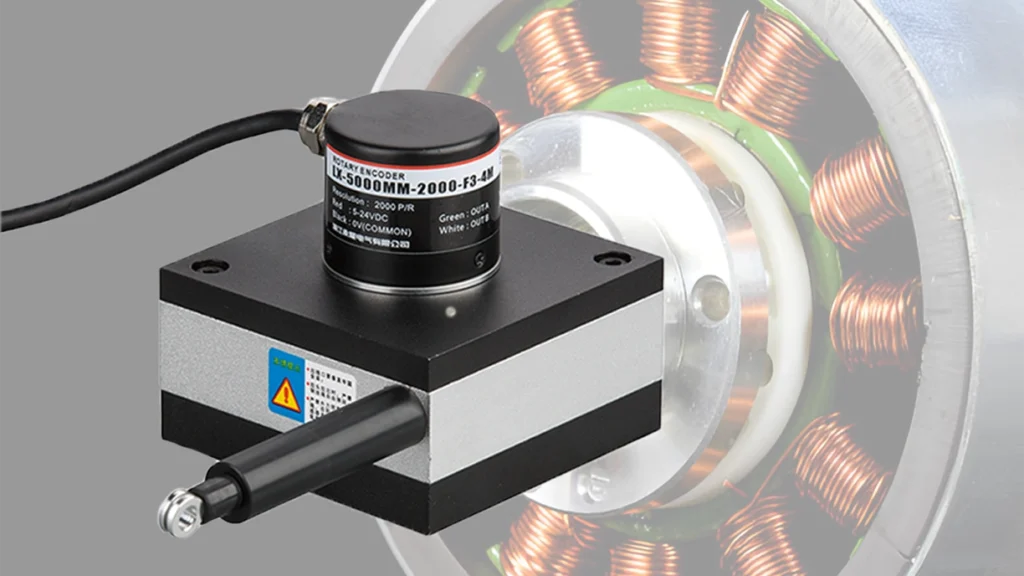
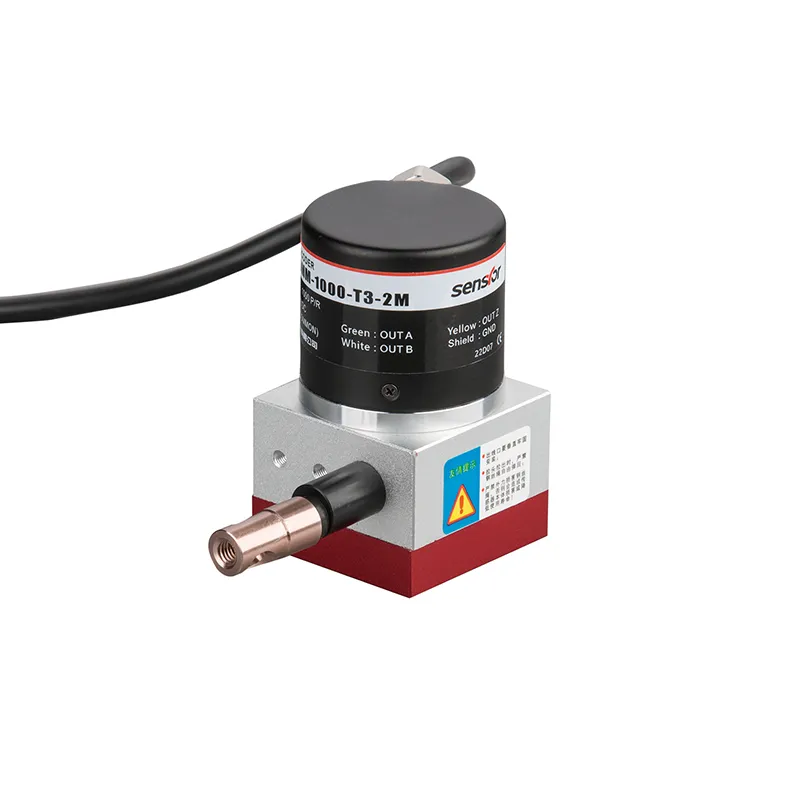
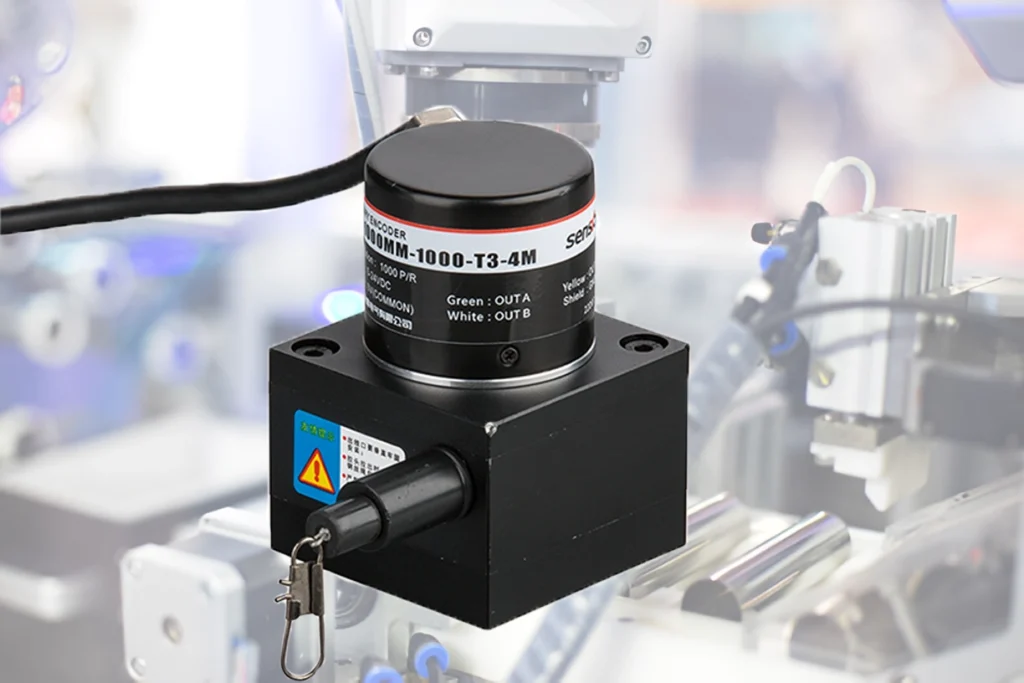
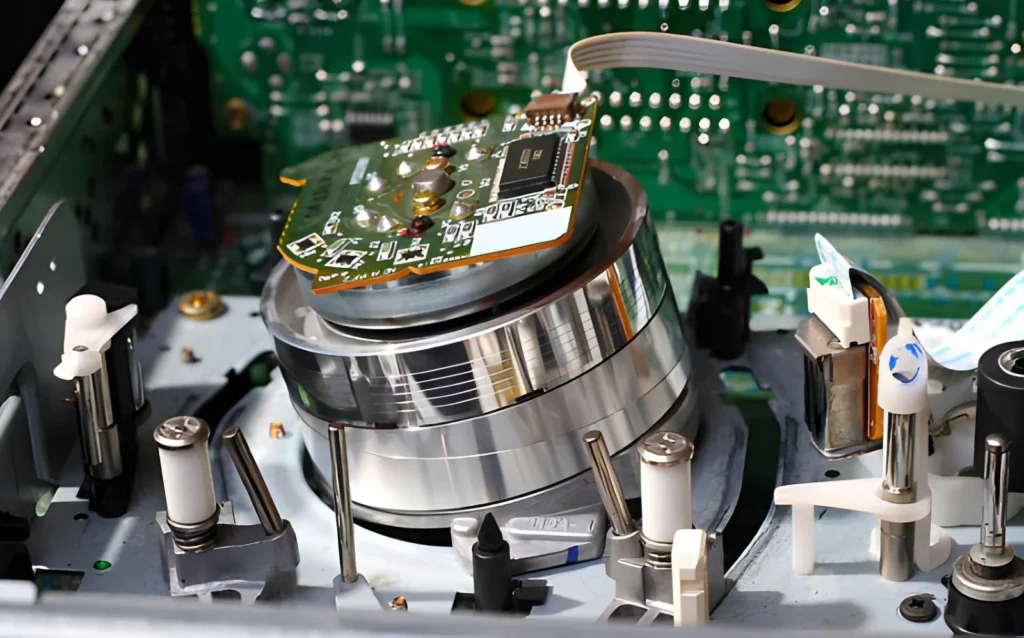
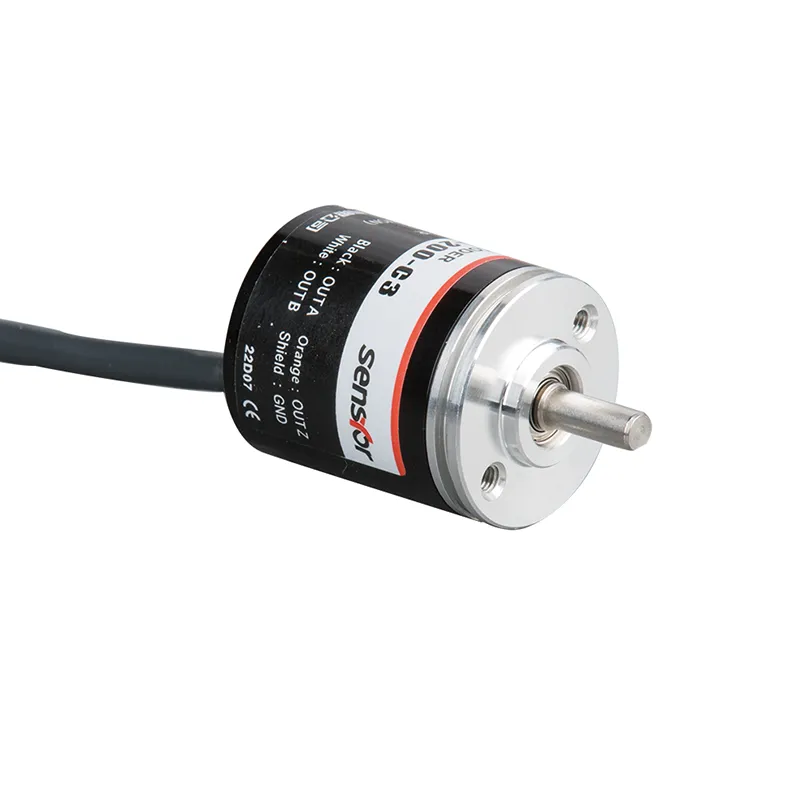
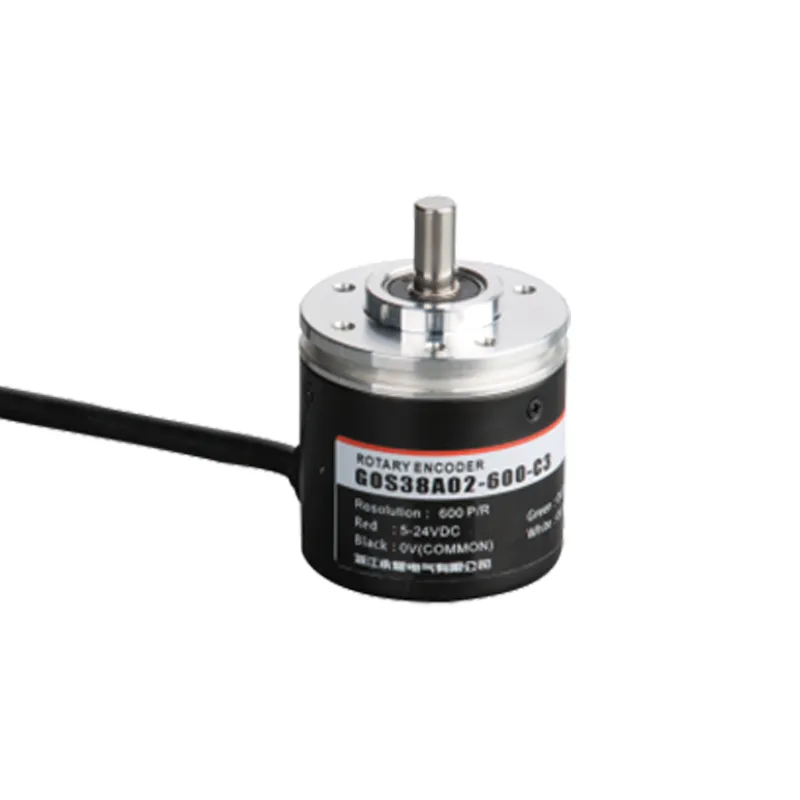
Did you know that linear encoder are the “invisible heroes” in modern industrial automation and precision measurement? Whether in CNC machines, automated assembly lines, or high-precision measuring instruments, linear encoders play a crucial role. They help machines “see clearly,” precisely feed back positions, and ensure every step in the process is accurate.
In this article, we will dive into the common types of linear encoders — optical, magnetic, inductive, and capacitive — and show you how to choose the right one for your needs. Ready? Let’s uncover the mystery of linear encoders together!
Basics of Linear Encoder
What is a Linear Encoder?
Simply put, a linear encoder is a type of position sensor used to measure the movement of an object in a straight line. It converts mechanical displacement into electrical signals and feeds this data to a control system to achieve precise position control.
Core Functions of Linear Encoders
Key Advantages
Measure linear displacement
High-precision positioning
Convert mechanical movement to electrical signals
Real-time feedback
Support speed and direction detection
Enhanced automation performance
Basic Working Principle
A linear encoder typically consists of two parts: a readhead, which detects position signals, and a scale, which provides reference markings. The readhead reads changes on the scale to calculate current position. Different encoder types use different physical methods to read the scale.
Have a project in mind and want help choosing the perfect encoder? Feel free to ask! We’re here so you can make the smartest choice.
Common Types of Linear Encoder
Linear encoders play a crucial role in measuring precise positions and movements. They come in various types, each with its unique strengths and suitable applications. In this section, we will explore the four most common types of linear encoders—Optical, Magnetic, Inductive (or Inductive-based), and Capacitive—in more detail. You’ll learn how they work, their pros and cons, and where they shine best.
1. Optical Linear Encoders
How do they work? Optical linear encoders use a read head that shines light onto a precisely patterned scale called the grating. This scale consists of alternating transparent and opaque stripes. As the read head moves along the grating, it detects changes in light intensity—resulting in an alternating pattern of light and dark spots. A photodetector converts these optical signals into electrical pulses that are processed to provide high-precision position data. Thanks to fine grating pitch and advanced interpolation, these encoders can reach resolutions in the micron or even nanometer range.
Advantages:
Very high precision and resolution, ideal for ultra-precise tasks.
Excellent resistance to electromagnetic interference, since they rely on light signals.
Fast response speed—perfect for high-speed positioning.
Disadvantages:
Sensitive to dust, oil contamination, and moisture, which can degrade performance.
Optical components require careful handling to prevent damage from shocks or vibration.
Typical applications: CNC machines, electronics manufacturing, and high-precision metrology instruments.
Optical Encoder Facts
Details
Grating pitch
Determines base resolution, generally micron-scale
How do they work? Magnetic linear encoders detect the position by sensing magnetic field changes on a magnetic scale. The magnetic scale consists of poles arranged in a known pattern. As the read head moves along, it detects variations in magnetic flux from these poles and converts this into electrical signals indicating position.
Advantages:
Outstanding resistance to dust, oil, moisture, and other contaminants, suitable for tough industrial environments.
Durable and long-lasting, requiring less frequent maintenance.
Flexible installation with larger allowable gaps between scale and read head.
Disadvantages:
Precision and resolution generally lower than optical encoders, typically in the micron to sub-millimeter range.
Susceptible to interference from strong external magnetic fields.
Influences encoder resolution; usually coarser than optical
Contamination resistance
Excellent resistance to oils, dust, and dirt
Magnetic interference
Moderate sensitivity; shielding may be necessary
Installation gap flexibility
Larger than optical, easing mounting constraints
3. Inductive Linear Encoders
How do they work? Inductive encoders use the principle of electromagnetic induction. The read head generates an alternating magnetic field which induces currents in a metal scale (often made of conductive or ferromagnetic material). Changes in the position affect the induced current’s amplitude or phase, which is then translated into position data.
Advantages:
Extremely high protection levels, making them waterproof, dustproof, and vibration resistant.
Mechanically robust, ideal for heavy-duty industrial environments.
Immune to dust and oil since no direct optical path is required.
Disadvantages:
Resolution and accuracy are usually lower compared to optical and sometimes magnetic encoders, making them better for rough positioning or speed sensing.
Manufacturing is somewhat complex and can be costlier than simpler magnetic types.
Typical applications: Heavy machinery, industrial robotics, and environments subject to intense vibration or corrosive media.
Inductive Encoder Characteristics
Details
Detection method
Electromagnetic induction sensing on metal scale
Protection level
IP67 or higher, excellent waterproof and dustproof
Typical accuracy
Generally lower than optical/magnetic
Ideal environments
Harsh industrial settings, heavy machinery
4. Capacitive Linear Encoders
How do they work? Capacitive encoders measure changes in capacitance between electrodes as one part moves relative to another. Motion alters the overlapping area, distance, or dielectric properties between the electrodes, resulting in capacitance changes which are translated to position signals.
Advantages:
High resolution with excellent immunity to optical and magnetic noise.
Compact, making them suitable for tight spaces and miniaturized designs.
Long lifespan due to non-contact operation and minimal wear.
Disadvantages:
Sensitive to humidity and contaminants that can affect capacitance measurement.
Higher manufacturing complexity and cost.
Typical applications: Semiconductor manufacturing, medical instrumentation, high-end automation devices.
Capacitive Encoder Specs
Details
Resolution
High, often in micron or sub-micron ranges
Noise immunity
Strong against optical and electromagnetic noise
Environmental considerations
Sensitive to moisture; sometimes requires controlled environments
Physical size
Compact for integration into small devices
Summary Table: Comparing the Four Common Types
Encoder Type
Resolution
Contamination Resistance
Environmental Adaptability
Typical Applications
Key Strengths
Optical Encoder
Micron to nano
Low
Clean & controlled
CNC machining, electronics, metrology
Highest precision & speed
Magnetic Encoder
Sub-millimeter to micron
High
Dusty, oily, moist
Industrial automation, outdoor machinery
Durable & pollution resistant
Inductive Encoder
Millimeter
Very high
Extreme harsh conditions
Heavy machinery, robotics
Ruggedness & high protection
Capacitive Encoder
Micron or better
Moderate
Sensitive to moisture
Semiconductor, medical, precision instruments
Compact & high noise immunity
By understanding these detailed characteristics, you can better select the linear encoder best suited to your application based on precision needs, environmental demands, and maintenance expectations. Whether your factory requires ultra-precise position measurement or a rugged sensor to survive tough environments, knowing these differences will make your decision easier.
Need expert advice?
Discover how linear encoder boost your machine’s accuracy and efficiency. Choose the right encoder today to elevate your production quality!
You’ve probably heard of “incremental” and “absolute” encoders, but what’s the difference?
Type
Operating Mechanism
Pros and Cons
Recommended Applications
Incremental Encoder
Outputs relative displacement changes and requires a reference reset
Simple structure, low cost, supports high-speed measurement but loses position after power loss
Ideal for high-speed continuous measurements
Absolute Encoder
Directly outputs a unique digital code for current position
Retains position info after power loss, no reset needed, reliable positioning but higher cost
Critical positioning control, high safety requirements
How to Choose a Linear Encoder?
Choosing the right encoder is like picking the perfect pair of shoes—comfortable and practical. Consider these factors for an ideal match:
Precision Needed: Do you need micron-level or millimeter-level accuracy?
Environmental Conditions: Are there dust, oil, moisture, or vibrations?
Installation Space: Are size constraints an issue?
Maintenance Requirements: How often do you want to perform maintenance?
Signal Type: Digital output or analog output?
Selection Criteria
Key Points
Recommended Type
Precision
±1 micron or higher?
Optical encoder
Environment
Dusty, oily, or wet?
Magnetic or inductive encoder
Size Constraints
Limited installation space?
Capacitive encoder
Power Failure Recovery
Need to preserve position after power loss?
Absolute encoder
Speed Requirements
High frequency or fast movement?
Incremental encoder
Popular Application Fields & Industry Trends
These compact devices are already widely used across many industries:
Application Field
Role
Industry Trend
CNC Machinery
Precise tool positioning
Pursuit of higher precision and faster machining
Automated Production Lines
Position feedback for automated assembly and process control
Integration with smart manufacturing and Industry 4.0
Electronics Assembly
Fine adjustment and inspection of tiny components
Demands for miniaturization and micro-assembly
Measurement Systems
High-precision dimensional measurement and calibration
Trend toward integrated multi-sensor systems
Though small in size, linear encoder are indispensable “positioning experts” in modern manufacturing and automation. Understanding the characteristics and selection criteria of different encoder types will empower you to succeed in your industrial applications. At SENSYORCODER, we specialize in providing high-quality linear encoder solutions tailored to your needs. Ready to explore or customize your encoder? Contact us anytime—our experts are here to help!
FAQ
How to choose a Linear Encoder?
Start with your specific needs. Precision and environment are crucial. Define your use case and conditions first, then select the suitable type.
What are key maintenance tips for Linear Encoders?
Clean regularly to avoid dust and oil buildup; inspect cable connections and signal integrity; choose more durable encoders in harsh environments.
How to test Linear Encoder accuracy?
Use laser interferometers or calibration scales for comparison measurements to verify the accuracy of encoder output data.
In the world of industrial automation, precise timing isn’t a luxury—it’s a necessity. Whether you’re designing a high-speed data acquisition system, calibrating RF modules, or managing test instrumentation, the CY7 High-Frequency Counter provides the accuracy and stability your project demands. Let’s dive deep into how this device works, where it excels, and why manufacturers and engineers worldwide […]
Sensyor Draw Wire Encoder – Reliable Linear Position Feedback with Spring-Loaded Cable Mechanism Featuring the Sensyor draw wire encoder in action, this precise linear cable encoder delivers outstanding accuracy and durability for demanding industrial applications. Engineered with a robust spring-loaded cable mechanism, it ensures consistent position feedback over a wide measuring range without compromise. Core […]
Have you ever wondered how machines know their exact position in space? That’s where the linear encoder steps in. Whether it’s in CNC machines, automated production lines, or robotics, linear encoders play an indispensable role. They are measuring devices that convert an object’s linear movement into electronic signals, enabling precise position monitoring and control. In this article, […]
We use cookies to enhance your browsing experience, serve personalised ads or content, and analyse our traffic. By clicking "Accept All", you consent to our use of cookies.