Hollow Shaft Rotary Encoder Specs Applications Selection
Hollow shaft rotary encoder are essential components for accurate motion detection in industrial systems. Selecting the wrong type or ignoring key specifications can lead to misalignment, signal errors, and costly downtime. This article will help engineers, technical decision-makers, and procurement teams understand hollow shaft rotary encoders, compare options, and make informed selection decisions for motor and machinery applications.
Understanding Hollow Shaft Rotary Encoders
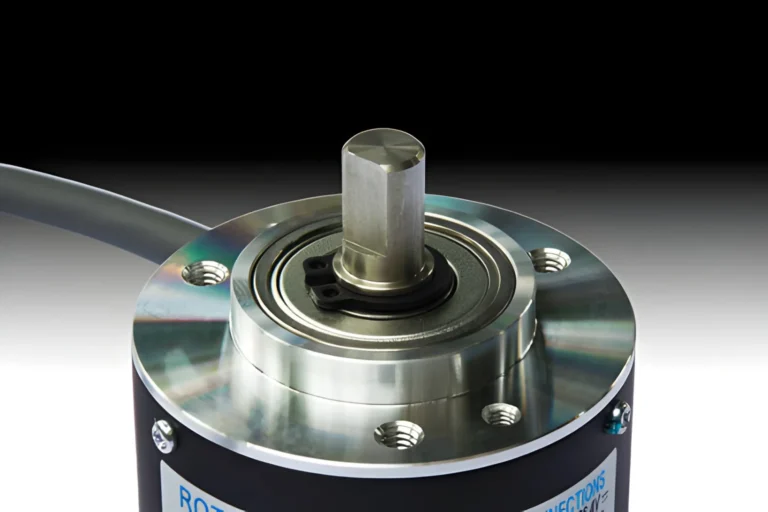
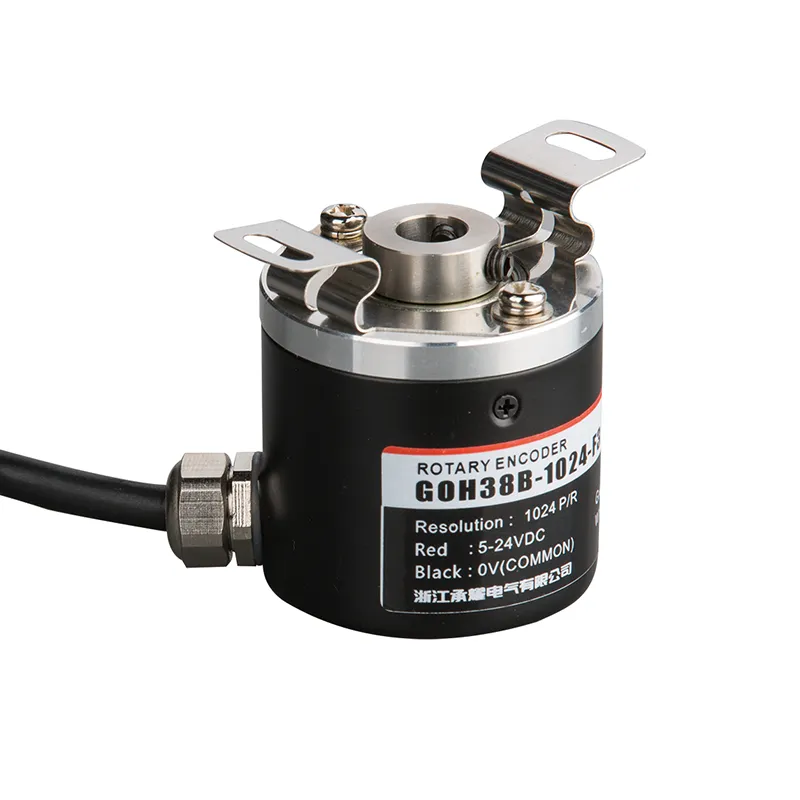
A GOS38H hollow shaft rotary encoder is a type of sensor designed to measure rotational position and speed by mounting directly onto a motor shaft. Unlike solid shaft encoders, hollow shaft models slip over the motor shaft, simplifying installation and reducing alignment errors.
Key aspects include:
- Incremental vs Absolute: Incremental encoders provide relative position feedback, while absolute encoders give exact shaft position at power-up.
- Signal Output: Common outputs include quadrature pulses, TTL, or analog signals suitable for motion controllers.
- Shaft Compatibility: Must match motor diameter and ensure secure mounting without causing slippage.
This foundation ensures readers can distinguish encoder types and understand their function in industrial automation and motor control systems.
Key Specifications and Classifications
When choosing a hollow shaft rotary encoder, several specifications are critical:
| Parameter | Description | Example Considerations |
|---|---|---|
| Shaft Diameter | Must match motor shaft; common sizes 6mm–20mm | Check motor specs |
| Resolution | Pulses per revolution (PPR); affects positioning accuracy | 500–5000 PPR |
| Output Signal | TTL, HTL, or analog; determines compatibility with controller | Quadrature TTL |
| Voltage | Power supply range | 5V, 12–24V |
| Environmental Rating | IP protection, operating temperature | IP65, -20°C to 70°C |
Including these specifications in your evaluation helps ensure compatibility and performance reliability. When reviewing Sensyor 38 Series Hollow Shaft Rotary Encoder product link, engineers can match the model to motor specifications and industrial requirements.
If our current products cannot meet your requirements, please contact us and provide us with your project details and requirements.
Industrial Applications of Hollow Shaft Encoder
Hollow shaft encoders are widely applied across industrial environments where precise rotational feedback is required:
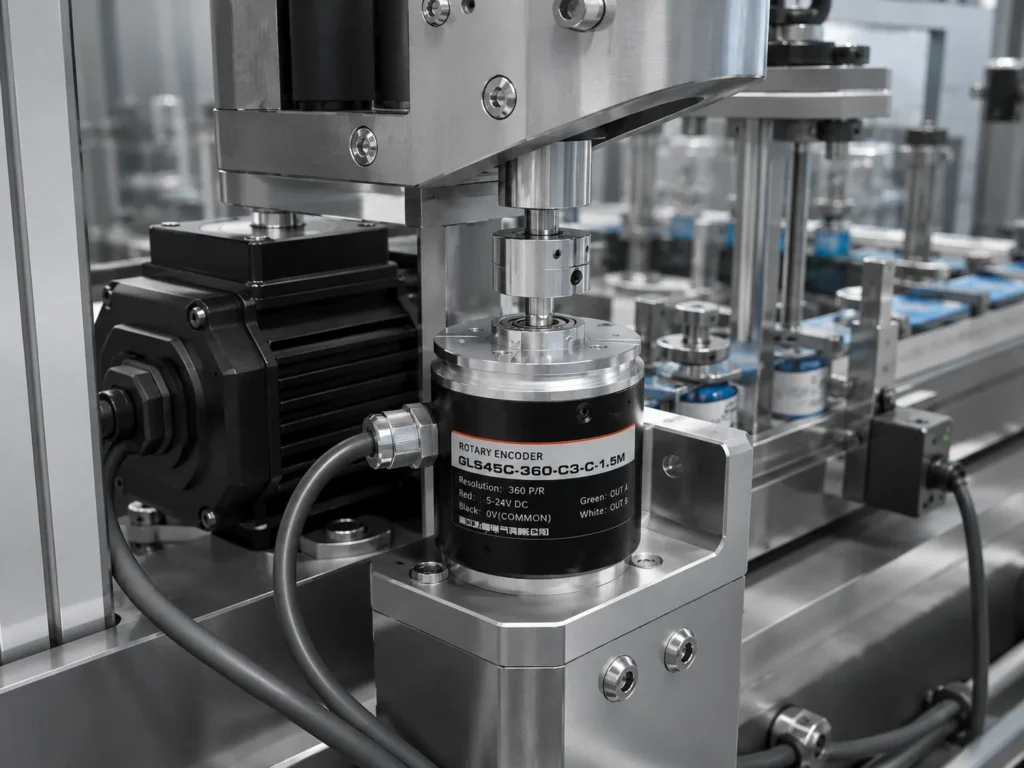
- Industrial Automation: Monitoring conveyor belts, motor speed, and robotic actuators for consistent performance.
- Robotics: Joint position tracking for articulated robotic arms and mobile platforms.
- Elevator and Conveyance Systems: Ensuring smooth and accurate motion control in lifts and material handling equipment.
- CNC Machines and Machining Centers: Tracking spindle or axis rotation for precision cutting and milling operations.
- Packaging and Printing Machinery: Controlling roller speed and position for accurate material processing.
Using a hollow shaft encoder like Sensyor Rotary Encoder Series ensures reliable performance and simplifies integration into these scenarios without complex coupling adjustments.
Comparing Hollow Shaft and Solid Shaft Encoders
When deciding between hollow shaft and GOS30C solid shaft encoder, consider these factors:
| Feature | Hollow Shaft | Solid Shaft |
|---|---|---|
| Installation Ease | Slips over motor shaft; easier alignment | Requires shaft coupling |
| Space Requirements | Compact, suitable for tight setups | Larger footprint |
| Shaft Diameter Flexibility | Can accommodate minor variations | Limited to exact size |
| Maintenance and Replacement | Easier removal for servicing | Requires disassembly |
This comparison clarifies why hollow shaft encoders are often preferred in retrofit applications, motor replacements, or where installation speed and alignment tolerance matter. Sensyor’s hollow shaft encoders provide a practical solution in these scenarios, offering incremental and absolute feedback models suitable for various industrial motors.
Selection Tips and Common Mistakes
Selecting the right hollow shaft encoder requires attention to detail:
- Check Shaft Compatibility: Ensure the encoder matches motor shaft diameter and length.
- Verify Electrical Compatibility: Confirm voltage range, signal type, and wiring requirements.
- Avoid Overload or Misalignment: Excess torque or improper installation can damage the encoder.
- Consider Environmental Conditions: Temperature extremes, vibration, and dust may require IP-rated models.
Common mistakes include ignoring signal type requirements, underestimating environmental stress, or selecting an incompatible shaft size. Incorporating these considerations reduces downtime and increases measurement accuracy. Sensyor provides options for customization Service and factory support to match specific motor or machinery requirements.
Selecting a hollow shaft rotary encoder requires balancing specifications, installation requirements, and application conditions. By considering shaft diameter, signal type, resolution, and environmental factors, engineers can achieve reliable motion feedback. For practical integration, explore Sensyor hollow shaft rotary encoder here to ensure compatibility with your motor systems and automation setups.
FAQ
What is a hollow shaft rotary encoder and how does it work?
It’s a sensor mounted over a motor shaft to measure rotational position or speed. It outputs electrical signals compatible with controllers for motion monitoring.
How to choose the right hollow shaft encoder for a motor?
Match the encoder’s shaft diameter, resolution, signal type, and voltage with the motor and control system requirements.
Hollow shaft vs solid shaft encoders: which is better for industrial automation?
Hollow shaft models simplify installation and alignment, making them preferable for retrofit and compact applications, while solid shafts may suit new designs with precise couplings.
Can hollow shaft encoders be customized for specific applications?
Yes, many manufacturers, including Sensyor, offer custom shaft diameters, signal types, and mounting options to suit industrial needs.
What are common installation mistakes with hollow shaft encoders?
Over-tightening, misalignment, neglecting environmental protection, and ignoring electrical compatibility can cause errors or damage.