ATEX Incremental Encoder vs Hollow Shaft Encoder Difference
What Is an ATEX Incremental Encoder?
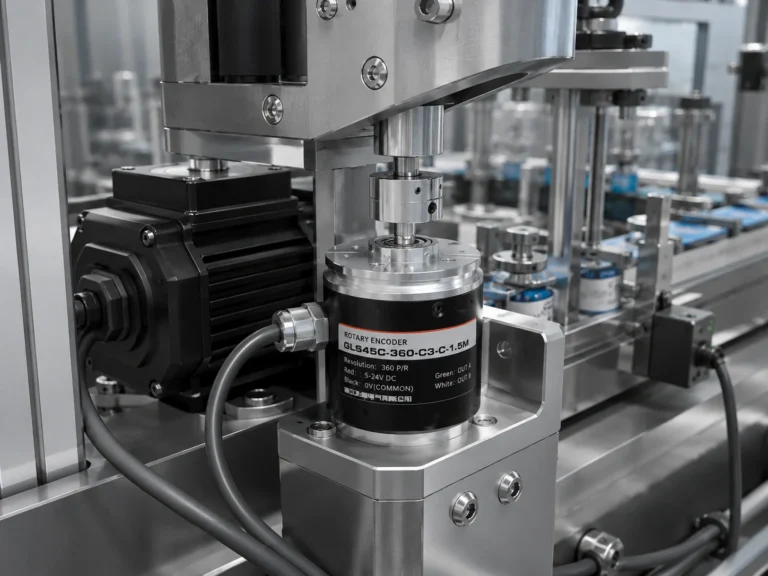
An ATEX incremental encoder is a rotary encoder that generates quadrature pulse signals (A/B channels, with optional Z index) for real-time speed, direction, and relative position feedback — while also meeting strict explosion protection standards defined by the ATEX directive (2014/34/EU). The term “ATEX” refers to the certification that allows the encoder to operate safely in environments where flammable gases, vapors, or combustible dust may be present.
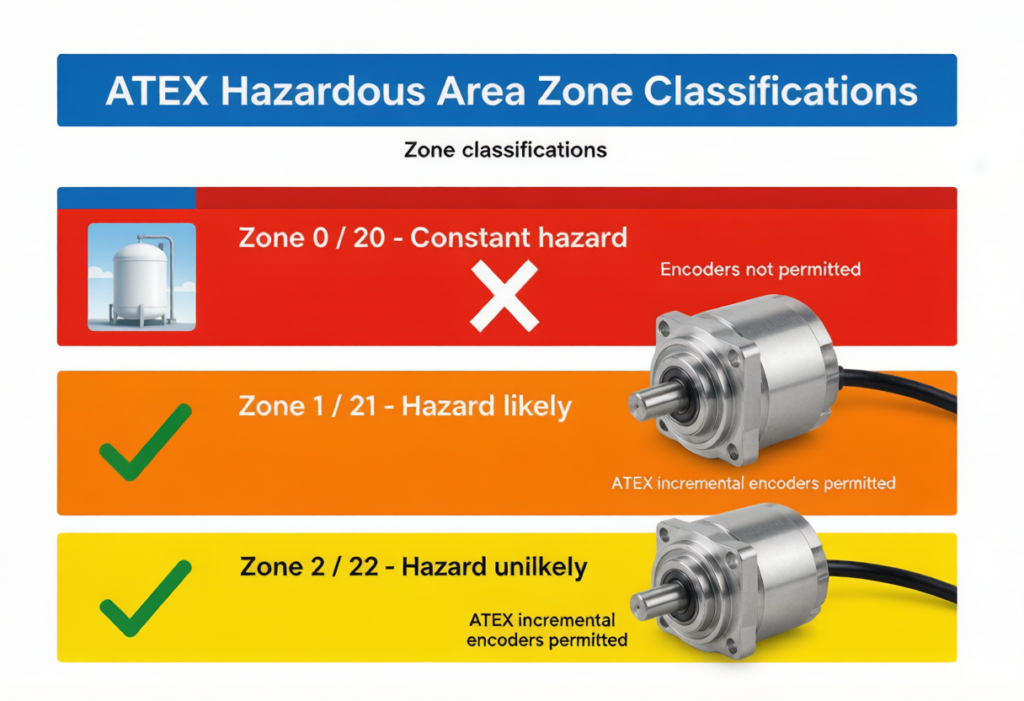
ATEX incremental encoders are certified for use in hazardous area zones:
- Zone 1 / Zone 21 — areas where explosive atmospheres are likely to occur during normal operation (gas and dust respectively)
- Zone 2 / Zone 22 — areas where explosive atmospheres are not likely to occur, and if they do, will persist only briefly
These encoders feature flameproof enclosures (Ex d), controlled surface temperatures (typically T6 class, max 85°C), and high ingress protection ratings (IP65 to IP67). They are widely deployed in oil and gas facilities, petrochemical plants, mining operations, paint and solvent processing, grain handling, and pharmaceutical manufacturing — anywhere sparks or hot surfaces could ignite an explosive atmosphere.
For a deeper overview of ATEX encoder features, selection criteria, and applications, you can refer to our detailed guide on what an ATEX incremental encoder is.
What Is a Hollow Shaft Encoder?
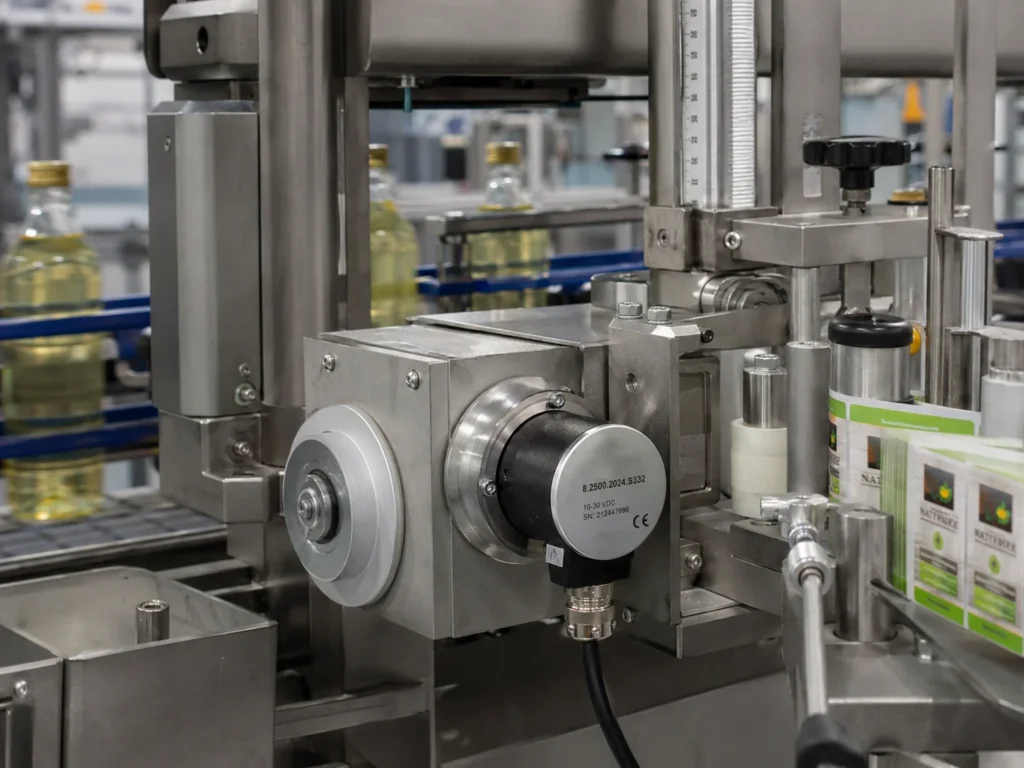
A hollow shaft encoder is a rotary encoder with a central through-bore that slides directly onto the motor or machine shaft, eliminating the need for a flexible coupling or mounting bracket. The encoder body is prevented from rotating by a torque arm, locating pin, or flexible tether connected to a fixed point on the machine frame.
This direct-mounting design offers several mechanical advantages:
- Simplified installation — no coupling alignment required; the encoder slides on and clamps in place
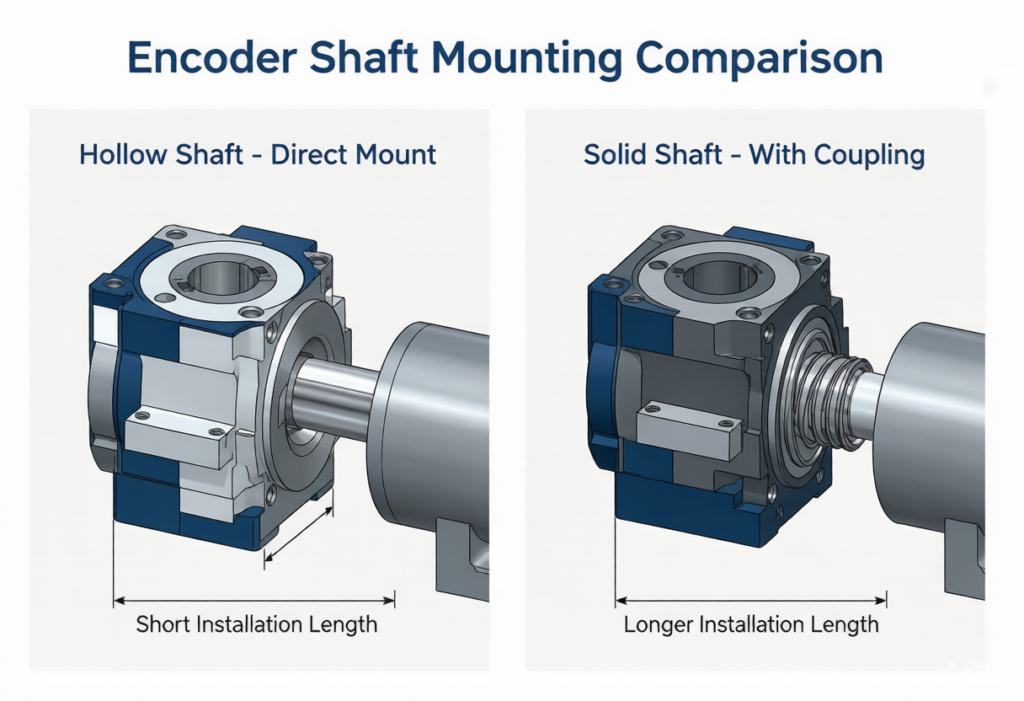
- Reduced axial footprint — smaller installation depth compared to solid shaft encoders with couplings
- Lower mechanical error — direct shaft-to-shaft connection eliminates backlash and coupling-induced lag
- Easier maintenance — the encoder can be removed without disconnecting a coupling
Hollow shaft encoders are commonly used in servo motors, elevator systems, packaging machinery, and applications where space is constrained. Sensyor manufactures through-hole encoder models like the GLT38B through-hole rotary encoder, which features a φ8mm hollow shaft and resolutions up to 2500 P/R.
To learn more about hollow shaft encoder specifications and selection, see our guide on hollow shaft rotary encoder applications and selection.
The Core Difference: Certification vs Shaft Design
Here is the key point that often causes confusion: ATEX incremental encoder and hollow shaft encoder describe two completely different properties of an encoder. They are not competing categories — they answer different questions.
- ATEX answers: “Is this encoder safe to use in explosive atmospheres?” — It is a safety certification.
- Hollow shaft answers: “How does this encoder physically mount to the machine?” — It is a mechanical design choice.
An ATEX incremental encoder can have a solid shaft or a hollow shaft. A hollow shaft encoder can be ATEX-certified or non-certified. These two attributes are independent, and understanding this distinction is the first step in selecting the right encoder for hazardous area applications.
| Attribute | ATEX Incremental Encoder | Hollow Shaft Encoder |
|---|---|---|
| What it describes | Explosion safety certification | Shaft mounting design |
| Primary concern | Safe operation in hazardous zones | Mechanical installation method |
| Can they coexist? | Yes — ATEX encoders come in both solid and hollow shaft versions | Yes — hollow shaft encoders can be ATEX-certified or standard |
| Key standards | ATEX 2014/34/EU, IECEx, UL | Shaft diameter, bore tolerance, torque arm design |
| Selection driver | Zone classification of the operating environment | Available shaft diameter, space constraints, load requirements |
ATEX Incremental Encoder with Hollow Shaft: When They Combine
When an application requires both explosion protection and a compact mounting solution, an ATEX-certified hollow shaft incremental encoder is the answer. Major encoder manufacturers — including Kübler, Lika, SCANCON, and BEI Sensors — now offer ATEX hollow shaft variants alongside traditional solid shaft ATEX models.
The hollow shaft design is particularly valuable in hazardous areas for several reasons:
- Tight mounting spaces — Offshore platforms, mining equipment, and chemical plants often have limited axial room. Hollow shaft mounting reduces installation depth compared to solid shaft encoders with couplings.
- No coupling required — Eliminating the coupling removes a potential failure point and simplifies the mechanical chain in safety-critical installations.
- Simplified retrofit — In existing hazardous area installations, swapping a solid shaft encoder for a hollow shaft version can reduce downtime because no coupling alignment is needed.
- No intrinsic safety barrier needed — Some ATEX hollow shaft encoders (like the BEI HS52) use explosion-proof construction (Ex d) that eliminates the need for an accompanying intrinsic safety barrier, streamlining the feedback system.
Typical specifications for ATEX hollow shaft incremental encoders include:
| Specification | Typical Range |
|---|---|
| Housing diameter | 58–89 mm |
| Hollow bore diameter | 6–50 mm (up to 380 mm for large magnetic types) |
| Resolution | Up to 10,000 PPR |
| Output signals | HTL, TTL, Push-Pull, RS422 |
| Protection rating | IP65 / IP66 / IP67 |
| Temperature range | −40°C to +60°C (some up to +80°C) |
| ATEX zones | Zone 1/21, Zone 2/22, Mining (Group I, M2) |
Solid Shaft vs Hollow Shaft in Hazardous Area Applications
When both shaft designs are available with ATEX certification, the choice between solid and hollow shaft depends on the mechanical requirements of the specific installation — not on safety certification.
| Factor | ATEX Solid Shaft Encoder | ATEX Hollow Shaft Encoder |
|---|---|---|
| Mounting method | Coupling + bracket or flange | Direct slide-on shaft mounting |
| Alignment requirements | High — misalignment > 0.1 mm can damage bearings | Low — self-centering on the shaft |
| Axial space needed | More — coupling adds length | Less — compact installation depth |
| Shaft load capacity | Higher — handles heavy radial and axial loads | Lower — primarily carries its own weight |
| Vibration damping | Coupling absorbs shock and misalignment | Direct contact transmits vibration (mitigated by torque arm) |
| Speed capability | Very high speeds possible (>10,000 RPM) | Good for high speeds, limited by clamping method |
| Installation time | Longer — requires alignment and coupling setup | Faster — slide on and clamp |
| Best for | Heavy machinery, high torque, high vibration, measuring wheels | Servo motors, compact machines, retrofit projects, tight spaces |
When to Choose ATEX Solid Shaft
Solid shaft encoders are preferred when the application involves high mechanical stress, heavy radial loads, or environments with significant vibration. The flexible coupling acts as a mechanical fuse — absorbing shock and protecting the encoder bearings. In hazardous area installations such as crane motors, winches, and conveyor drives in mining, solid shaft encoders with ATEX certification provide the durability needed for continuous heavy-duty operation.
When to Choose ATEX Hollow Shaft
Hollow shaft encoders excel in space-constrained installations where direct mounting is preferred. In offshore oil and gas platforms, chemical processing plants, and paint facilities — where every millimeter of installation depth matters — ATEX hollow shaft encoders provide explosion protection without the added bulk of a coupling assembly. They are also ideal for motor feedback applications where the encoder mounts directly on the rear shaft of an explosion-proof motor.
If you want to explore Sensyor’s hollow shaft product options, our optical incremental shaft encoder guide covers both solid and hollow shaft variants in detail.
How to Choose the Right Encoder for Hazardous Areas
Selecting the correct encoder for a hazardous environment requires evaluating both the safety certification and the mechanical design. Here is a step-by-step approach:
- Identify the ATEX zone — Determine whether the area is Zone 1/21, Zone 2/22, or a mining environment (Group I). This defines the required certification level.
- Determine the encoder type — Incremental encoders provide speed and relative position feedback. If you need absolute position after power loss, consider an ATEX absolute encoder instead.
- Choose the shaft design — Evaluate your mounting space, shaft diameter, load requirements, and whether a coupling is practical. Select solid shaft for heavy loads or hollow shaft for compact installations.
- Verify output compatibility — Ensure the encoder’s output signals (HTL, TTL, Push-Pull, RS422) match your control system, PLC, or drive.
- Check environmental ratings — Confirm IP protection level, operating temperature range, and resistance to chemicals, saltwater, or dust specific to your site.
- Review certification scope — Verify that the ATEX certificate covers both the encoder model and the specific configuration (shaft type, cable, connector) you plan to install.
Sensyor offers customizable encoder solutions with various shaft designs, output types, and resolutions. Browse our product catalog to compare available models, or explore our absolute encoder solutions if your hazardous area application requires position retention after power loss.
Common Mistakes When Selecting Encoders for Hazardous Areas
| Mistake | Why It Happens | How to Avoid It |
|---|---|---|
| Confusing ATEX certification with shaft type | Assuming ATEX encoders only come in solid shaft, or that hollow shaft encoders cannot be ATEX-certified | Treat certification and shaft design as independent selection criteria — both solid and hollow shaft ATEX encoders exist |
| Overlooking zone classification | Buying an encoder certified for Zone 2 when the application requires Zone 1 | Confirm the exact zone classification with your safety officer before specifying the encoder |
| Ignoring cable gland and accessory certification | The encoder is ATEX-certified but the cable gland or connector is not | Ensure all components in the explosion-proof chain — encoder, cable, gland, barrier — carry compatible ATEX certification |
| Choosing hollow shaft for high-load applications | Hollow shaft encoders are not designed for heavy radial or axial loads | Use solid shaft encoders with couplings for high-torque, heavy-load, or measuring-wheel applications |
| Neglecting temperature class | Encoder surface temperature may exceed the auto-ignition temperature of the ambient gas or dust | Verify the temperature class (T6 ≤ 85°C, T4 ≤ 135°C) matches the hazardous area requirements |
Making the Right Choice
Understanding the difference between an ATEX incremental encoder and a hollow shaft encoder comes down to recognizing that they describe different things — safety certification versus mounting method. Once you separate these two dimensions, the selection process becomes straightforward: first determine your ATEX zone requirement, then choose the shaft design that best fits your mechanical installation.
If you need help selecting the right encoder for a hazardous area application, contact the Sensyor team for technical consultation. We provide customizable encoder solutions with various shaft designs, output interfaces, and certification options to meet your specific requirements.
FAQ
Can a hollow shaft encoder be ATEX certified?
Yes. Many manufacturers offer ATEX-certified hollow shaft encoders for Zone 1/21 and Zone 2/22 hazardous areas. The hollow shaft design is compatible with flameproof enclosure (Ex d) construction, and some models — like the BEI HS52 — were specifically designed as ATEX hollow shaft encoders to simplify installation in explosive environments.
Is an ATEX incremental encoder always more expensive than a standard hollow shaft encoder?
Generally yes, because ATEX certification requires flameproof housing construction, stainless steel materials, controlled surface temperatures, and rigorous testing. However, the cost difference depends on the zone rating, housing size, and certification scope. A Zone 2/22 ATEX encoder is typically less expensive than a Zone 1/21 version.
What is the maximum resolution for an ATEX incremental encoder?
ATEX incremental encoders typically offer resolutions up to 10,000 PPR (pulses per revolution) for optical types. Magnetic ATEX encoders can reach up to 65,536 PPR. The exact maximum depends on the manufacturer, sensor technology, and housing size.
Do I need an intrinsic safety barrier with an ATEX hollow shaft encoder?
It depends on the protection method. Encoders using flameproof enclosure (Ex d) construction do not require an intrinsic safety barrier — the housing is designed to contain any internal explosion. However, encoders using intrinsic safety (Ex i) protection do require certified barriers. Always verify the protection method specified on the ATEX certificate.
Can I replace a solid shaft ATEX encoder with a hollow shaft version?
In many cases yes, as long as the replacement encoder carries the same or higher ATEX zone certification, matches the shaft diameter, and provides compatible output signals. The hollow shaft version may simplify installation by eliminating the coupling. However, verify that the application does not require the higher load capacity that a solid shaft encoder provides.