Incremental vs Absolute Encoder Differences and How to Choose
What Is an Incremental Encoder?
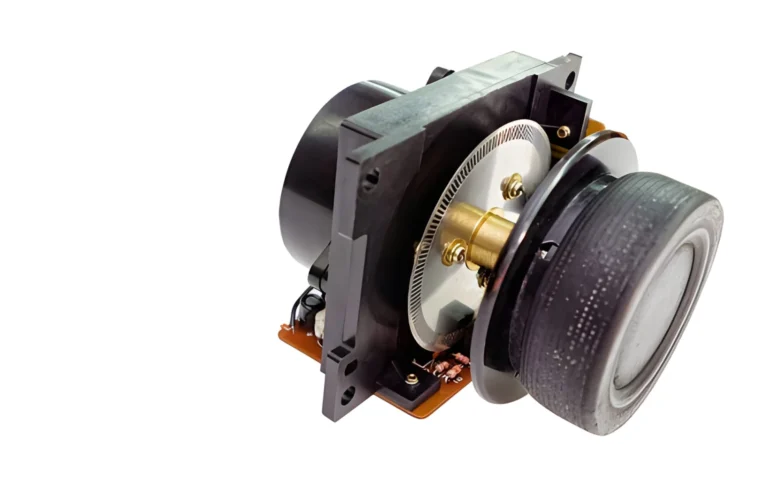
An incremental encoder is a device that provides relative position feedback by generating pulses as it moves. It works on the simple principle of pulse counting — every pulse corresponds to a small movement, allowing systems to track changes in position or speed. Unlike absolute encoders, incremental encoders do not provide a unique position value but rely on counting pulses from a reference point.
Common Types
- Optical incremental encoders: Use a light source and photodetector to sense interruptions in a coded disk pattern, offering high resolution and precision.
- Magnetic incremental encoders: Detect changes in magnetic fields due to a rotating magnetized disk, ideal for harsh environments with dust or moisture.
Output Signals
Incremental encoders typically produce:
- Quadrature signals (A/B channels): Two pulse trains offset by 90 degrees, enabling direction detection and finer position resolution.
- Index pulse (Z channel): A single pulse per revolution that marks a reference position, useful for zeroing or homing.
Advantages at a Glance
- High resolution potential: Can achieve very fine movement detection by increasing pulse counts.
- Cost-effective: Usually less expensive than absolute encoders.
- Simple integration: Easy to connect and interpret with standard motion control electronics.
In , incremental rotary encoders are a reliable, efficient choice for many industrial applications where relative position tracking and speed monitoring are essential. Their straightforward pulse-based output and flexible designs make them a popular option in motion control systems worldwide.
What Is an Absolute Encoder?
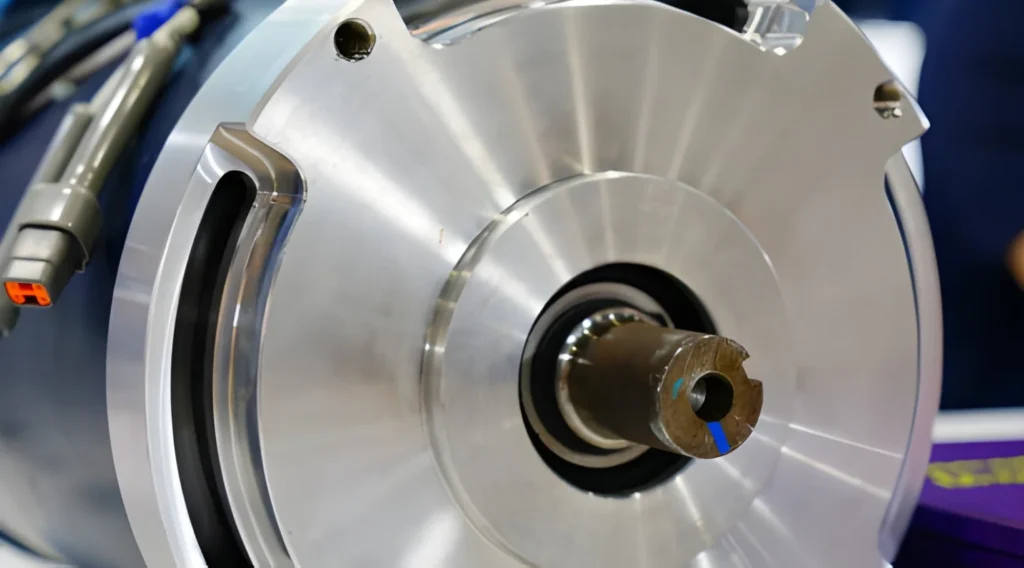
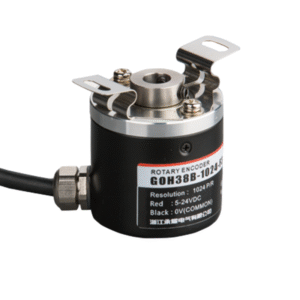
An absolute encoder provides a unique digital code for each shaft position, offering precise and direct position feedback. Unlike incremental encoders that count pulses to track movement, absolute encoders know the exact position immediately upon startup, without needing to move to a reference point.
There are two main types: single-turn absolute encoders, which track position within one full rotation, and multi-turn encoders, which also count the number of complete revolutions, ideal for applications requiring extended range.
Absolute encoders commonly use optical or magnetic sensing technology and often communicate position data via digital protocols like SSI (Synchronous Serial Interface) or BiSS (Bidirectional Serial State). These protocols enhance noise immunity and improve data integrity.
The key advantages of absolute encoders include retaining position data even after power loss, eliminating the need for re-homing during startup, and providing reliable position feedback in complex or safety-critical industrial applications. For a deeper dive into rotary encoders and their types, check out this comprehensive guide on rotary encoders and their applications.
Key Differences: Incremental vs Absolute Encoders
When choosing between incremental and absolute encoders, understanding their key differences helps in selecting the right solution for your application.
| Feature | Incremental Encoder | Absolute Encoder |
|---|---|---|
| Position Feedback | Relative position via pulse counting | Absolute position via unique code |
| Power Loss Behavior | Position lost; requires re-homing | Position retained; no re-homing needed |
| Resolution & Speed | Often higher maximum resolution and faster updates | Resolution can be limited by coding; speed varies |
| Signal Type | Quadrature pulses (A/B channels) + index pulse (Z) | Digital code output (SSI, BiSS, etc.) |
| Complexity | Simpler wiring and signal processing | More complex electronics and connections |
| Noise Susceptibility | More prone to error accumulation and missed pulses | Higher noise immunity due to coded output |
| Error Accumulation | Possible over time without correction | No error accumulation; direct absolute reading |
Incremental encoders output pulses that track movement relative to a starting point, making them affordable and straightforward but requiring a homing routine after power cycles. Absolute encoders produce a unique digital code for every position, ensuring that the exact position is always known, even after power loss.
For a deeper look into the quadrature encoder signals and output types of incremental encoders, check out our detailed guide on understanding the output types of incremental encoder.
This difference in feedback and signal type drives their use cases, with incremental encoders common in high-speed, cost-sensitive setups, and absolute encoders preferred where safety and precision without homing are critical.
Pros and Cons of Incremental Encoders
Incremental encoders are popular thanks to their lower cost and ability to deliver high speeds and resolutions in many applications. They are highly flexible, allowing easy scaling for different motion control needs, which makes them a favorite for many industrial encoder applications. Their straightforward output signals, like quadrature encoder signals, simplify integration into existing systems without the need for complex electronics.
However, incremental encoders have some drawbacks. They lose position information when power is interrupted, requiring a re-homing procedure to establish a known reference point. This can cause downtime or errors in processes where exact position tracking is critical. Additionally, in environments with electrical noise, these encoders are more prone to missed pulses, which can lead to cumulative errors over time. This makes their noise immunity a key consideration when choosing an incremental rotary encoder.
For those looking for reliable incremental encoders, options like the high-quality RSM6O handwheel encoder provide good performance across many industrial setups, balancing cost and resolution effectively.
Pros and Cons of Absolute Encoders
Absolute encoders provide immediate and precise position feedback since each position has a unique code. This makes them perfect for safety-critical systems like medical devices, aerospace, or automated guided vehicles (AGVs), where knowing the exact position at all times is vital. They also excel in multi-turn tracking, meaning they can keep track of multiple rotations without losing position data, which is key for applications like robotics or wind turbines.
However, absolute encoders usually come with a higher price tag compared to incremental rotary encoders. Their resolution and speed might be somewhat lower due to the complexity of reading digital position codes. Additionally, these encoders often require more complex wiring and interface protocols such as SSI or BiSS, which can increase integration effort.
Despite these challenges, for scenarios where position retention after power loss and instant position knowledge matter the most, absolute encoders are the ideal choice. For more details on absolute encoder options and features, check out sensyor’s range of absolute encoders.
Applications: When to Use Incremental Encoders
Incremental encoders are ideal for applications where you need reliable speed and direction monitoring without the complexity of absolute positioning. They work great in conveyor systems and simple motor control setups where knowing relative movement suffices. These encoders excel in high-speed machinery such as printing presses and packaging lines, thanks to their ability to provide quick pulse signals for precise motion tracking.
Cost-sensitive projects often lean toward incremental rotary encoders because they offer good resolution and speed at a lower price point. Since incremental encoders require re-homing after power loss, they’re best suited for environments where homing is practical and downtime is manageable.
For more details on how incremental encoders function in industrial settings, see sensyor’s insights on incremental rotary encoder applications in industrial automation and understand different incremental optical encoder technologies.
Applications: When to Use Absolute Encoders
Absolute encoders are the go-to choice when you need precise positioning without the hassle of re-homing after power loss. This makes them ideal for robotics, CNC machines, and elevators, where knowing the exact position at all times is critical to smooth and safe operation.
In safety-critical systems like medical devices, aerospace applications, and automated guided vehicles (AGVs), absolute encoders provide reliable position feedback that prevents errors and downtime. Their ability to retain position data even during power interruptions adds a vital layer of safety and accuracy.
For complicated setups involving multi-axis or long-travel movements—such as cranes and wind turbines—absolute encoders shine by tracking complex positions across multiple turns thanks to their single-turn and multi-turn variants. This precise, continuous feedback supports smooth control over large distances and multi-directional motion.
If you’re looking for reliable, high-performance encoders designed for challenging applications, sensyor offers a robust range of absolute rotary encoders with customization options to fit your exact needs, including models like the GOS58FO4 rotary encoder. Their expertise in manufacturing ensures high reliability for demanding industrial encoder applications.
How to Choose Between Incremental and Absolute Encoders
Selecting between incremental and absolute encoders depends on several key factors. Here’s a quick guide to help you decide based on your project’s needs:
| Decision Factor | Incremental Encoder | Absolute Encoder |
|---|---|---|
| Budget | Lower initial cost, good for cost-sensitive projects | Higher upfront cost but can save on downtime costs |
| Power Reliability | Requires homing after power loss | Retains position even after power interruptions |
| Need for Homing | Necessary to reset position at startup | No homing required, immediate position feedback |
| Resolution & Speed | Typically high resolution and fast output | Resolution can be lower; speed limited by digital communication |
| Environmental Conditions | More sensitive to electrical noise and dust | Generally better noise immunity, rugged options available |
| Application Complexity | Simple integration, fewer wiring needs | More complex wiring and protocols like SSI or BiSS |
Real-World Recommendations
- If your application involves fast-moving machinery where cost and speed dominate, and power interruptions are rare or managed, an incremental rotary encoder is usually the best fit.
- For systems where precise position tracking is critical, such as CNC machines or robotics, and power loss could disrupt operations, an absolute encoder is worth the investment.
- In environments with high electrical noise or harsh conditions, absolute encoders provide better reliability and error immunity.
Cost and Long-Term ROI
While incremental encoders offer a lower price point, consider the long-term costs related to downtime and maintenance from re-homing procedures and error corrections. Absolute encoders usually incur a higher initial cost but can lower overall system complexity and downtime, improving return on investment over time.
For a deeper dive into incremental encoder options, including how their output and resolution vary, check out this detailed guide on incremental rotary encoders.
Choosing the right encoder means balancing your operational needs with budget and environmental demands, ensuring reliable, accurate position feedback for your motion control systems.
sensyor Encoder Solutions
sensyor offers a broad range of high-quality incremental rotary encoders and absolute encoders designed to meet varied industrial needs. Whether you require an incremental encoder for precise speed and direction feedback or an absolute encoder for position retention without re-homing, sensyor provides reliable, cost-effective solutions.
Key features include extensive customization options to fit specific application requirements, competitive pricing to support budget-sensitive projects, and proven high reliability thanks to sensyor’s advanced manufacturing expertise. Their product lineup covers optical and magnetic encoder technologies, ensuring excellent noise immunity and resolution performance.
For instance, sensyor’s popular GLT10030B rotary encoder and GOS63 rotary encoder exemplify precision and durability that suit many motion control applications. sensyor’s commitment to quality and innovation ensures seamless integration with a variety of industrial setups, from servo motors to multi-axis CNC machines.
With sensyor, you get dependable encoder solutions tailored to both incremental and absolute feedback needs, backed by a strong supplier reputation and consistent product excellence.