
Rotary Encoder Module 5V 20 Pulses with Push Button for Arduino
Sensyor Rotary Encoder Module – Precision You Can Trust
Key Features at a Glance:
- Operates smoothly at 5V, compatible with standard microcontrollers
- 20 pulses per revolution for precise, incremental position tracking
- Supports direction detection with quadrature encoding outputs
- Integrated push-button switch adds versatile control options
- Ideal for Arduino, Raspberry Pi, ESP32, STM32 projects
Why Choose Sensyor Rotary Encoder Module?
- Arduino Compatible – Seamless integration into your maker projects
- 1-Year Warranty – Reliability backed by our quality promise
- Free Shipping – On orders over $50, worldwide delivery
Upgrade your control interfaces today with the Sensyor digital rotary encoder module—engineered for makers, educators, and engineers who demand accuracy and durability.
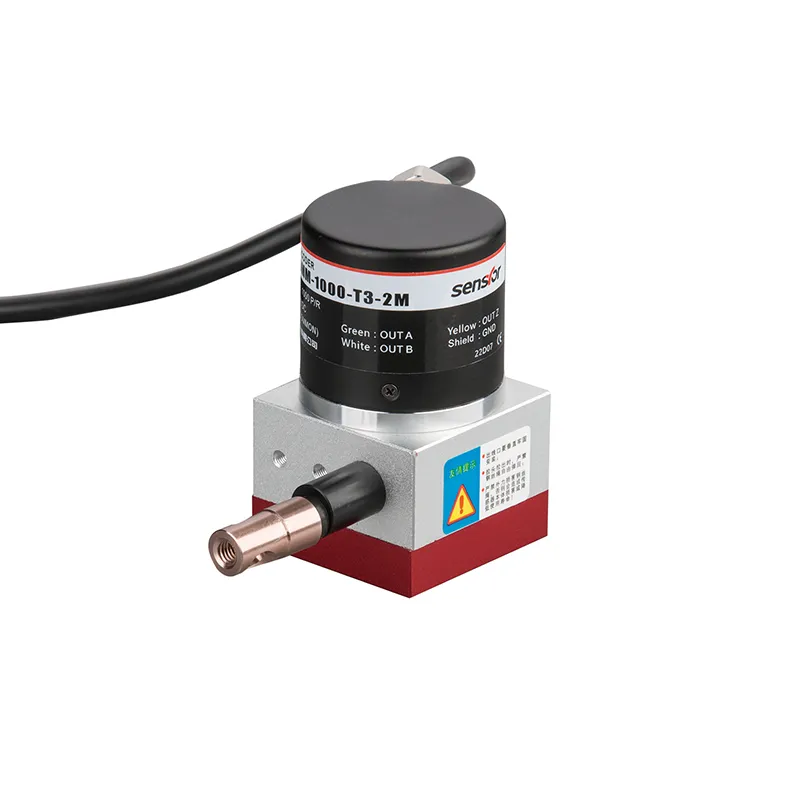
Product Overview
The Sensyor rotary encoder module is a smart upgrade from traditional potentiometers. Unlike potentiometers that wear out over time and provide analog signals, this Rotary Encoder Sensor Module delivers precise digital feedback, ensuring long-lasting accuracy and reliability. Its Incremental Rotary Encoder Module design allows for smooth position tracking and direction detection, making it ideal for projects that demand consistent performance.
Built for makers, educators, and engineers alike, Sensyor stands behind every Digital Rotary Encoder Module with a promise of reliable performance. Whether you’re designing interactive controls, robotics systems, or prototype interfaces, this module offers dependable results every time.
For those seeking a trusted, easy-to-use rotary encoder breakout board, the Sensyor incremental rotary encoder sensor module delivers both precision and durability that outshine many standard options. Discover more similar innovative products in our Sensyor product range.
Key Features of the Rotary Encoder Module
The Sensyor rotary encoder module is packed with features that make it ideal for a wide range of projects. Here’s what sets it apart:
| Feature | Description |
|---|---|
| Quadrature output | Provides precise direction detection and position tracking using CLK and DT signals. Ideal for smooth control in your projects. |
| Integrated push-button switch | Includes a built-in tactile button for easy input without extra hardware. |
| 360° continuous rotation | Allows endless turning with tactile detents for clear feedback at each step. |
| 5-pin breadboard friendly | Simple VCC, GND, CLK, DT, SW pins make wiring straightforward and compatible with common breadboards. |
| Wide compatibility | Works effortlessly with Arduino, ESP32, Raspberry Pi, STM32, and other microcontrollers. |
| Low power consumption | Efficient design ensures minimal energy use—great for battery-powered projects. |
| Robust mechanical build | Durable components ensure long-lasting performance even under frequent use. |
This incremental rotary encoder module combines smooth rotation and reliable digital signals, making it a practical upgrade over rotary potentiometers. Its 20 pulses per revolution deliver fine resolution without complexity. For detailed comparisons and building tips, check out our incremental rotary encoder how to distinguish signals guide.
Technical Specifications
Here’s a quick look at the Sensyor rotary encoder module’s key specs, designed to fit smoothly into your projects:
| Specification | Details |
|---|---|
| Operating Voltage | 5V (compatible with 3.3V–5V) |
| Pulses per Revolution | 20 pulses/rev |
| Output | 2-bit quadrature (CLK/DT) + Push-button switch (SW) |
| Interface Pins | VCC, GND, CLK, DT, SW |
| Mechanical Angle | 360° continuous rotation |
| Dimensions | 30 × 18 × 30 mm |
| Shaft Diameter | 6 mm |
| Operating Temperature | -20°C to +70°C |
| Weight | 12 g |
This incremental rotary encoder module features a 2-bit quadrature output, allowing precise direction detection and position tracking, ideal for your Arduino, ESP32, or Raspberry Pi setups. Its 360-degree continuous rotation with 20 pulses per revolution ensures smooth and accurate control, making it an upgrade over traditional rotary potentiometer replacements.
For a deeper dive into the benefits of incremental encoders and how environmental factors affect their performance, check out our detailed guide on incremental rotary encoders.
Pinout and Wiring Guide
The Sensyor rotary encoder module features five essential pins: VCC, GND, CLK, DT, and SW. Here’s a quick overview:
- VCC: Power supply (5V recommended, some versions support 3.3V)
- GND: Ground connection
- CLK: Clock output (quadrature signal A)
- DT: Data output (quadrature signal B)
- SW: Push-button switch output
Raspberry Pi
- Connect VCC to 3.3V pin only.
- Connect GND to any ground pin.
- Connect CLK to a GPIO input pin (e.g., GPIO17).
- Connect DT to another GPIO input (e.g., GPIO27).
- Connect SW to a GPIO pin if push-button use is required.
- External 10kΩ pull-up resistors on CLK and DT pins are recommended; Raspberry Pi GPIO pins don’t have internal pull-ups as strong as microcontrollers.
Pull-up Resistor and Debounce Tips
- Pull-up resistors help keep the rotary encoder signals stable. If unsure, add 10kΩ resistors between CLK, DT, SW, and VCC.
- Debouncing is crucial when reading the rotary encoder signals and the switch. Use software debouncing in your code or add a small capacitor (e.g., 0.1µF) across the switch for better stability.
- Proper debounce handling prevents missed counts and erratic signals during rotation or button presses.
This simple pinout and wiring guide ensures easy hookup of your rotary encoder sensor module to popular platforms like Arduino, ESP32, and Raspberry Pi for smooth position tracking and switch control. For advanced applications, explore integration with the Sensyor LX40S Wire Type Encoder for precise rotary feedback.
How It Works: Quadrature Encoding and Smooth Control
The Sensyor rotary encoder module uses quadrature encoding—a smart way to track both direction and position. It outputs two signals, CLK and DT, that are out of phase. Watching the order and timing of these signals helps your microcontroller know if the knob is turned clockwise or counterclockwise.
| Signal | Description |
|---|---|
| CLK | Clock pulse signal |
| DT | Data pulse, shifted in phase |
Direction Detection with Phase Shift
- When CLK leads DT, the shaft is turning one way (e.g., clockwise).
- When DT leads CLK, it’s turning the opposite direction (e.g., counterclockwise).
This phase difference lets your controller track rotation direction instantly and accurately.
Incremental vs Absolute Encoders
- Incremental rotary encoder modules (like Sensyor) count changes as pulses. They track movement relative to the last position but lose absolute position after power off.
- Absolute encoders keep exact position information permanently, no matter power state.
For most maker projects, incremental encoders offer simplicity and reliability. Learn more about the key differences between these two types in our detailed absolute vs incremental rotary encoder guide.
Why 20 Pulses per Revolution?
The Sensyor’s 20 pulses per revolution provide a perfect balance—high enough resolution for smooth tuning and control but not so high that it overloads your processor. This means fine adjustments feel natural and intuitive, ideal for menus, robotics, and more.
Explore more on output signals and phase detection in our article about incremental rotary encoder main output signals and how to identify A, B, Z phases.
Understanding this makes it clear why Sensyor’s digital rotary encoder module is a top choice for precise and reliable position sensing.
Applications and Project Ideas
The Sensyor rotary encoder module is perfect for a wide range of projects and practical uses. Whether you’re navigating menus, adjusting settings, or controlling motors, this incremental rotary encoder module fits right in.
- Menu Navigation & Parameter Adjustment: Easily scroll through options or tweak values on your custom interface with smooth, precise clicks.
- Motor Speed & Position Control: Use it to manage motor speeds or track positions in robotics and automation projects.
- Volume & Brightness Controls: Replace traditional knobs in audio or lighting devices for reliable, digital control.
- Robotics & CNC Positioning: Essential for accurate rotary input in robotic arms or CNC machines.
- DIY Game Controllers & Oscilloscopes: Build interactive controls and measurement tools with intuitive rotary input.
For those who want to get started quickly, explore ready-to-use project links with full code repositories that simplify integrating the digital rotary encoder module into your devices. This makes it easier to leverage the direction detection and 20 pulses/rev capabilities in real-world setups.
If you want to dive deeper into motion control applications or understand how the incremental rotary encoder sensor module improves precision, check out Sensyor’s detailed guides like the ultimate guide to rotary encoders and mastering incremental shaft encoder benefits in industrial automation.
Arduino Code Example and Library Integration
Get started quickly with our Sensyor rotary encoder module using this simple Arduino sketch. It counts position changes and detects button presses, perfect for projects needing precise input.
Recommended Libraries
- RotaryEncoder: Enables easy reading of the quadrature signals for smooth position tracking.
- Encoder: Another solid choice with robust support for incremental rotary encoder sensor modules.
Serial Monitor Output
Watch the serial monitor to see position counts update as you turn the knob and messages when you press the integrated push button switch. This feedback helps debug and refine your project.
Troubleshooting Tips
- Missed Pulses: Slow down rotation speed or add hardware/software debouncing to improve accuracy.
- Button Bouncing: Use INPUT_PULLUP with debounce delay (as in the example) for reliable switch press detection.
- Pin Conflicts: Verify wiring matches pin assignments in code to ensure correct readings.
This Arduino code example and library integration simplify working with your digital rotary encoder module, making it a breeze to add precise and responsive controls to your electronics projects.
For more detailed wiring and usage, check out our 38 Series Rotary Encoder Module product page.
Installation and Best Practices
Installing your Sensyor rotary encoder module right ensures smooth operation and longer life. Here’s what to keep in mind:
- Mounting Options: You can mount the rotary encoder sensor module on a panel or directly onto a PCB. Panel mounting is great for easy access, while PCB mounting offers more stability for compact projects.
- Knob Selection and Attachment: Choose knobs that fit the 6 mm shaft diameter snugly. Avoid forcing the knob to prevent damaging the shaft or encoder. Use a small set screw or friction fit knobs designed for rotary encoder with switch applications.
- Debouncing Techniques: Mechanical rotary encoders can produce noisy signals. Use software debouncing or hardware solutions like RC filters or low-value pull-up resistors to clean up the pulses for reliable counting.
- Power Supply Considerations: The rotary encoder module operates at 5V but is 3.3V tolerant on some versions. Ensure your power source is stable to avoid signal glitches. Avoid powering the encoder directly from noisy sources to maintain accuracy.
- Safety and ESD Handling: Handle the rotary encoder with care to prevent electrostatic discharge (ESD) damage. Ground yourself before touching the module and consider ESD-safe packaging during transport and storage.
Following these installation tips will help your incremental rotary encoder module deliver precise position sensing and reliable push-button switch performance in any project. For mounting enhancements, check out our XT-Series Spring Bracket designed for secure attachment.
Comparison Table: Sensyor vs KY-040 vs EC11 vs Absolute Encoders
| Feature | Sensyor Rotary Encoder Module | KY-040 Rotary Encoder Module | EC11 Rotary Encoder Module | Absolute Encoder Module |
|---|---|---|---|---|
| Price | Affordable | Budget-friendly | Low-cost | Higher (precision products) |
| Resolution (Pulses/Rev) | 20 pulses/rev | 20 pulses/rev | ~20 pulses/rev | Varies; typically much higher |
| Output Type | 2-bit Quadrature + Push Button | 2-bit Quadrature + Push Button | 2-bit Quadrature + Push Button | Absolute position data |
| Rotation | 360° continuous with detents | 360° continuous with detents | 360° continuous with detents | Position-specific (no continuous) |
| Push-button Switch | Yes | Yes | Yes | Usually no |
| Voltage Compatibility | 3.3V–5V tolerant | 5V | 5V | Varies (depends on model) |
| Mechanical Durability | Robust, made for repeated use | Standard | Standard | High-grade for industrial use |
| Compatibility | Arduino, ESP32, Raspberry Pi, STM32 | Arduino, Raspberry Pi | Arduino | Varies; often industrial controllers |
| Size (mm) | 30×18×30 | Similar size | Compact | Varies; often bulkier |
| Best For | Makers, educators, engineers | Hobbyist projects | Basic rotary sensing | Precise position tracking |
Our Sensyor Incremental Rotary Encoder Module stands out for its reliable performance and broad compatibility, making it ideal for detailed position tracking and direction detection in a variety of projects. Compared to similar modules like the KY-040 and EC11, Sensyor offers stable 20-pulse resolution and a rugged build with 3.3V–5V tolerance, perfect for Arduino and related platforms.
If you need exact position feedback, consider absolute encoders as explained in our detailed comparison of incremental vs absolute encoders — they shine where precision is key but come with added cost and complexity.This table helps pick the right rotary encoder sensor module based on project needs, budget, and feature priorities.
Frequently Asked Questions about Rotary Encoder Module
1. Is the Sensyor rotary encoder module compatible with 3.3V microcontrollers?
Yes, while the module operates typically at 5V, it supports 3.3V tolerant input signals making it compatible with microcontrollers like ESP32 and Raspberry Pi.
2. Can I add a knob to the rotary encoder sensor module?
Absolutely! The encoder has a standard 6mm shaft designed to fit most rotary knobs, making it easy to customize for your project’s needs.
3. Why does my encoder count sometimes jump or miss pulses?
This is often caused by switch bouncing or wiring issues. Using pull-up resistors and software debouncing can solve missed pulses and improve reliability.
4. How is this rotary encoder module different from a typical potentiometer?
This digital rotary encoder module offers infinite rotation, precise position tracking, and direction detection—advantages over rotary potentiometer replacements that have limited rotation and analog output.
5. What microcontrollers support the incremental rotary encoder module?
It works well with Arduino, ESP32, Raspberry Pi, STM32, and other popular boards that can read quadrature signals.
6. Can the integrated push-button switch be used like a regular button?
Yes, it functions as a standard tactile push-button, perfect for menu selection or mode switching in your projects.
7. How many pulses per revolution does the encoder provide?
The Sensyor rotary encoder module outputs 20 pulses per revolution, which balances resolution and responsiveness for smooth control.
8. What are the recommended wiring practices?
Use the labeled 5-pin interface (VCC, GND, CLK, DT, SW), enable internal pull-up resistors where possible, and keep wiring short to reduce noise.
9. Is this rotary encoder module suitable for robotics applications?
Definitely. Its quadrature output enables precise motor position and speed control, making it ideal for robotics and CNC tasks.
10. Does the rotary encoder support continuous 360° rotation?
Yes, the module offers 360-degree continuous rotation with tactile detents, perfect for endless rotational input without worrying about stops.
For more insights into rotary encoder technology, check out our detailed GLT10030B rotary encoder page.
Customer Reviews and Ratings
★★★★★ “The Sensyor rotary encoder module exceeded my expectations! Its reliability and smooth push-button switch make it perfect for my Arduino projects.” – Verified Buyer
★★★★☆ “I replaced my old potentiometer with this incremental rotary encoder module, and the difference is clear — precise direction detection and no missed pulses.” – Maker from USA
★★★★★ “Easy to wire and integrate with ESP32. The 20 pulses/rev provide just the right resolution for motor control applications.” – Engineer, Germany
★★★★★ “Robust build quality and excellent compatibility with Raspberry Pi. The digital rotary encoder module feels solid and responsive.” – Hobbyist, India
★★★★★ “Perfect for menu navigation and parameter adjustment in my DIY game controller. The button click adds great functionality.” – Verified DIY Enthusiast
Our customers consistently praise the Sensyor rotary encoder sensor module for its reliability, ease of use, and compatibility across platforms. Join thousands of makers, educators, and engineers who trust this rotary knob sensor for Arduino and more in their projects.
Related Products
Complete your projects with the Sensyor lineup designed for seamless integration and reliable performance:
- Sensyor Arduino Sensor Kit – A versatile collection of sensors including rotary encoder modules, perfect for makers and engineers looking to expand their digital input options.
- Sensyor DC Motor Driver Module – Ideal for motor control projects that pair well with rotary encoder sensors for precise speed and position feedback.
- Sensyor OLED Display Module – Easily add visual output to your rotary encoder projects for menu navigation or parameter display.
These modules work great alongside the Sensyor rotary encoder sensor module to build responsive, interactive electronics. For more advanced sensor options, check out our Incremental Rotary Encoder High Resolution Quadrature Output Sensor page for enhanced precision solutions.Boost your project’s versatility by combining the digital rotary encoder module with other Sensyor accessories, all crafted for smooth microcontroller integration and solid reliability.
Ready to Build Your Project?
Get started with our Sensyor rotary encoder module today! Choose from convenient bundle options that include everything you need to create precise and reliable controls. Whether you’re a maker, engineer, or educator, our bundles make setup easy and hassle-free.
Download the detailed rotary encoder module datasheet PDF to explore full technical specs and wiring diagrams. For any questions or assistance, our dedicated support team is ready to help—contact us anytime at Sensyor support.With our 1-year warranty and proven reliability, you can trust Sensyor for your next digital rotary encoder module project. Grab yours now and enjoy free shipping on orders over $50!