Top 10 China Incremental Encoder Companies in 2026
The China Incremental Encoder market is broad enough to make buyers blink twice. One current marketplace listing shows 332 incremental encoder manufacturers and suppliers, while a separate listing shows 103 incremental optical encoder manufacturers and suppliers in China. At the same time, an industry reference notes that China’s demand for high-precision encoders has long been strong, while the upper end of the market historically relied heavily on imports. So, no, buyers are not choosing from a neat little shelf of three brands and one obvious hero. They are choosing through noise.
When I talk with purchasing teams, I usually hear the same question in different clothes: Who in China can actually deliver stable encoder quality, useful engineering support, and sane lead times without turning the RFQ into a treasure hunt? That question matters even more in the incremental encoder segment, where one bad choice can quietly become scrap, downtime, or the sort of meeting nobody wants on a Monday morning.
That is exactly why this article matters. Instead of pretending every company is “the best” — I am looking at the China Incremental Encoder industry from a B2B angle: manufacturing visibility, product breadth, engineering fit, and how well a supplier can support OEM, factory automation, exporter, wholesaler, and industrial service needs. I will also show where Sensyor fits, especially if you are sourcing Incremental Encoder, Absolute Encoder, Bearingless Encoder, Linear Encoder, Magnetic & Optical Encoders, Analog Signal Encoders, and related industrial sensors for motion control or machine integration.
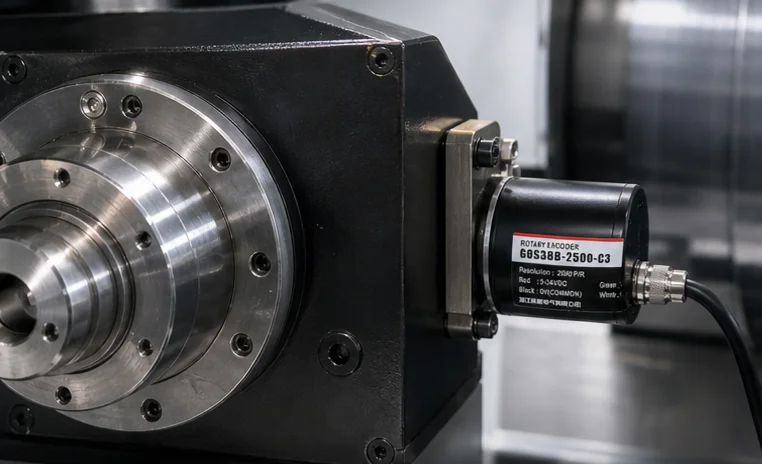
China Incremental Encoder market reality
Before naming companies, I want to ground the discussion in something more useful than marketing fireworks. China Incremental Encoder space is crowded, and that alone changes how a procurement team should think. In a fragmented market, “top ten” often means “ten companies worth screening carefully” rather than “ten companies with universally proven dominance.”
| Market signal | What it suggests for buyers |
|---|---|
| A China marketplace lists 332 incremental encoder manufacturers and suppliers. | Supplier discovery is easy, but supplier qualification is the real work. |
| A separate China listing shows 103 incremental optical encoder manufacturers and suppliers. | Optical encoder options are plentiful, so buyers should compare signal stability, assembly quality, and response speed rather than only price. |
| An industry article says China has had strong demand for high-precision encoders but historically depended mainly on imports at the high end. | Domestic manufacturers that invest in R&D, consistency, and application support have a real opening in premium projects. |
| Recent market commentary says absolute rotary encoder demand is being pushed by industrial automation and precision requirements. | Buyers should not evaluate incremental products in isolation; many projects also need an absolute rotary encoder or multiturn absolute encoder option in the same supply chain. |
For procurement teams, this means the conversation cannot stop at “Do you make incremental rotary encoders?” The stronger question is whether a China manufacturer can support multiple feedback methods, multiple outputs, and multiple installation conditions without making your engineering team babysit the order. That is where a good factory or supplier starts to separate itself from a company that merely has a catalog and a nice coffee machine.
Looking for a dependable supplier instead of just another catalog? Contact us now with your shaft size, resolution, output signal, and installation requirements, and we will help you move from selection to quotation faster.
Top 10 companies
Here is my practical shortlist. I am not pretending this is the final word from heaven, and I doubt the encoder gods have published one anyway. Instead, I am combining visible China market listings and industry references with a B2B sourcing lens: who appears in the market, what product clues are visible, and which companies deserve a closer RFQ conversation.
| Company | Market visibility | Procurement note |
|---|---|---|
| Sensyor | High-tech enterprise focused on electro-optical-mechanical sensing, with rotary encoders and industrial sensors, plus product coverage from Incremental Encoders to Absolute Encoders, Bearingless Encoders, Draw-wire Encoders, Magnetic & Optical Encoders, Analog Signal Encoders, and industrial sensing products. | Best suited when a buyer wants one China manufacturer with broad sensing coverage, R&D depth, and room for OEM or custom industrial projects. |
| Changchun Yuheng Optics Co., Ltd. | Listed as a manufacturer/factory and trading company for encoders, with own brand, ODM, OEM, and ISO9001:2015. | A serious candidate for buyers who want a visible China supplier with formal manufacturing credentials in encoder production. |
| Weihai Idencoder Electronic Technology Co., Ltd. | Listed as a manufacturer/factory for encoders with own brand, ODM, and OEM in China supplier listings. | Worth screening for private-label or project-based encoder sourcing. |
| HOPO Technologies (Ningbo) Co., Ltd. | Listed as a manufacturer/factory and trading company, with magnetic grid sensor, grating sensor, and digital display instrument lines. | Relevant for buyers who want to compare encoder sourcing with adjacent sensor technologies in one vendor pool. |
| Jiangsu Raysilicon Technologies Co., Ltd. | Listed in China manufacturer results for incremental encoders with ODM/OEM availability and response time shown as within 3 hours. | Useful for RFQ teams that value quick pre-sales response and customization discussion. |
| Anhui Hade Optical Technology Co., Ltd. | Listed in incremental optical encoder manufacturer results, with encoder, proximity switch, sensor, collector, and rotary encoder coverage. | Interesting when a buyer wants an incremental optical encoder supplier that also touches neighboring sensor categories. |
| Dongguan Taotao Electronics Co., Ltd. | Listed as a manufacturer/factory for encoders with ODM noted in China listings. | Can be considered for custom or volume-oriented discussions where design variation matters. |
| Shanghai QiYi Mechanical and Electrical Equipment Co., Ltd. / CALTSENSOR | States 12 years in the incremental encoder industry, strict factory testing, 2-year warranty, 24-hour technical consulting, CE, and exports to more than 20 developed countries and regions. | Attractive for export buyers who care about testing discipline, documentation, and after-sales response. |
| Zhuhai Delburg Technology Co., Ltd. | Presented as a Chinese encoder and incremental encoder supplier covering encoder, incremental encoder, and absolute encoder products. | Worth including when a buyer wants to compare incremental and absolute families from one supplier channel. |
| Changchun Bochen Optoelectronic Technology Co., Ltd. | An industry article highlights the company as an encoder-focused technical enterprise with a strong reputation in the absolute encoder field. | A candidate to review when projects may evolve from incremental feedback to absolute positioning. |
What makes this shortlist practical is not that every company does everything. It is that each one gives a buyer a reason to investigate further. Some show manufacturing credentials, some show export capability, some show optical or magnetic sensing crossover, and some show encoder specialization. For a B2B customer, that is far more useful than a shiny ranking with no procurement logic behind it.
Still, if I narrow the conversation to a strategic sourcing discussion, Sensyor deserves special attention because the product mix is broader than a single incremental line. That matters in real factories. Today the request may be for a hollow shaft encoder on a servo motor. Six months later, the same customer may need a multiturn absolute encoder for lift positioning, a bearingless encoder for harsh mechanical layouts, or a rotary encoder sensor bundled with proximity sensors and photoelectric sensors for a larger automation project. One supplier that can grow with the application often beats three suppliers that argue with each other over who owns the problem.
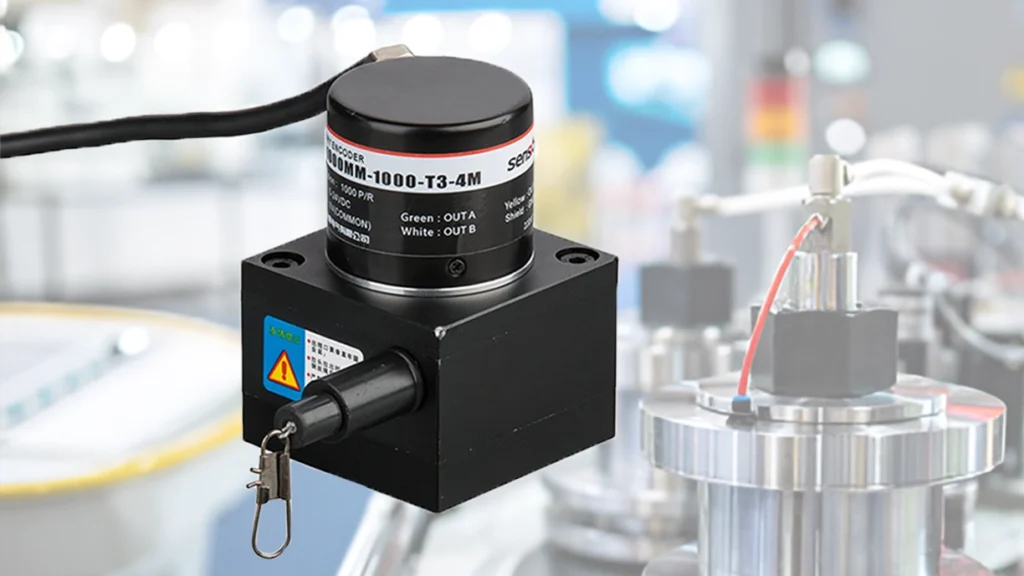
Sensyor position
From a B2B perspective, Sensyor is not interesting only because it makes encoders. It is interesting because it sits at the intersection of rotary feedback, sensor engineering, and application flexibility. That is the kind of positioning purchasing managers like, because it reduces vendor sprawl and makes technical communication less painful.
| Product family | Typical B2B fit | My practical view |
|---|---|---|
| Incremental Encoder | Speed feedback, conveyor systems, servo monitoring, packaging machines | A good fit when the controller only needs relative movement and fast pulse output. |
| Absolute Encoder | Position retention after power loss, indexing tables, lifts, AGV subsystems | Better when machine restart must recover true position without re-homing. |
| Bearingless Encoder | Large shafts, limited installation space, wear-sensitive layouts | Useful where mechanical coupling and bearing life are design headaches. |
| Draw-wire Encoder | Linear travel measurement on platforms, gates, stroke systems | A smart choice when motion is linear but the control architecture still wants encoder-style feedback. |
| Magnetic & Optical Encoder | Mixed industrial environments | Optical designs usually shine in precision-oriented systems, while magnetic options are often favored in dirtier conditions. |
| Analog Signal Encoder | Legacy input cards, analog-compatible controls | Helpful where the plant has not fully moved to digital motion feedback. |
| Proximity, Photoelectric, and Laser Sensors | Broader automation package sourcing | This breadth can simplify projects for OEMs that want a supplier, not a supplier zoo. |
This is where the core phrase Sensyor incremental encoder fits naturally. For a buyer, the value is not the phrase itself; it is the commercial logic behind it. If I am sourcing from a China factory for export or wholesale distribution, I want to know whether the manufacturer can support not only incremental rotary encoders but also the neighboring Product Series that tend to appear in the same machine platform. Sensyor broader sensor profile makes that conversation much easier.
What B2B buyers compare
Now let us move from ranking talk to the part buyers actually care about: what to compare before a purchase order lands on somebody’s desk. This is where many blog posts get fluffy. I would rather be useful.
| Buying scenario | Better-fit product | What to check before order |
|---|---|---|
| High-speed motor feedback | Incremental encoder or incremental optical encoder | Verify pulse resolution, output type, shielding, allowable rpm, and whether the PLC or drive expects A/B/Z or differential signals. |
| Position must survive power loss | Absolute rotary encoder | Confirm single-turn or multiturn, protocol compatibility, and restart behavior after shutdown. |
| Multi-revolution tracking | Multiturn absolute encoder | Check batteryless or geared design, environmental rating, and controller support. |
| Space-limited motor end | Hollow shaft encoder | Match shaft diameter, anti-rotation method, cable exit direction, and mounting depth. |
| Dirty or vibration-heavy environment | Magnetic encoder | Ask about resistance to dust, oil mist, shock, and alignment tolerance. |
| Clean, precision-focused motion | Optical encoder | Review resolution stability, repeatability, and installation accuracy. |
| Mixed old and new control systems | Analog signal encoder plus digital options | Confirm scaling, voltage/current output, and future upgrade path. |
Here is the real commercial truth behind incremental vs absolute encoder. Incremental is often the economical choice when the machine only needs relative movement, speed, direction, and a simple home routine. Absolute becomes the smarter investment when losing position after power-off would cost time, safety margin, or production accuracy. If your machine operator has ever muttered, “Why are we homing this again?” then the answer may already be staring at you.
From a connection standpoint, buyers should stop treating wiring as an afterthought. An incremental rotary encoder normally lives or dies by resolution matching, signal format, cable shielding, voltage compatibility, and whether the receiving input is single-ended or differential. A rotary encoder sensor that looks right on paper can still misbehave if the drive input, grounding method, or cable routing is wrong. In other words, the encoder is not always “bad”; sometimes the cabinet simply had a creative opinion.
Selection also needs to follow the mechanics, not just the catalog. If shaft space is tight, a GOH38B hollow shaft encoder is often cleaner than adding couplings and brackets. If the project cannot afford re-homing after outages, an absolute rotary encoder or multiturn absolute encoder usually gives better operational value. If contamination is heavy, magnetic options deserve a serious look; if precision is king and the environment is controlled, an incremental optical encoder is often the sharper tool.
Whether you need a hollow shaft encoder, an incremental optical encoder, or a multiturn absolute encoder for OEM projects, we are ready to support your bulk inquiry, technical evaluation, and factory-direct supply, Customization available.
And yes, I will say the quiet part out loud: a low price is wonderful right up to the moment your line stops. That is why I prefer suppliers who can discuss application load, mounting method, cable environment, and controller interface with confidence. If your project is active, sending shaft size, rpm, voltage, output requirement, and installation photos usually moves an inquiry toward a real quote much faster than asking for “best price” alone.
China incremental encoder market is wide, crowded, and very capable, but buyers win only when they match the supplier to the application instead of chasing slogans. The available market listings show just how many manufacturer and supplier options exist, and the history of import dependence in high-precision segments explains why engineering depth still matters so much. That is why Sensyor incremental encoder stands out in this discussion: not because every project needs the same encoder, but because many projects need a supplier that can handle incremental, absolute, optical, magnetic, and broader sensor requirements without making the customer juggle five separate factories.
FAQ
Is an incremental encoder still the right choice for new equipment?
Yes, when the machine mainly needs speed and relative position feedback, and the control system can home reliably at startup.
When should I move to an absolute rotary encoder?
When power loss cannot be allowed to erase position, or when restart time and safety logic matter more than the initial device cost.
Do I really need a multiturn absolute encoder?
You do when the axis can rotate through multiple revolutions and the system must know the true accumulated position after shutdown or emergency stop.
Why do buyers ask for a hollow shaft encoder so often?
Because installation is usually cleaner on motors and rotating shafts, especially when space is tight and coupling parts add tolerance risk.
What is the practical difference between magnetic and optical designs?
Magnetic options are often favored for tougher environments, while optical options are commonly chosen for higher precision feedback in cleaner conditions.
Can one supplier handle more than encoders?
Yes, and many buyers prefer it; combining encoders with proximity sensors, photoelectric sensors, or laser sensors can simplify sourcing and after-sales communication.
What should an exporter or wholesaler ask before bulk purchase?
Ask about MOQ, batch consistency, test reports, labeling, packaging, warranty terms, export documentation, and response speed for quality issues.
How do I reduce risk with a new China supplier?
Start with a sample or pilot batch, lock the drawing and electrical specs, confirm inspection points, and make sure technical service is part of the quotation discussion.